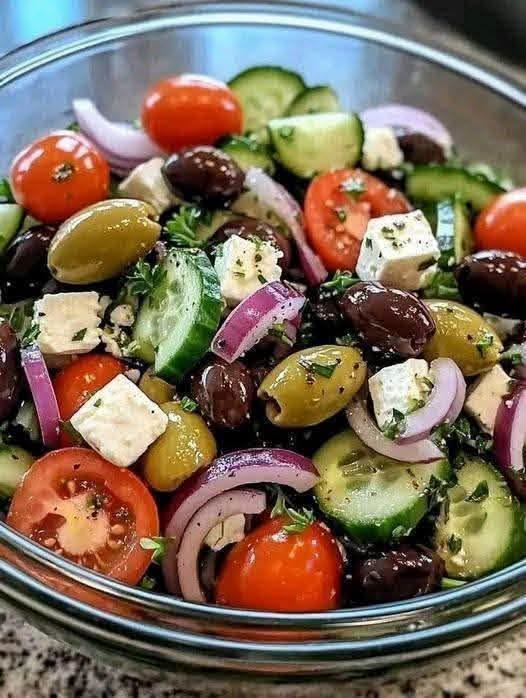
The photo appears to show a Greek-style salad (horiatiki-inspired) with tomatoes, cucumber, red onion, Kalamata/green olives, feta, herbs, and an olive-oil dressing. Traditional Greek salad is built around tomatoes, cucumber, onion, olives, feta, oregano, and olive oil; some versions add green pepper or capers.
Ingredients — serves 4
For the salad
3 large ripe tomatoes, cut into wedges
1 large English cucumber, sliced or quartered
½–1 red onion, thinly sliced
½ green bell pepper, sliced — optional
¾ cup Kalamata olives, pitted
½ cup green olives, pitted
150–200 g feta cheese, cut into cubes
2 tbsp fresh parsley, chopped
1 tsp dried Greek oregano
Black pepper, to taste
Optional: a few capers
For the dressing
4 tbsp extra-virgin olive oil
2 tbsp red-wine vinegar
1 tbsp fresh lemon juice
1 small garlic clove, finely minced
½ tsp dried oregano
¼ tsp black pepper
Small pinch of salt
The basic oil-and-vinegar/oregano combination is consistent with traditional Greek preparations.
Method
Prepare the vegetables. Wash and dry the tomatoes and cucumber well. Cut the tomatoes into large wedges and the cucumber into thick slices or half-moons.
Soften the onion. Slice the red onion very thinly. If you prefer a milder onion flavor, soak it in cold water for 5–10 minutes and drain thoroughly.
Make the dressing. Whisk together olive oil, red-wine vinegar, lemon juice, garlic, oregano and pepper. Taste before adding salt because both feta and olives can be quite salty.
Build the salad. Put tomatoes, cucumber, onion, pepper and olives into a large bowl.
Dress lightly. Pour over most of the dressing and gently toss. Avoid vigorous mixing so the tomatoes don’t become crushed and the feta doesn’t disintegrate.
Add feta. Arrange the feta on top or gently fold in the cubes.
Finish. Sprinkle with oregano, parsley and a little black pepper. Drizzle with the remaining dressing.
Rest briefly. Let it stand for about 10–15 minutes before serving so the vegetable juices mingle with the dressing.
For the freshest texture, dress the salad shortly before serving. Block feta also holds its texture better than finely pre-crumbled feta.
Nut information
This recipe is naturally nut-free as written. A standard Greek salad does not require peanuts or tree nuts, and one established Greek salad recipe specifically lists it as nut-free.
However, if you’re preparing it for someone with a nut allergy, check packaged ingredients carefully:
Feta: normally contains milk, not nuts, but check the package for allergen/cross-contact information.
Olives: plain olives generally don’t contain nuts, but flavored or marinated products can contain additional ingredients.
Dressing: homemade dressing is preferable because commercial dressings/marinades can contain unexpected ingredients.
Pesto or nut toppings: don’t add these unless you have confirmed they are safe.
Use clean utensils and bowls if serving someone with a severe allergy to avoid cross-contact.
Other major allergen: feta is a milk/dairy allergen. A dairy-free version can be made with a suitable dairy-free feta alternative.
Helpful variations
More protein: Add grilled chicken, chickpeas, tuna, or grilled fish. Chickpeas are particularly easy for a vegetarian version.
More filling: Serve with warm pita or crusty bread.
Creamier: Add a little extra feta.
Lower sodium: Reduce the olives and feta, and use lemon, oregano and garlic for flavor instead of adding extra salt.
More authentic-style: Skip lettuce and keep the salad focused on tomato, cucumber, onion, olives, feta, oregano and olive oil. Traditional versions generally don’t need lettuce.
Nutrition — approximate
For the recipe above, nutrition varies substantially with the amount of feta, olives and olive oil. As a rough guide, expect approximately 250–350 calories per serving, with most of the fat coming from olive oil, olives and feta. It provides vegetables, some protein and fiber, but can be relatively high in sodium because of the feta and olives.
Q&A
Q: Can I make this salad ahead of time?
Yes. Chop the vegetables and refrigerate them separately or together, but keep the dressing and feta separate until shortly before serving. This helps preserve the crunch.
Q: Can I use cherry tomatoes?
Absolutely. Halved cherry or grape tomatoes work very well.
Q: Do I have to use Kalamata olives?
No. Kalamata gives the classic Greek character, but green olives or another good-quality olive can be used.
Q: Can I leave out feta?
Yes. It becomes a dairy-free Mediterranean vegetable salad. Add chickpeas or white beans if you’d like more protein.
Q: Is Greek salad gluten-free?
The basic salad ingredients are naturally gluten-free. Check packaged olives, dressings and other processed ingredients if you’re avoiding gluten strictly.
Q: Is it keto-friendly?
Generally yes: the salad is relatively low in carbohydrates, although tomatoes and onions contribute some carbs. Avoid serving it with bread if you need to keep carbohydrates very low.
Q: How long does it keep?
For best texture, eat it the same day. Refrigerated leftovers can generally be kept for about 1–2 days, although the tomatoes become softer and release more liquid.
Q: Why does my salad taste watery?
The most common causes are very juicy tomatoes, watery cucumber, or dressing added too early. Drain/cut the vegetables shortly before serving and dress just before eating.
Q: Can I add lettuce?
Yes. It makes a Greek-style salad rather than the simplest traditional village-style version. Many modern recipes include romaine.
Q: What should I serve with it?
Grilled chicken, fish, lamb, falafel, hummus, pita, roasted potatoes or grilled vegetables all work particularly well.

With years of experience in restaurant research and local SEO, Sara creates accurate, user-friendly guides that work for both people and search engines. Her goal is to help users go from search results to their nearest restaurant or menu choice with as few clicks as possible.
- Grandma’s Cream Puffs – Light, Crisp & Creamy - October 17, 2026
- Easy Crockpot Creamy Garlic Parmesan Chicken - October 17, 2026
- Garlic Herb Roasted Potatoes - October 17, 2026