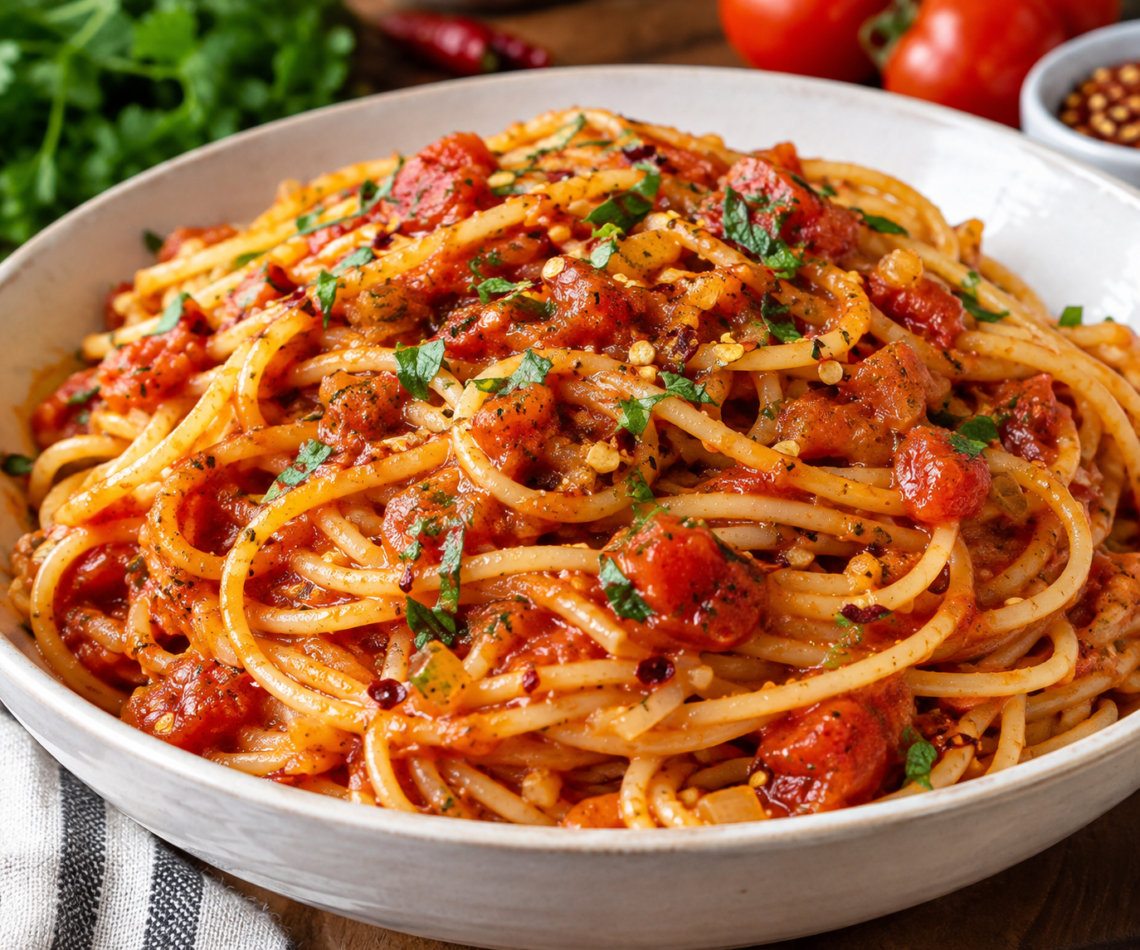
Spicy Tomato Spaghetti is a delicious, comforting pasta dish made with tender spaghetti tossed in a rich tomato sauce infused with garlic, chili flakes, olive oil, and aromatic herbs. The sauce is bold, slightly tangy, and full of heat, making every bite satisfying. This easy homemade recipe is perfect for busy weeknight dinners, quick lunches, or whenever you crave a spicy Italian-inspired meal.
Prep Time: 10 minutes
Cook Time: 25 minutes
Total Time: 35 minutes
Servings: 4
Course: Main Course
Cuisine: Italian-Inspired
Difficulty: Easy
Ingredients
For the Spaghetti
– 12 oz (340 g) dried spaghetti
– 2 tablespoons olive oil
– 5 cloves garlic, finely minced
– 1 small yellow onion, finely chopped
– 1/2 teaspoon red pepper flakes, or more to taste
– 1/2 teaspoon smoked paprika
– 1/4 teaspoon cayenne pepper (optional)
– 1 can (28 oz / 800 g) crushed tomatoes
– 2 tablespoons tomato paste
– 1/2 teaspoon sugar, optional, to balance tomato acidity
– 1 teaspoon dried oregano
– 1/2 teaspoon dried basil
– 1 teaspoon salt, or to taste
– 1/2 teaspoon freshly ground black pepper
– 1/2 cup (120 ml) reserved pasta water, as needed
– 1 tablespoon fresh lemon juice, optional
– 2 tablespoons fresh parsley or basil, chopped
– 1/3 cup (30 g) grated Parmesan cheese, optional
For Extra Flavor (Optional)
– 1 tablespoon butter
– 1/2 teaspoon Italian seasoning
– 1/4 teaspoon chili oil
– 1/2 cup sliced mushrooms or chopped bell peppers
– 1/2 cup cooked chicken or sautéed shrimp for added protein
Instructions
Step 1: Boil the Spaghetti
Fill a large pot with water and bring it to a rolling boil. Add a generous pinch of salt, then add the spaghetti.
Cook according to the package directions until al dente, usually 8–11 minutes. Stir occasionally to prevent the strands from sticking together.
Before draining, reserve about 1 cup of pasta water. Drain the spaghetti without rinsing it.
Step 2: Sauté the Garlic and Onion
While the pasta cooks, heat the olive oil in a large skillet over medium heat.
Add the chopped onion and cook for 3–4 minutes until softened and translucent.
Add the minced garlic and red pepper flakes. Cook for 30–60 seconds, stirring continuously, until fragrant. Avoid burning the garlic, as it can make the sauce bitter.
Step 3: Add the Tomato Paste
Stir in the tomato paste and cook for 1–2 minutes. Let it darken slightly to develop a deeper, richer tomato flavor.
Add the smoked paprika and optional cayenne pepper. Stir well so the spices coat the onion and garlic evenly.
Step 4: Make the Spicy Tomato Sauce
Pour in the crushed tomatoes and stir thoroughly.
Add the oregano, dried basil, black pepper, and salt. If the tomatoes taste particularly acidic, add the optional sugar.
Bring the sauce to a gentle simmer, then reduce the heat to medium-low. Cook uncovered for 15–20 minutes, stirring occasionally, until thickened and flavorful.
If the sauce becomes too thick, add a splash of water or reserved pasta water.
Step 5: Adjust the Seasoning
Taste the sauce and adjust the salt, chili flakes, and black pepper according to your preference.
For extra heat, add more red pepper flakes or a small amount of chili oil. For a brighter flavor, stir in the optional lemon juice.
If you prefer a smoother sauce, use an immersion blender briefly before adding the pasta.
Step 6: Combine the Spaghetti and Sauce
Add the drained spaghetti directly to the skillet.
Toss thoroughly with tongs for 1–2 minutes, allowing the pasta to absorb the tomato sauce. Add reserved pasta water a little at a time until the sauce clings beautifully to every strand.
For a richer finish, stir in the optional butter.
Step 7: Garnish and Serve
Remove the skillet from the heat. Sprinkle with fresh parsley or basil and grated Parmesan cheese, if desired.
Serve immediately while hot, with extra chili flakes and Parmesan at the table.
Tips for the Best Spicy Tomato Spaghetti
1. Use good-quality tomatoes. Crushed canned tomatoes or ripe fresh tomatoes create the foundation of a delicious sauce.
2. Do not burn the garlic. Garlic cooks quickly and can turn bitter if left in hot oil too long.
3. Bloom the chili flakes. Briefly heating them in olive oil releases their flavor and distributes the heat throughout the sauce.
4. Simmer the sauce properly. Giving the tomatoes time to cook reduces excess acidity and deepens the flavor.
5. Save the pasta water. Its starch helps the sauce cling to the spaghetti and creates a silky consistency.
6. Cook the pasta al dente. Slightly firm spaghetti holds its texture better when tossed in the hot sauce.
7. Balance the heat. If the sauce is too spicy, add a little butter, extra tomato, or a small amount of cream.
8. Add herbs at the right time. Dried herbs work well during simmering, while fresh basil and parsley are best added near the end.
9. Avoid rinsing the pasta. The remaining surface starch helps the sauce adhere.
10. Serve immediately. Spaghetti tastes best when freshly tossed with the sauce.
Delicious Variations
Creamy Spicy Tomato Spaghetti: Stir in 1/4 cup heavy cream near the end of cooking for a creamy, mildly spicy sauce.
Spicy Garlic Spaghetti: Increase the garlic to 7–8 cloves and finish with fresh parsley and olive oil.
Spicy Tomato Chicken Spaghetti: Add 1–2 cups of cooked, sliced chicken to the sauce before combining it with the pasta.
Spicy Shrimp Spaghetti: Sauté peeled shrimp with garlic and paprika until cooked, then fold them into the finished sauce.
Vegetable Spaghetti: Add mushrooms, zucchini, spinach, or bell peppers for extra color and texture.
Cheesy Spicy Spaghetti: Add mozzarella or Parmesan for a richer, cheesy finish.
Vegan Spicy Tomato Spaghetti: Omit the butter and cheese, and use olive oil and plant-based Parmesan if desired.
Extra-Hot Spaghetti: Add finely chopped fresh chili or additional cayenne pepper, increasing the amount gradually.
Serving Suggestions
– Garlic bread or toasted baguette
– Fresh green salad with lemon vinaigrette
– Roasted zucchini or broccoli
– Grilled chicken breast
– Sautéed mushrooms
– Steamed green beans
– Freshly grated Parmesan and basil
Storage Instructions
Refrigeration: Store cooled spaghetti in an airtight container in the refrigerator for up to 3–4 days.
Freezing: Freeze the cooked spaghetti and sauce in airtight, freezer-safe containers for up to 2 months for best quality. The pasta may soften slightly after thawing.
Reheating on the Stove: Add the spaghetti to a skillet with 1–2 tablespoons of water. Warm over medium-low heat, stirring until heated through.
Reheating in the Microwave: Place a portion in a microwave-safe bowl, cover loosely, and heat in short intervals, stirring between intervals.
Make-Ahead Tip: Prepare the tomato sauce up to 3 days ahead and refrigerate it separately. Boil fresh spaghetti when ready to serve for the best texture.
Nutrition Information
Estimated nutrition per serving, assuming 4 servings and including the spaghetti, olive oil, and tomato sauce without optional cheese or extra protein:
– Calories: 390–440 kcal
– Protein: 11–14 g
– Total Fat: 10–13 g
– Saturated Fat: 1–3 g
– Total Carbohydrates: 65–72 g
– Dietary Fiber: 5–8 g
– Net Carbohydrates: 58–65 g
– Total Sugars: 9–13 g
– Cholesterol: 0 mg
– Sodium: 450–700 mg
– Potassium: 500–750 mg
Nutrition values are estimates and vary by pasta brand, tomato product, portion size, and added ingredients. Parmesan, butter, chicken, or shrimp will change the final values.
Allergen Information
– Wheat/Gluten: Traditional spaghetti contains wheat and gluten. Use certified gluten-free pasta if needed.
– Milk/Dairy: Parmesan and butter contain dairy; omit them for a dairy-free version.
– Soy: Check packaged pasta, cheese alternatives, and seasoning labels if soy is an allergen.
– Eggs: Some fresh pasta contains eggs; most dried spaghetti is egg-free, but check the label.
– Peanuts and Tree Nuts: Not normally present in the basic recipe, but check labels and cross-contact warnings.
– Fish and Shellfish: Not present unless shrimp or seafood is added.
Frequently Asked Questions (Q&A)
Q1: How do I make Spicy Tomato Spaghetti hotter?
Increase the red pepper flakes gradually, add fresh chopped chili, or stir in a little chili oil. Taste as you go to avoid making the sauce overwhelmingly hot.
Q2: Can I use fresh tomatoes instead of canned tomatoes?
Yes. Use approximately 2 pounds (900 g) of ripe tomatoes, chopped or grated. Simmer them longer until they break down and form a thick sauce.
Q3: Why does my tomato sauce taste too acidic?
Some tomatoes are naturally more acidic. Simmer the sauce longer and add a small pinch of sugar if needed. A little butter can also soften the sharpness.
Q4: Can I make this recipe without tomato paste?
Yes. You can omit the tomato paste, although the sauce may be less concentrated. Allow extra simmering time to thicken it.
Q5: Is Spicy Tomato Spaghetti vegetarian?
Yes. The basic recipe is vegetarian when made without meat or meat-based additions. Use vegetarian Parmesan if you want to keep the entire dish vegetarian.
Q6: Can I make it vegan?
Yes. Use olive oil instead of butter and omit the Parmesan or use a plant-based alternative.
Q7: Can I make the sauce ahead of time?
Yes. Prepare the sauce in advance, cool it promptly, and refrigerate it in an airtight container for up to 3 days. Reheat it before tossing with freshly cooked spaghetti.
Q8: What can I use instead of spaghetti?
Penne, linguine, fettuccine, rigatoni, or gluten-free pasta can all work well. Adjust the cooking time according to the package instructions.
Q9: How can I make this meal higher in protein?
Add grilled chicken, shrimp, lean ground beef, or cooked lentils. You can also choose a higher-protein pasta made from legumes.
Q10: Can I make Spicy Tomato Spaghetti less spicy?
Yes. Reduce or omit the chili flakes and cayenne pepper. The tomato, garlic, and herb flavors will still make a delicious pasta dish.
Q11: How do I stop spaghetti from sticking together?
Use plenty of boiling water, stir the pasta during the first minute of cooking, and toss it with the sauce immediately after draining.
Q12: Can I use jarred tomato sauce?
Yes. Use approximately 3 cups of tomato sauce and adjust the herbs, salt, and chili according to its existing seasoning. Simmer for 10–15 minutes to develop the flavor.
Q13: What cheese goes best with spicy tomato spaghetti?
Parmesan is a classic choice. Pecorino Romano offers a saltier, sharper taste, while mozzarella gives the pasta a softer, stretchy texture.
Q14: Can I add vegetables?
Absolutely. Mushrooms, bell peppers, spinach, zucchini, and olives all pair well with spicy tomato sauce.
Q15: How long does leftover spaghetti last?
Refrigerate it promptly in a covered container and use it within 3–4 days. Reheat until steaming hot throughout.
Q16: Can I freeze leftover spaghetti?
Yes. Freeze it in individual portions for convenience. Thaw in the refrigerator and reheat thoroughly, adding a little water if the sauce has thickened.
Q17: What should I do if the sauce becomes too thick?
Add reserved pasta water a tablespoon at a time while tossing until the sauce reaches your preferred consistency.
Q18: Is this recipe suitable for meal prep?
Yes. The sauce can be made ahead, and the pasta can be portioned into meal-prep containers. Keeping the sauce separate until serving helps preserve the pasta’s texture.
Q19: Can I add ground beef to the sauce?
Yes. Brown approximately 1/2 pound (225 g) of ground beef before cooking the onion and garlic. Drain excess grease as needed, then continue with the recipe.
Q20: What makes this spaghetti taste restaurant-quality?
Use good-quality tomatoes, cook the garlic and tomato paste carefully, simmer the sauce until flavorful, and finish the pasta in the sauce with a splash of starchy pasta water.
Final Recipe Notes
Spicy Tomato Spaghetti is an easy, flavorful meal that combines tender pasta with a rich tomato sauce, fragrant garlic, and just the right amount of chili heat. Customize the spice level, add your favorite vegetables or protein, and finish with fresh herbs for a comforting homemade dinner everyone can enjoy.

With years of experience in restaurant research and local SEO, Sara creates accurate, user-friendly guides that work for both people and search engines. Her goal is to help users go from search results to their nearest restaurant or menu choice with as few clicks as possible.
- Grandma’s Cream Puffs – Light, Crisp & Creamy - October 17, 2026
- Easy Crockpot Creamy Garlic Parmesan Chicken - October 17, 2026
- Garlic Herb Roasted Potatoes - October 17, 2026