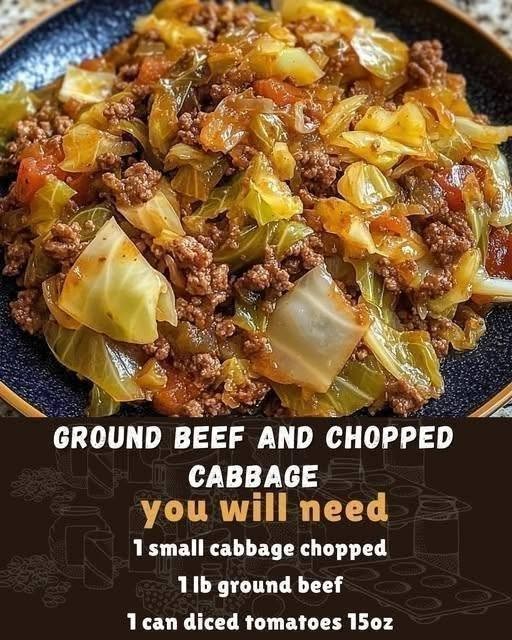
Ground Beef and Chopped Cabbage is a hearty, flavorful, and budget-friendly one-pan meal made with tender cabbage, seasoned ground beef, garlic, onions, and a delicious blend of herbs and spices. Everything cooks together in one skillet, allowing the cabbage to soak up the savory juices from the beef. It is an easy, comforting dinner that is naturally low in carbohydrates and perfect for busy weeknights.
Prep Time: 15 minutes
Cook Time: 25–30 minutes
Total Time: 40–45 minutes
Servings: 4–6
Course: Main Course, Dinner
Cuisine: American-inspired, Homestyle
Cooking Method: Stovetop, One-Pan
Diet: Low-Carb, Gluten-Free (when using certified gluten-free ingredients)
Ingredients
For the Ground Beef and Cabbage
– 1½ pounds (680 g) lean ground beef
– 1 medium head green cabbage, approximately 2 pounds (900 g), chopped
– 1 medium yellow onion, finely diced
– 3 cloves garlic, minced
– 2 tablespoons olive oil, if needed
– 1 medium bell pepper, diced (optional)
– ½ cup (120 ml) beef broth
– 1 tablespoon tomato paste
– 1 tablespoon Worcestershire sauce
– 1 teaspoon paprika
– ½ teaspoon smoked paprika
– 1 teaspoon dried Italian seasoning
– ½ teaspoon onion powder
– ½ teaspoon garlic powder
– ½ teaspoon ground black pepper
– ¾ teaspoon salt, or to taste
– ¼ teaspoon red pepper flakes (optional)
– 1 tablespoon fresh lemon juice or apple cider vinegar
– 2 tablespoons fresh parsley, chopped
Optional Cheesy Topping
– ½ cup (50 g) shredded cheddar cheese
– 2 tablespoons grated Parmesan cheese
– 2 tablespoons sliced green onions
Ingredient Notes
– Ground beef: Use 85–90% lean ground beef for a good balance of flavor and texture. Leaner beef produces less grease.
– Cabbage: Green cabbage holds its texture well while becoming tender and sweet during cooking.
– Beef broth: Adds moisture and savory flavor. Low-sodium broth gives you better control over the salt.
– Tomato paste: Adds richness and a subtle tang without making the dish overly saucy.
– Worcestershire sauce: Enhances the beef’s savory flavor. Check the label if you need a gluten-free version.
– Lemon juice or vinegar: Brightens the dish and balances the richness of the beef.
– Cheese: Completely optional. Add it at the end for a creamy, cheesy finish.
Instructions
Step 1: Prepare the Ingredients
Remove any damaged outer cabbage leaves. Cut the cabbage into quarters, remove the hard central core, and chop the leaves into bite-sized pieces.
Dice the onion and bell pepper, mince the garlic, and measure the seasonings. Having everything ready makes cooking quicker and easier.
Step 2: Brown the Ground Beef
Place a large, deep skillet or Dutch oven over medium-high heat.
Add the ground beef and break it into small pieces with a wooden spoon or spatula. Cook for approximately 6–8 minutes, stirring occasionally, until the beef is thoroughly browned and no longer pink.
If the beef releases excessive grease, carefully drain the excess, leaving approximately 1 tablespoon in the pan for flavor. Cook ground beef to an internal temperature of 160°F (71°C).
Step 3: Add the Onion and Bell Pepper
Add the diced onion and optional bell pepper to the browned beef.
Cook for 3–4 minutes, stirring occasionally, until the onion begins to soften and the pepper becomes slightly tender.
Add the minced garlic and cook for another 30–60 seconds, just until fragrant. Avoid browning the garlic too much, as it can become bitter.
Step 4: Season the Beef Mixture
Stir in the tomato paste, Worcestershire sauce, paprika, smoked paprika, Italian seasoning, onion powder, garlic powder, black pepper, salt, and optional red pepper flakes.
Cook for 1–2 minutes, stirring well to coat the beef and vegetables evenly.
This brief cooking step allows the tomato paste and spices to develop a deeper, richer flavor.
Step 5: Add the Chopped Cabbage
Add the chopped cabbage to the skillet in batches if necessary. It may initially look like too much, but cabbage shrinks considerably as it cooks.
Pour in the beef broth and stir everything together. If your skillet is very full, cover it for 3–4 minutes to allow the cabbage to wilt, then stir and continue adding any remaining cabbage.
Make sure the seasoning mixture is distributed throughout the pan.
Step 6: Cook Until Tender
Reduce the heat to medium, cover the skillet, and cook for 12–15 minutes, stirring every 3–4 minutes.
The cabbage should gradually soften and release its natural moisture while absorbing the savory beef juices.
For firmer cabbage, begin checking after 8–10 minutes. For softer, more tender cabbage, cook for an additional 5 minutes as needed.
If the mixture becomes too dry before the cabbage is tender, add a few tablespoons of beef broth or water. If it contains too much liquid, remove the lid for the last few minutes.
Step 7: Adjust the Flavor
Remove the lid and stir the mixture thoroughly.
Taste and adjust the salt, black pepper, paprika, or other seasonings according to your preference.
Add the lemon juice or apple cider vinegar and stir. This small amount of acidity helps balance the savory beef and naturally sweet cabbage.
Step 8: Add the Cheese (Optional)
If you want a cheesy version, sprinkle the cheddar and Parmesan evenly over the beef and cabbage.
Cover the skillet for 1–2 minutes over low heat, until the cheese melts. Alternatively, leave the cheese out for a lighter, dairy-free meal.
Step 9: Garnish and Serve
Remove the skillet from the heat and sprinkle with chopped parsley or sliced green onions.
Let the dish rest for 2–3 minutes before serving. This allows the juices and seasonings to settle.
Serve hot on its own or alongside your favorite low-carb or family-style side dishes.
Serving Suggestions
– Serve over cauliflower rice for a low-carb meal.
– Pair with steamed green beans or roasted broccoli.
– Serve with mashed potatoes for a comforting family dinner.
– Add a side salad with a light vinaigrette.
– Serve over cooked rice for a more filling meal.
– Add a dollop of sour cream or plain Greek yogurt if desired.
– Offer warm dinner rolls or crusty bread for soaking up the savory juices.
Tips for the Best Ground Beef and Cabbage
1. Brown the beef properly. Allow it to develop a little color before adding the vegetables. Browning creates a richer, meatier flavor.
2. Cut the cabbage evenly. Similar-sized pieces cook at roughly the same rate.
3. Avoid overcooking. Cabbage should be tender but not completely mushy unless you prefer a very soft texture.
4. Season in layers. Add spices with the beef, then taste again near the end. Cabbage absorbs seasoning as it cooks.
5. Control the moisture. Cabbage releases water naturally, so begin with just ½ cup of broth. Add more only if needed.
6. Choose the right skillet. A wide, deep skillet or Dutch oven makes it easier to stir the cabbage without spilling.
7. Make it spicy. Add extra red pepper flakes, cayenne pepper, or a little hot sauce.
8. Make it cheesy. Cheddar, Monterey Jack, or mozzarella all work well.
9. Make it tomato-rich. Add ½ cup of crushed tomatoes for a slightly saucier variation.
10. Let it rest briefly. A few minutes off the heat helps the flavors come together before serving.
Variations
Garlic Butter Ground Beef and Cabbage: Stir in 1 tablespoon of butter near the end of cooking for a richer finish.
Keto Ground Beef and Cabbage: Use lean or moderately fatty ground beef, low-carb seasonings, and a Worcestershire sauce without added sugar if desired. Omit rice and other high-carbohydrate sides.
Cheesy Beef and Cabbage Skillet: Add ½–1 cup shredded cheddar and a little Parmesan for a creamy, cheesy dinner.
Ground Beef and Cabbage with Tomatoes: Add crushed tomatoes or diced tomatoes and reduce the broth slightly to create a more tomato-forward dish.
Asian-Inspired Beef and Cabbage: Replace the Italian seasoning with ground ginger, add a small amount of sesame oil, and use gluten-free tamari if needed. Adjust the salt accordingly.
Ground Beef, Cabbage, and Potatoes: Add small cubes of potato and cook until tender, adding extra broth as needed. This variation is more filling but contains more carbohydrates.
Spicy Beef and Cabbage: Add cayenne, chili flakes, or diced jalapeño for a little heat.
Extra Vegetable Version: Add sliced mushrooms, zucchini, carrots, or spinach. Add quick-cooking vegetables toward the end to prevent them from becoming mushy.
Storage Instructions
Refrigeration: Allow the dish to cool slightly, then transfer it to an airtight container. Refrigerate within 2 hours of cooking and consume within 3–4 days.
Freezing: Cool completely and portion into freezer-safe containers. Freeze for up to 2–3 months for best quality. Cabbage may become softer after thawing.
Reheating on the stovetop: Place the desired portion in a skillet over medium-low heat. Add a splash of broth or water and stir occasionally until steaming hot throughout.
Reheating in the microwave: Place in a microwave-safe container, cover loosely, and heat in short intervals, stirring between intervals. Reheat leftovers to 165°F (74°C).
Meal Prep: Divide the cooled mixture into individual containers for easy lunches or dinners throughout the week.
Food Safety Notes
– Cook ground beef to an internal temperature of 160°F (71°C).
– Refrigerate leftovers promptly; do not leave cooked food at room temperature for more than 2 hours, or 1 hour when the temperature is above 90°F (32°C).
– Reheat leftovers to 165°F (74°C).
– Thaw frozen leftovers in the refrigerator rather than on the counter.
– If the dish has an unusual odor, visible mold, or other signs of spoilage, discard it.
Nutrition Information
Estimated nutrition per serving, assuming 6 servings and using lean ground beef, green cabbage, olive oil, and the listed ingredients without optional cheese. Actual values vary with the beef’s fat percentage, portion size, and amount of grease drained.
– Calories: 300–360 kcal
– Protein: 23–27 g
– Total Fat: 18–23 g
– Saturated Fat: 6–9 g
– Total Carbohydrates: 12–15 g
– Dietary Fiber: 4–5 g
– Net Carbohydrates: 8–11 g
– Total Sugars: 6–8 g
– Cholesterol: 65–85 mg
– Sodium: 400–650 mg
– Potassium: 600–800 mg
These figures are estimates, not laboratory-tested values. Adding cheese, using fattier beef, or changing the serving size will change the nutrition information. For more precise tracking, calculate the ingredients using the nutrition labels of the specific products you use.
Allergen Information
– Milk/Dairy: The basic recipe can be dairy-free. Optional cheddar, Parmesan, sour cream, and Greek yogurt contain dairy.
– Soy: Usually absent from the basic ingredients, but check Worcestershire sauce, broth, and seasoning labels.
– Wheat/Gluten: The main ingredients are naturally gluten-free, but some Worcestershire sauces, broths, and packaged seasonings may contain gluten or wheat.
– Eggs: Not normally present in the basic recipe.
– Peanuts and Tree Nuts: Not normally present in the basic recipe.
– Fish and Shellfish: Not normally present in the basic recipe.
– Sesame: Not present unless added in an Asian-inspired variation.
For anyone with a food allergy, always check product labels and cross-contact warnings. Ingredient formulations can vary by brand.
Frequently Asked Questions (Q&A)
Q1: Can I use ground turkey instead of ground beef?
Yes. Ground turkey works well and produces a lighter flavor. Since it is often leaner, you may need a little olive oil to prevent sticking and help the seasonings coat the meat.
Q2: Do I need to boil the cabbage before cooking it?
No. The cabbage cooks directly in the skillet with the beef, broth, and seasonings. This saves time and helps preserve the dish’s flavor.
Q3: Why is my ground beef and cabbage watery?
Cabbage releases a considerable amount of moisture as it cooks. Remove the lid for the final few minutes and let excess liquid evaporate. Avoid adding too much broth at the beginning.
Q4: Can I make this recipe without tomato paste?
Yes. Simply omit it. The dish will still be flavorful, although it will have a slightly less rich and tangy taste.
Q5: Is ground beef and cabbage keto-friendly?
Yes, it can fit into a ketogenic or low-carb eating plan. Cabbage contains carbohydrates, but it also provides fiber. Check the portion size and the labels of any sauces or broth you use.
Q6: Can I make this recipe ahead of time?
Absolutely. Cook the dish, cool it promptly, and refrigerate it in an airtight container. Reheat individual portions when needed.
Q7: What kind of cabbage works best?
Green cabbage is the classic choice because it softens nicely while retaining some texture. Savoy cabbage also works, while red cabbage will create a different color and slightly different flavor.
Q8: Can I cook this recipe in a slow cooker?
Yes. Brown the beef with the onion and garlic first, then transfer it to a slow cooker with the remaining ingredients. Cook on LOW for approximately 4–5 hours or HIGH for 2–3 hours, checking the cabbage for tenderness and avoiding excess broth.
Q9: Can I use frozen chopped cabbage?
Yes. Frozen cabbage works well, but it may release more water and become softer. Add it directly to the skillet and adjust the cooking time and liquid as needed.
Q10: How can I make the recipe more filling?
Serve it over rice, add potatoes, or increase the amount of vegetables. For a lower-carb option, cauliflower rice is an excellent choice.
Q11: Can I make this recipe dairy-free?
Yes. The basic recipe is naturally dairy-free when made without the optional cheese or dairy toppings. Check the labels of packaged ingredients.
Q12: What is the best way to prevent the beef from becoming dry?
Avoid overcooking it before adding the cabbage. Use moderately lean ground beef, retain a little of the cooking fat, and add enough broth to keep the mixture moist while the cabbage cooks.
Q13: Can I add bacon?
Yes. Cook 3–4 slices of chopped bacon until crisp, remove them from the pan, and brown the beef in the rendered fat if appropriate. Stir the bacon back in near the end. Reduce the added salt because bacon is salty.
Q14: Can I double the recipe?
Yes, but use a very large pot or cook in batches. A crowded skillet can steam the beef instead of browning it properly, and the cabbage may take longer to soften.
Q15: Is this recipe suitable for meal prep?
Yes. It reheats well and makes convenient lunches or dinners. Portion it into containers with your preferred side dish and refrigerate promptly.
Q16: Can I use pre-shredded cabbage?
Yes. Bagged shredded cabbage saves preparation time. It cooks faster than larger chopped pieces, so begin checking for tenderness earlier.
Q17: How do I know when the cabbage is done?
It should be tender enough to pierce easily with a fork while retaining the texture you prefer. Taste a piece near the end of cooking and adjust the timing accordingly.
Q18: Can I make the dish without Worcestershire sauce?
Yes. Omit it or replace it with a small splash of tamari, a little extra broth, or a modest amount of vinegar. Check substitutions for allergens and sodium.
Q19: What herbs go well with beef and cabbage?
Parsley, thyme, oregano, and Italian seasoning pair nicely with the beef and cabbage. Fresh parsley added just before serving provides a bright finish.
Q20: What is the best way to serve leftovers?
Serve reheated leftovers as they are, spoon them over cauliflower rice, or use them as a filling for lettuce wraps. You can also top them with a freshly cooked egg for a hearty breakfast.
Final Recipe Notes
Ground Beef and Chopped Cabbage is a simple, satisfying one-pan dinner that combines savory beef, tender cabbage, garlic, and warm spices into a flavorful meal. It is versatile enough for low-carb meal planning yet easy to adapt for the whole family. With affordable ingredients, straightforward preparation, and minimal cleanup, it is a dependable recipe to keep in your weekly dinner rotation.

With years of experience in restaurant research and local SEO, Sara creates accurate, user-friendly guides that work for both people and search engines. Her goal is to help users go from search results to their nearest restaurant or menu choice with as few clicks as possible.
- Grandma’s Cream Puffs – Light, Crisp & Creamy - October 17, 2026
- Easy Crockpot Creamy Garlic Parmesan Chicken - October 17, 2026
- Garlic Herb Roasted Potatoes - October 17, 2026