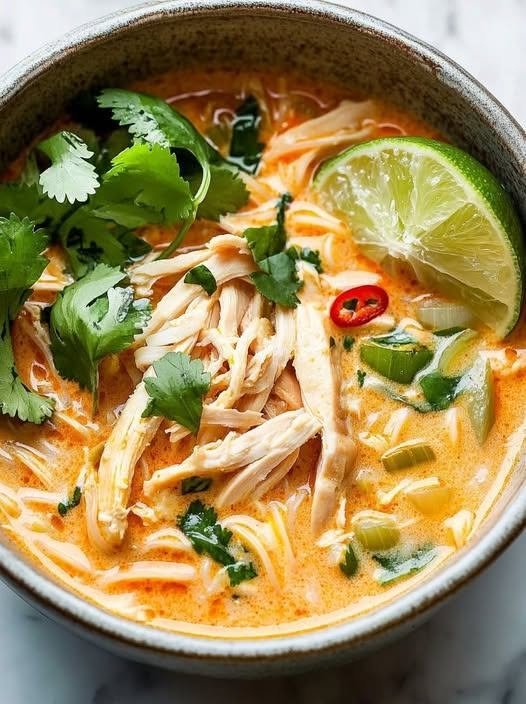
A rich, creamy and aromatic Thai-inspired noodle soup featuring tender chicken, silky coconut milk, fragrant ginger, garlic, red curry paste, fresh lime and rice noodles. The combination of creamy, spicy, salty and tangy flavors makes this a comforting complete meal in a bowl. Similar Thai-style soups commonly combine coconut milk, red curry paste, ginger, chicken, rice noodles, fish sauce and lime.
Recipe Information
Prep Time: 15 minutes
Cook Time: 30 minutes
Total Time: 45 minutes
Servings: 6
Cuisine: Thai-inspired
Course: Soup / Main Dish
Difficulty: Easy to Moderate
Ingredients
For the Soup
1½ lb boneless, skinless chicken thighs or chicken breasts
1 tablespoon olive oil or neutral cooking oil
1 medium yellow onion, thinly sliced
1 red bell pepper, thinly sliced
3 cloves garlic, minced
1½ tablespoons fresh ginger, finely grated
2–3 tablespoons Thai red curry paste, depending on desired spice level
6 cups low-sodium chicken broth
1 can (13.5–14 oz) full-fat unsweetened coconut milk
1 tablespoon fish sauce
1 tablespoon low-sodium soy sauce or gluten-free tamari
1 tablespoon brown sugar or coconut sugar
1 teaspoon lime zest
2 tablespoons fresh lime juice, plus extra for serving
6 oz rice noodles or rice vermicelli
1 cup sliced mushrooms, optional
1 cup baby spinach, optional
½ teaspoon black pepper
½ teaspoon salt, or to taste
For Garnishing
3 green onions, thinly sliced
¼ cup fresh cilantro, chopped
Fresh Thai basil or regular basil
Lime wedges
Thinly sliced red chili
Fresh cilantro leaves
Optional red pepper flakes
Instructions
1. Prepare the Chicken
Pat the chicken dry and cut it into thin strips or small bite-sized pieces.
Season lightly with black pepper and a small amount of salt. Don’t add too much salt because fish sauce and soy sauce will contribute plenty of seasoning.
2. Sauté the Aromatics
Heat the oil in a large heavy-bottomed pot or Dutch oven over medium heat.
Add the sliced onion and red bell pepper.
Cook for 3–4 minutes, stirring occasionally, until they begin to soften.
Add the garlic and fresh ginger.
Cook for another 30–60 seconds, until fragrant.
3. Add the Red Curry Paste
Add 2 tablespoons red curry paste to the pot.
Stir continuously for approximately 1–2 minutes.
Cooking the curry paste briefly in the oil helps release its aromatic flavors. Thai red curry soup recipes commonly start by frying the curry paste with garlic and ginger before adding the broth and coconut milk.
For a spicier soup, use 3 tablespoons.
4. Build the Coconut Broth
Slowly pour in the chicken broth while stirring.
Add:
Coconut milk
Fish sauce
Soy sauce or tamari
Brown sugar
Lime zest
Stir well.
Bring the mixture to a gentle simmer.
Do not rapidly boil the coconut milk because a gentle simmer gives the soup a smoother texture.
5. Add the Chicken
Add the sliced chicken to the simmering broth.
Cook for approximately:
5–8 minutes for thinly sliced chicken breast
8–12 minutes for chicken thighs
The chicken should be fully cooked before serving. For food safety, chicken should reach an internal temperature of 165°F (74°C).
6. Add the Vegetables
If using mushrooms, add them now.
Simmer for approximately 3–4 minutes.
If using spinach, add it during the final 1–2 minutes so it remains fresh and vibrant.
7. Prepare the Rice Noodles
While the soup is cooking, prepare the rice noodles according to the package directions.
For many rice vermicelli noodles, soaking in hot water for several minutes is sufficient.
Drain thoroughly.
For the best texture, don’t overcook them because they will soften further when combined with the hot soup. Some Thai chicken noodle soup recipes cook the noodles separately and add them at the end.
8. Add the Noodles
Add the drained noodles directly to the soup.
Gently stir and heat for 1–2 minutes.
Don’t cook them for too long or they can become mushy.
9. Finish With Lime
Turn off the heat.
Add:
2 tablespoons fresh lime juice
Additional fish sauce if needed
Additional lime juice if desired
Taste carefully.
The ideal flavor should be:
Creamy + spicy + slightly sweet + salty + bright and tangy.
Fresh lime is best added toward the end to preserve its bright flavor.
10. Serve
Ladle the soup into large bowls.
Top with:
Green onions
Fresh cilantro
Thai basil
Sliced red chili
A squeeze of fresh lime
Serve immediately while hot.
Nutrition Information
Approximate per serving, assuming 6 servings:
Calories: 430 kcal
Protein: 32 g
Carbohydrates: 38 g
Fat: 19 g
Saturated Fat: 13 g
Fiber: 3 g
Sugar: 7 g
Sodium: 900–1,100 mg
Cholesterol: 75–95 mg
Nutrition will vary depending on the coconut milk, curry paste, noodles, chicken cut and amount of fish sauce/soy sauce used.
Nut Information
Does this recipe contain nuts?
No peanuts or tree nuts are intentionally included in this recipe.
However, coconut is botanically a fruit rather than a tree nut, although coconut is regulated as a tree-nut allergen in some countries and can still cause allergic reactions. If preparing this for someone with a coconut allergy, replace coconut milk with an appropriate alternative.
Important allergy warning
Thai curry paste can contain or be manufactured around allergens depending on the brand. Always check the package label.
Fish sauce may also have facility-specific allergen statements.
For a severe nut allergy, use products specifically labeled according to the individual’s allergy requirements and check for cross-contact warnings.
Dietary Information
Peanut-Free: Yes, when using peanut-free curry paste and other ingredients
Tree-Nut-Free: No, if coconut is being avoided under your allergy requirements
Dairy-Free: Yes
Egg-Free: Yes
High-Protein: Yes
Gluten-Free: Can be made gluten-free with certified gluten-free fish sauce, curry paste, broth and tamari
Low-Carb: No, because of the rice noodles
Keto: No as written
Vegetarian: No
Pescatarian: No
Soy-Free: No if soy sauce is used; use coconut aminos if appropriate
Tips for the Best Thai Coconut Chicken Soup
Use full-fat coconut milk
Full-fat coconut milk creates a richer and creamier broth. Light coconut milk can be used if you want to reduce calories, but the soup won’t be quite as creamy.
Don’t skimp on ginger
Fresh ginger gives the soup its characteristic warm, aromatic flavor. Fresh ginger is preferable to powdered ginger.
Adjust the curry paste
Start with 2 tablespoons if you’re unsure about the heat.
Use 3 tablespoons for a noticeably spicy soup.
Different curry paste brands vary considerably in heat and saltiness.
Add lime at the end
Fresh lime juice gives the soup a bright finish. Adding it after turning off the heat helps maintain that fresh citrus flavor.
Keep noodles separate for leftovers
Rice noodles absorb liquid as they sit. If you are intentionally making this soup for meal prep, store cooked noodles separately and add them when reheating.
Easy Variations
Thai Coconut Chicken Vegetable Soup
Add:
Bok choy
Mushrooms
Bell peppers
Carrots
Snow peas
Baby spinach
This turns the soup into an even more vegetable-rich meal.
Extra-Spicy Version
Add:
½–1 fresh Thai chili
Red pepper flakes
Extra red curry paste
Chili oil for serving
Creamier Version
Add an additional ¼–½ cup coconut milk at the end.
Don’t boil vigorously after adding it.
High-Protein Version
Use:
1¾ lb chicken breast
Reduced amount of noodles
Extra mushrooms
Baby spinach
This increases the protein while keeping the soup filling.
Low-Carb Version
Replace rice noodles with:
Shirataki noodles
Zucchini noodles
Cabbage noodles
This significantly reduces the carbohydrate content.
Storage
Allow leftovers to cool appropriately and transfer them to airtight containers.
Refrigerate for up to 3–4 days.
For best texture, store the noodles separately from the broth.
When reheating, gently warm the soup on the stovetop rather than boiling it aggressively.
Add a splash of chicken broth or coconut milk if the soup has thickened.
Frequently Asked Questions
Can I use chicken breast instead of chicken thighs?
Yes. Chicken breast creates a leaner soup, while thighs are more tender and flavorful.
Can I use cooked rotisserie chicken?
Absolutely.
Use approximately 3–4 cups shredded cooked chicken and add it near the end. Simmer just long enough to warm it through.
Can I use coconut cream?
Yes. Coconut cream makes the soup richer and thicker. If using coconut cream, dilute it with additional chicken broth or water according to your desired consistency.
Can I use coconut milk from a carton?
You can, but refrigerated carton coconut milk is generally thinner than canned full-fat coconut milk. For the creamiest soup, canned coconut milk is preferable.
Can I make this soup without fish sauce?
Yes. Replace the fish sauce with additional soy sauce or tamari. Keep in mind that fish sauce provides a distinctive salty, savory flavor.
Can I make it gluten-free?
Yes. Use rice noodles, gluten-free chicken broth, gluten-free red curry paste and gluten-free tamari instead of regular soy sauce. Check all packaged ingredients carefully.
Can I make this soup without soy?
Yes. Use coconut aminos in place of soy sauce, provided they fit your dietary needs.
Can I use regular noodles?
Yes, but rice noodles complement the Thai flavors particularly well. Rice noodles are commonly used in Thai-style coconut chicken noodle soups.
Why did my coconut milk separate?
Coconut milk can naturally separate, especially when exposed to high heat. A gentle simmer and frequent stirring help maintain a smoother broth.
How can I make the soup less spicy?
Use only 1 tablespoon red curry paste and avoid fresh chilies or chili flakes. You can also add extra coconut milk to mellow the heat.
How can I make it spicier?
Add additional red curry paste, fresh Thai chili, chili flakes or chili oil.
Can I freeze this soup?
Yes, but for the best texture, freeze the broth and chicken separately from the noodles. Cook fresh noodles when serving.
Can I add shrimp?
Yes. Add peeled, deveined shrimp during the final 3–5 minutes of cooking, depending on their size.
Can I add vegetables?
Definitely. Mushrooms, bell peppers, spinach, carrots, bok choy and snow peas work particularly well.
Is this authentic Thai soup?
This is best described as a Thai-inspired coconut curry chicken noodle soup rather than a strictly traditional Thai recipe. Thai coconut chicken soups such as Tom Kha Gai use related aromatic ingredients, but recipes vary considerably.
Can I make it ahead?
Yes. Prepare the broth and chicken ahead of time, refrigerate them, and cook the noodles separately. Reheat the broth gently and add fresh noodles just before serving.
Quick Recipe Summary
Tender chicken + creamy coconut milk + Thai red curry paste + fresh ginger + garlic + rice noodles + lime + cilantro = a rich, fragrant, comforting Thai-inspired soup that’s perfect for lunch or dinner.

With years of experience in restaurant research and local SEO, Sara creates accurate, user-friendly guides that work for both people and search engines. Her goal is to help users go from search results to their nearest restaurant or menu choice with as few clicks as possible.
- Stuffed Cabbage Rolls - October 18, 2026
- Easy Crockpot Creamy Garlic Parmesan Chicken - October 18, 2026
- Turmeric Carrot Lentil Stew - October 18, 2026