Low-carb • Sugar-free • High-protein • Ready in ~15 minutes
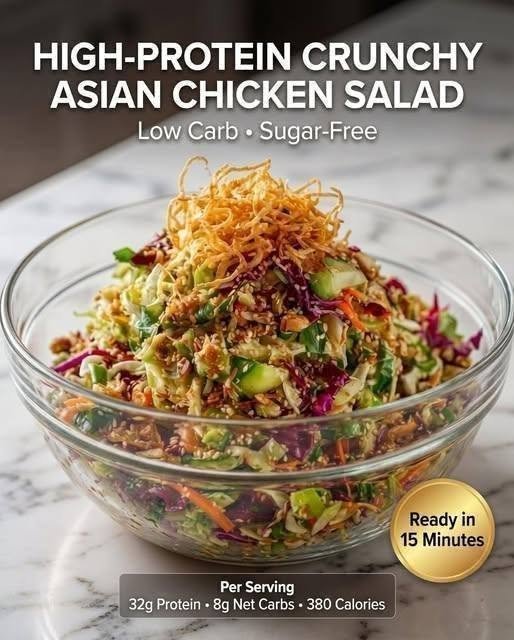
The image lists 32 g protein, 8 g net carbs and 380 calories per serving. Those numbers are best treated as targets rather than exact nutrition facts—the actual values change with chicken size, dressing, peanut butter, oils, and brands. For reference, cooked roasted chicken breast is about 165 kcal and 31 g protein per 100 g according to USDA-derived data.
F
Foodatron
+1
Servings
4 large servings
Time
Prep: 10 minutes
Cook/crisp topping: 5–10 minutes
Total: about 15 minutes
Full Ingredients
Chicken
450 g cooked boneless, skinless chicken breast, shredded or chopped
½ tsp salt
½ tsp black pepper
½ tsp garlic powder
½ tsp ground ginger
½ tsp sesame oil
You can use leftover grilled/roasted chicken. If cooking from raw, use approximately 600 g raw chicken breast and cook until the center reaches 74°C / 165°F.
Salad vegetables
250 g green cabbage, very thinly sliced
100 g red cabbage, thinly sliced
1 large cucumber, diced
1 medium carrot, julienned
3 spring onions, sliced
½ small red bell pepper, thinly sliced
¼ cup fresh cilantro/coriander, chopped
2 tbsp fresh mint, chopped — optional
1 small jalapeño, thinly sliced — optional
Optional additions
For more crunch:
40 g roasted peanuts
1 tbsp sesame seeds
1–2 tbsp chopped cashews
Important: cashews and peanuts are nutritionally different from tree nuts vs. legumes, but both can cause serious allergies. If you’re cooking for someone with an allergy, check the specific product and avoid cross-contact.
Sugar-Free Asian Peanut-Sesame Dressing
Mix:
1 tbsp natural peanut butter, unsweetened
1½ tbsp rice vinegar
1 tbsp low-sodium soy sauce or tamari
2 tsp toasted sesame oil
1 tbsp lime juice
1 tsp grated fresh ginger
1 small garlic clove, finely grated
½ tsp chili flakes
½–1 tsp powdered erythritol/monk-fruit sweetener, optional
1–2 tbsp water, as needed
Whisk until smooth.
For completely peanut-free dressing
Replace the peanut butter with:
1 tbsp tahini
This changes the flavor slightly but gives you a sesame-based dressing.
Crispy Low-Carb Topping
For the crunchy “noodle” effect seen in the picture:
Option 1 — Konjac/shirataki
100–150 g shirataki/konjac noodles
½ tsp sesame oil
Pinch of salt
Preparation:
Drain and rinse noodles thoroughly.
Pat them extremely dry.
Cut into shorter pieces.
Spread in a single layer in an air fryer.
Air-fry at approximately 190°C / 375°F for 8–12 minutes, tossing several times.
Continue until they become dry and crisp.
They can burn quickly, so watch them closely.
Easier alternative
Simply toast peanuts + sesame seeds in a dry skillet for 2–3 minutes. This is easier and usually gives a more reliable crunch.
Step-by-Step Recipe
1. Prepare the chicken
Cut or shred the cooked chicken into bite-size pieces.
If using freshly cooked chicken, season with salt, pepper, garlic and ginger.
2. Make the dressing
Add the peanut butter, soy sauce, vinegar, lime juice, sesame oil, garlic and ginger to a bowl.
Whisk.
Add water a little at a time until it becomes pourable but still creamy.
Taste and adjust:
More lime → brighter
More soy → saltier
More chili → hotter
More sweetener → sweeter
More peanut butter → creamier
3. Prepare the vegetables
Place cabbage, red cabbage, cucumber, carrot, bell pepper, spring onion and herbs in a very large bowl.
Toss well.
4. Add chicken
Add the 450 g cooked chicken to the vegetables.
Mix gently.
5. Add dressing
Pour over approximately ¾ of the dressing.
Toss thoroughly.
Let the salad sit for 2–3 minutes so the cabbage absorbs some of the flavor.
6. Add crunch
Add roasted peanuts and sesame seeds.
If using crispy konjac noodles, don’t mix them through the entire salad. Put them on top immediately before serving so they stay crunchy.
7. Serve
Divide into 4 portions.
Drizzle with the remaining dressing and garnish with:
sesame seeds
coriander
spring onion
chili
lime wedges
Approximate Nutrition
Using 450 g cooked chicken breast, 40 g peanuts, 1 tbsp peanut butter, vegetables and the specified dressing, you should get approximately:
Nutrition Per serving
Calories ~360–400 kcal
Protein ~32–36 g
Total carbohydrates ~11–14 g
Fiber ~3–5 g
Net carbohydrates ~7–10 g
Fat ~17–21 g
Sugar ~4–6 g
Added sugar ~0 g
So the recipe is designed to land close to the picture’s 380 kcal / 32 g protein / 8 g net-carb target, but don’t treat those numbers as laboratory measurements.
Chicken alone contributes substantial protein: USDA-derived data puts cooked roasted chicken breast at about 31 g protein and 165 kcal per 100 g.
F
Foodatron
+1
Why your numbers may differ
Your actual nutrition can change substantially depending on:
raw vs. cooked chicken weight
peanut brand
peanut butter ingredients
amount of sesame oil
soy sauce
size of vegetables
amount of dressing actually consumed
whether you use peanuts/cashews
cooking method
For accurate tracking, weigh your ingredients and enter the specific brands you use.
Nut & Seed Information
Peanuts
Peanuts provide:
protein
unsaturated fats
magnesium
vitamin E
some fiber
But they are a major food allergen.
Cashews
Cashews are optional and add:
calories
fat
some protein
magnesium and copper
They also contain considerably more carbohydrate than some other crunchy toppings, so leave them out if you’re targeting very low net carbs.
Sesame
Sesame seeds and sesame oil give the characteristic Asian flavor.
Sesame is also a major allergen, so don’t assume a person with a peanut/tree-nut allergy can automatically tolerate sesame.
Best nut-free version
Use:
roasted pumpkin seeds (pepitas)
sunflower seeds
sesame only if tolerated
For a peanut-free AND sesame-free version, use toasted pumpkin seeds and replace sesame oil with a neutral oil.
Easy Substitutions
Chicken
Replace with:
turkey breast
cooked shrimp
lean beef
tofu
tempeh
For the same protein target, you’ll need to adjust the quantity because the protein content differs.
Peanut butter
Replace with:
tahini
almond butter
sunflower-seed butter
Soy sauce
Use:
tamari for gluten-free
coconut aminos for a soy-free option
Note: coconut aminos are often sweeter and can contain more carbohydrate, so check the label if you’re strictly limiting carbs.
Vegetables
You can substitute:
napa cabbage
lettuce
bok choy
radish
celery
bean sprouts
Make It More Spicy
Add one or more:
1 tsp chili crisp
sliced fresh red chili
½ tsp cayenne
1 tsp sambal
chili flakes
a little sriracha
For a strict sugar-free version, check the label of commercial chili sauces because many contain added sugar.Q&A
Q: Is this actually low-carb?
Yes, it can be. The recipe is built around chicken, cabbage, cucumber and a controlled amount of carrot and dressing. The exact net-carb number depends on your ingredients.
Q: Is it keto?
It can fit into a keto-style diet depending on your individual carbohydrate limit and the brands/amounts used, but the recipe itself shouldn’t be assumed to be universally “keto.”
Q: Is it sugar-free?
The dressing contains no intentionally added table sugar. However, vegetables naturally contain small amounts of sugar, and some products such as soy sauce, peanut butter or chili sauces can contain added sugar. Check labels.
Q: Can I meal-prep it?
Yes, but keep the components separate.
Best meal-prep method:
Store chicken separately.
Store chopped vegetables separately.
Store dressing in a small container.
Store peanuts/seeds separately.
Add dressing and crunchy toppings immediately before eating.
The salad will remain much crunchier this way.
Q: How long does it keep?
For best texture, consume within 2–3 days when refrigerated properly. Keep dressing and crunchy toppings separate.
Q: Can I use rotisserie chicken?
Yes. Remove the skin if you want to keep calories lower, and remember that rotisserie chicken can contain considerably more sodium depending on preparation.
Q: Can I use chicken thighs?
Absolutely. They are juicier but generally higher in fat and calories than skinless chicken breast, so the nutrition will change.
Q: How do I increase protein?
Use:
550 g chicken instead of 450 g
additional egg whites
shrimp
edamame, if its carbohydrate content fits your target
Increasing chicken is the simplest option.
Q: How do I reduce calories?
The biggest calorie-saving opportunities are the oil, peanut butter and peanuts.
Try:
½ tbsp sesame oil instead of 2 tsp
½ tbsp peanut butter
20 g peanuts instead of 40 g
Keep the chicken and vegetables high.
Q: How do I make it more filling?
Increase:
cabbage
cucumber
chicken
leafy vegetables
rather than simply increasing oil or nuts.
Q: Can I make it without peanuts?
Yes. Use tahini, sunflower-seed butter or pumpkin seeds, depending on your allergy requirements.
Q: Can I make it dairy-free?
Yes. The basic recipe contains no dairy.
Q: Can I make it gluten-free?
Yes. Use certified gluten-free tamari instead of ordinary soy sauce and verify the labels of all packaged ingredients.
Q: What gives it the restaurant-style flavor?
The combination of lime + rice vinegar + ginger + garlic + sesame oil + soy + chili + a little peanut butter gives the salad its strong Asian-inspired flavor.
Q: Why is my salad watery?
Cucumber and cabbage release water over time. Pat the vegetables dry and add dressing shortly before serving. Salting the vegetables heavily in advance can also draw out additional water.
Q: Why isn’t my crispy topping crunchy?
The most common reason is moisture. Shirataki noodles need to be drained, rinsed and dried extremely well before crisping. Also avoid piling them up in the air fryer.
My Recommended “Best Texture” Version
For the closest result to the pictured bowl:
Base:
450 g cooked chicken + green cabbage + red cabbage + cucumber + carrot
Dressing:
peanut butter + lime + rice vinegar + soy + sesame oil + ginger + garlic + chili
Crunch:
40 g roasted peanuts + 1 tbsp toasted sesame + crispy konjac noodles
Finish:
fresh coriander + spring onion + lime + sliced red chili
That gives you the juicy chicken + crunchy vegetables + creamy/tangy dressing + nutty crispy topping combination shown in the image.

With years of experience in restaurant research and local SEO, Sara creates accurate, user-friendly guides that work for both people and search engines. Her goal is to help users go from search results to their nearest restaurant or menu choice with as few clicks as possible.
- Grandma’s Cream Puffs – Light, Crisp & Creamy - October 17, 2026
- Easy Crockpot Creamy Garlic Parmesan Chicken - October 17, 2026
- Garlic Herb Roasted Potatoes - October 17, 2026