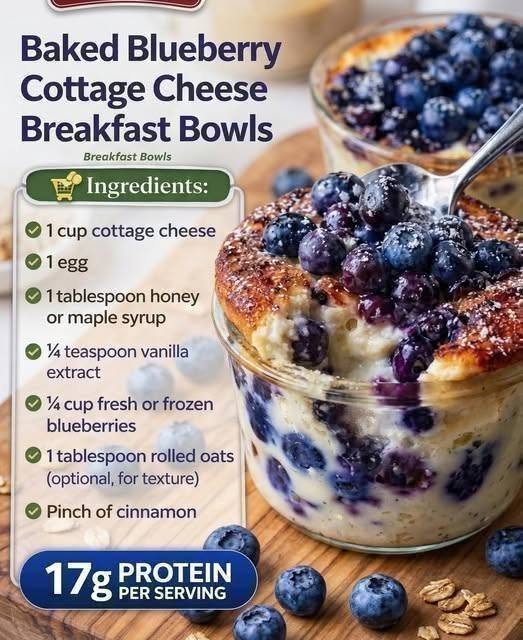
This recipe makes a creamy, high-protein breakfast with cottage cheese, egg, juicy blueberries, honey or maple syrup, vanilla, and cinnamon. It is similar to a baked cheesecake but is simple enough for everyday breakfast.
The image lists 17 g protein per serving. That is a reasonable estimate for a bowl made with the specified ingredients, although the actual amount depends on the cottage cheese brand and portion size.
1. Recipe overview
Preparation time
5–10 minutes
Baking time
25–35 minutes
Yield
1 generous serving or 2 small servings
Oven temperature
175°C / 350°F
2. Complete ingredients
The following quantities make one generous breakfast bowl.
Ingredients checklist
Cottage cheese — **1 cup (225–250 g)
Large egg — **1 egg
Honey or maple syrup — **1 tablespoon (15 ml)
Vanilla extract — **¼ teaspoon
Fresh or frozen blueberries — **¼ cup (about 35–40 g)
Rolled oats (optional) — **1 tablespoon (about 5 g)
Ground cinnamon — **1 pinch
For multiple servings, multiply every ingredient by the selected number. Use one egg per serving.
Choosing the ingredients
Cottage cheese: Full-fat gives a richer, creamier result. Low-fat cottage cheese also works. Choose a plain, unsweetened variety.
Egg: Helps bind the mixture and gives the baked bowl structure.
Blueberries: Fresh berries hold their shape well. Frozen blueberries can be used straight from the freezer.
Honey or maple syrup: Choose according to your taste. You can reduce or omit the sweetener.
Vanilla: Adds a cheesecake-like aroma.
Rolled oats: Optional, but they absorb some moisture and add texture and fiber.
Cinnamon: Balances the sweetness and complements the blueberries.
3. Step-by-step cooking instructions
Baked Blueberry Cottage Cheese Breakfast Bowl: Your New Favorite High-Protein Breakfast
Step 1 — Preheat the oven
Preheat to 175°C (350°F). Lightly grease an oven-safe ramekin or small baking dish with a little butter or neutral oil. A dish holding approximately 300–400 ml works well for one serving.
Step 2 — Mix the cottage cheese
Add the cottage cheese, egg, honey or maple syrup, and vanilla to a bowl. Whisk thoroughly until combined.
For a smooth, cheesecake-like texture, blend the mixture until creamy. If you prefer a more textured bowl, simply mash the cottage cheese with a fork and mix.
Ceramic Mixing Bowls Set – Colorful Nesting Bowls | Dowan®
Step 3 — Add the blueberries
Gently fold in most of the blueberries, reserving a few for the top. Stir in the rolled oats and cinnamon if using them.
If using frozen blueberries, add them frozen rather than thawing them first. This reduces excess liquid.
Protein Mini Cheesecakes – Never Free Farm
Step 4 — Fill the baking dish
Pour the mixture into the greased ramekin. Leave a little room at the top because the egg mixture may puff up. Scatter the reserved blueberries over the surface.
Baked Blueberry Cottage Cheese
Step 5 — Bake until set
Bake for approximately 25–35 minutes, depending on the depth of the dish and your oven.
The surface should be lightly golden and the center should no longer be liquid. Because the recipe contains egg, the center should reach 71°C (160°F) for food safety. If it browns too quickly, loosely cover the top with foil.
Baked Blueberry Cottage Cheese Bowls | Protein-Packed Morning Meal
Step 6 — Rest and serve
Let the bowl rest for 5–10 minutes. It will firm up as it cools. Add a few fresh blueberries, a light drizzle of honey, or a sprinkle of cinnamon before serving.
Texture tip: The mixture will be soft and custardy when hot. For a firmer, sliceable texture, bake a little longer while checking the center temperature. Avoid excessive baking, which can make the egg mixture rubbery.
4. Nutrition facts
The following is an estimate for one serving using approximately 1 cup cottage cheese, one large egg, one tablespoon honey, ¼ cup blueberries, and the optional tablespoon of oats.
Estimated nutrition per bowl
280–330
Calories (kcal)
25–30 g
Protein
25–35 g
Carbohydrates
8–13 g
Fat
2–4 g
Fiber
18–25 g
Total sugars
These are approximate values, not a laboratory analysis. The amount of protein depends especially on the cottage cheese. The sugar estimate includes naturally occurring dairy and fruit sugars plus the added sweetener.
The picture claims 17 g protein per serving. That may correspond to a different cottage cheese brand, a smaller serving, or a different interpretation of the recipe. For the ingredient quantities shown, check your cottage cheese nutrition label to calculate the most accurate protein total.
Key vitamins and minerals
Calcium: Cottage cheese supplies calcium for bones and teeth.
Vitamin B12: Cottage cheese and eggs provide vitamin B12, which supports normal nerve function and red blood cell formation.
Riboflavin (vitamin B2): Dairy and eggs contribute to energy metabolism.
Selenium: Eggs provide selenium, a mineral involved in normal thyroid function and antioxidant defenses.
Manganese: Blueberries and oats contribute manganese.
Vitamin K: Blueberries contribute small amounts of vitamin K.
Anthocyanins: Blueberries contain these plant pigments, which give the berries their blue-purple color and have antioxidant activity.
5. Allergen and nut information
Ingredient
Allergen or dietary note
Cottage cheese
Contains milk; unsuitable for milk allergy
Egg
Contains egg; unsuitable for egg allergy
Rolled oats
Naturally gluten-free, but cross-contamination is possible
Blueberries
No common major allergen
Honey or maple syrup
Neither is a nut; honey is not suitable for infants under 12 months
Vanilla and cinnamon
Check packaged products for any allergen warnings
Is this recipe nut-free?
The basic recipe contains no peanuts or tree nuts. Almonds, walnuts, cashews, pecans, pistachios, and other nuts are not needed.
However, if you are preparing it for someone with a diagnosed nut allergy:
Check the labels on cottage cheese, oats, vanilla extract, and any toppings.
Avoid products carrying a relevant cross-contact warning when advised to do so.
Use clean utensils, bowls, and baking dishes.
Do not add almond milk, nut butter, or chopped nuts unless they are safe for the person eating it.
The recipe is vegetarian, but it is not vegan because it contains cottage cheese and egg. It can be gluten-free when certified gluten-free oats and uncontaminated ingredients are used.
6. Variations and substitutions
404 Not Found
Higher-fiber version
Add another tablespoon of rolled oats or serve with a small portion of chia seeds. This increases fiber and may make the breakfast more filling.
Baked Blueberry Cottage Cheese Bowls – Spicesbysofiacom
Lower-added-sugar version
Omit the honey or maple syrup and use very ripe blueberries. Add vanilla and cinnamon for extra flavor without additional sweetener.
Baked Blueberry Cottage Cheese Breakfast Bowls – Fruity, Creamy & High-Protein – Lily’s Kitchen
Cheesecake-style version
Blend the cottage cheese, egg, sweetener, and vanilla until completely smooth before folding in the blueberries. This produces a finer, creamier texture.
Cottage Cheese and Egg Custard Recipe
Mixed-berry version
Replace some or all of the blueberries with raspberries or chopped strawberries. Keep the total fruit quantity similar to avoid excess moisture.
Can you make it without an oven?
Yes. An air fryer can work at approximately 160°C (320°F); start checking around 15–20 minutes, depending on the ramekin and air fryer. Always confirm that the center is fully set and reaches 71°C (160°F).
A microwave is also possible, but the result will be softer and less browned. Cook in a microwave-safe dish in short intervals until fully set, checking the center temperature.
7. Storage and meal preparation
Refrigeration: Store in a covered container in the refrigerator for up to 3–4 days.
Freezing: You can freeze individual portions, although the cottage cheese texture may become slightly grainy after thawing. Use within about 2 months for best quality.
Reheating: Microwave in short intervals until heated through, or reheat in a 160°C (320°F) oven.
Food safety: Refrigerate within two hours of cooking. Do not leave the bowl at room temperature for prolonged periods.
Meal prep: Mix the ingredients the night before and refrigerate, then bake in the morning. For the best texture, add the berries just before baking.
8. Frequently asked questions (Q&A)
Q1. Does baked cottage cheese taste like regular cottage cheese?
A little, but baking changes the texture and softens the flavor. Blending the cottage cheese first makes the result smoother and more similar to baked cheesecake.
Q2. Why is my breakfast bowl watery?
Blueberries can release juice, and cottage cheese contains moisture. Drain excess liquid if necessary, use frozen berries straight from the freezer, and add the optional oats to absorb some moisture.
Q3. Can I use Greek yogurt instead of cottage cheese?
Yes, but the texture and protein content will differ. Use thick, plain Greek yogurt and check its nutrition label. The baking time may also change.
Q4. Can I use frozen blueberries?
Absolutely. Add them without thawing. They may release more juice, so the bowl might need a few extra minutes in the oven.
Q5. Can I skip the egg?
You can experiment with an egg-free version, but the result will not set in the same way. An egg-free recipe needs a suitable binder and a different cooking method or proportions.
Q6. Is this recipe good for weight management?
It can fit into a balanced eating plan because cottage cheese and egg provide protein. Portion size, sweetener, toppings, and your overall dietary needs determine how it fits your goals.
Q7. Is it suitable for a high-protein diet?
Yes. Cottage cheese and egg are the main protein sources. To estimate the total accurately, add the protein listed on your cottage cheese label to the contribution from the egg and other ingredients.
Q8. Can I make it with low-fat cottage cheese?
Yes. Low-fat cottage cheese usually reduces the fat and calories, but the result may be less rich. Some brands have more protein per serving than others.
Q9. Why did the center stay runny?
The dish may be too deep, the oven may be running cool, or the mixture may contain extra moisture. Bake longer in short increments and verify that the center reaches 71°C (160°F).
Q10. Can I eat it cold?
Yes. Once cooked and refrigerated promptly, it can be eaten cold or reheated. The texture becomes firmer as it chills.
Q11. Can babies eat this recipe?
For babies who are developmentally ready for solid foods, a fully cooked, appropriately soft portion may be suitable depending on their individual needs. Never give honey to a child under 12 months, and ensure the texture is safe for the child’s feeding stage.
Q12. Can I use maple syrup instead of honey?
Yes. Use the same amount. Both sweeten the bowl, although their flavors differ slightly.
Q13. What should I serve with it?
Serve it alone for a simple breakfast, or pair it with whole-grain toast, plain yogurt, or extra fresh fruit for a larger meal.
Q14. Can I make several bowls at once?
Yes. Multiply the ingredients by the number of servings and divide the mixture between individual ramekins. Smaller bowls may cook faster than one large dish, so check each center for doneness.
Final recommendation
For the closest result to your image, blend the cottage cheese with the egg, honey, and vanilla until smooth. Fold in blueberries and oats, bake at 175°C (350°F) until the center reaches 71°C (160°F), and finish with a few fresh blueberries and a light drizzle of sweetener.

With years of experience in restaurant research and local SEO, Sara creates accurate, user-friendly guides that work for both people and search engines. Her goal is to help users go from search results to their nearest restaurant or menu choice with as few clicks as possible.
- Broccoli Apple Salad (No-Mayo) - October 27, 2026
- Baked Blueberry Cottage Cheese Breakfast Bowls - October 27, 2026
- Spinach, Potato & Cheese Frittata - October 27, 2026