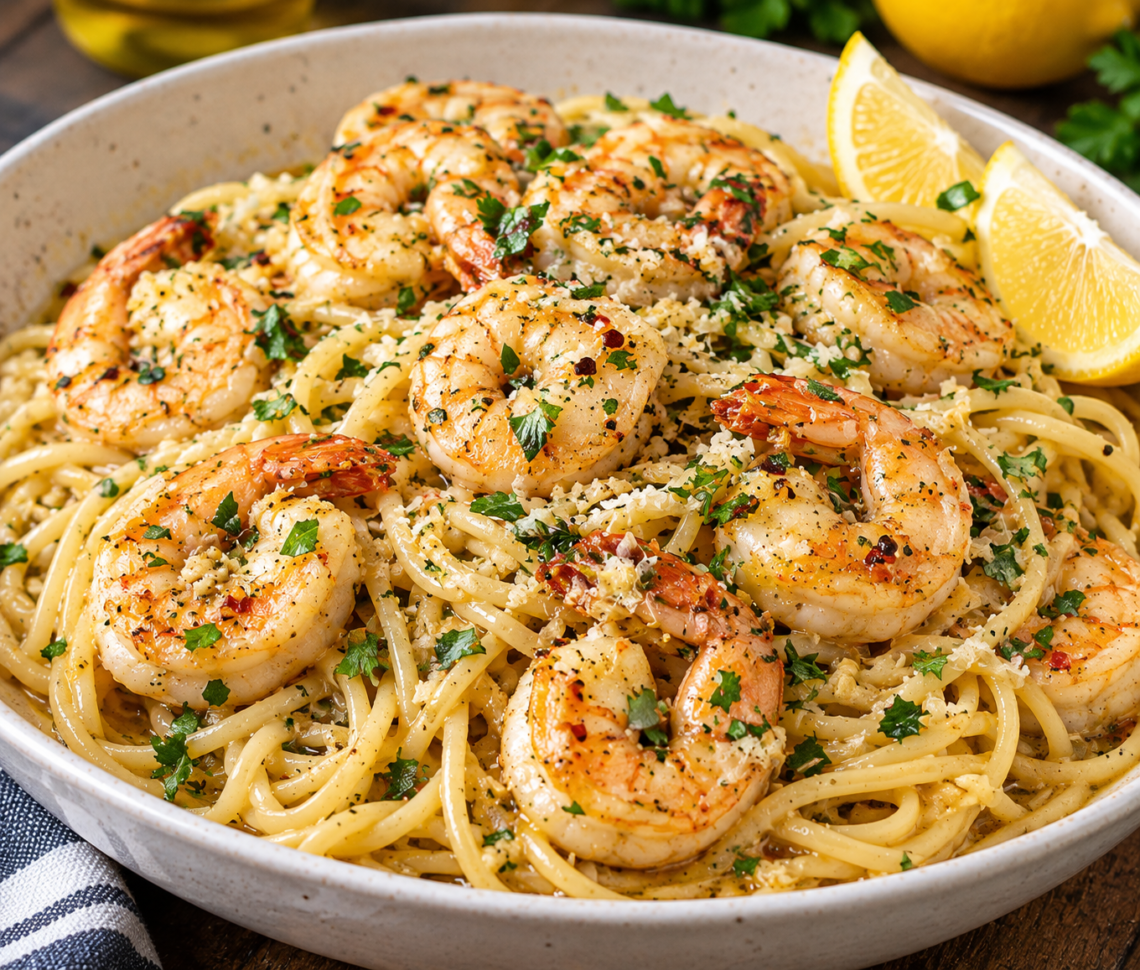
A delicious, restaurant-style pasta tossed with juicy shrimp, garlic butter, fresh lemon juice, Parmesan cheese, and a light, silky sauce. This easy dinner is full of buttery, garlicky flavor and comes together beautifully for a weeknight meal or special family dinner.
Prep Time: 15 minutes
Cook Time: 20 minutes
Total Time: 35 minutes
Servings: 4
Course: Main Course
Cuisine: Italian-American
Difficulty: Easy
Ingredients
For the shrimp and pasta
– 12 oz (340 g) linguine or spaghetti
– 1 lb (450 g) large shrimp, peeled and deveined
– 4 tablespoons unsalted butter
– 2 tablespoons olive oil
– 6 cloves garlic, finely minced
– ½ teaspoon red pepper flakes, optional
– ½ teaspoon salt, or to taste
– ½ teaspoon freshly ground black pepper
– ½ teaspoon paprika, optional
– ½ cup (120 ml) dry white wine or chicken broth
– 2 tablespoons fresh lemon juice
– 1 teaspoon lemon zest
– ½ cup (120 ml) reserved pasta cooking water, as needed
– ½ cup freshly grated Parmesan cheese
– ¼ cup chopped fresh parsley
– Lemon wedges, for serving
Optional additions
– ½ cup halved cherry tomatoes
– 2 cups fresh baby spinach
– ¼ teaspoon Italian seasoning
– Extra Parmesan cheese for garnish
Instructions
Step 1: Cook the pasta
1. Bring a large pot of water to a boil.
2. Add salt to the water, then cook the linguine or spaghetti according to the package instructions until al dente.
3. Before draining, reserve about 1 cup of pasta water.
4. Drain the pasta and set it aside. Do not rinse it, as the starch helps the sauce cling to the noodles.
Step 2: Prepare the shrimp
1. Pat the shrimp dry with paper towels.
2. Season with salt, black pepper, and paprika if using.
3. Make sure the shrimp are peeled and deveined before cooking.
Step 3: Sauté the shrimp
1. Heat the olive oil and 2 tablespoons of butter in a large skillet over medium-high heat.
2. Add the shrimp in a single layer.
3. Cook for approximately 1–2 minutes per side, depending on their size, until they turn pink and opaque.
4. Transfer the shrimp to a plate. Avoid overcooking, as they will warm through again in the sauce.
Step 4: Make the garlic butter sauce
1. Reduce the heat to medium.
2. Add the remaining 2 tablespoons of butter to the same skillet.
3. Stir in the minced garlic and red pepper flakes, if using.
4. Cook for 30–60 seconds until fragrant, taking care not to burn the garlic.
5. Pour in the white wine or chicken broth.
6. Add the lemon juice and lemon zest.
7. Simmer for 2–3 minutes, allowing the liquid to reduce slightly.
Step 5: Combine the pasta and sauce
1. Add the drained pasta to the skillet.
2. Toss thoroughly to coat the noodles in the garlic butter sauce.
3. Add a splash of reserved pasta water as needed to create a glossy sauce.
4. Stir in the Parmesan cheese until it begins to melt into the sauce.
5. Add the chopped parsley and optional spinach or cherry tomatoes.
Step 6: Add the shrimp
1. Return the cooked shrimp to the skillet.
2. Toss gently with the pasta for 1–2 minutes, until everything is hot.
3. Taste and adjust the seasoning with additional salt, pepper, lemon juice, or red pepper flakes.
4. Remove from the heat and serve immediately.
Serving Suggestions
Serve this shrimp scampi pasta with:
– Garlic bread or crusty bread
– A fresh green salad with lemon vinaigrette
– Roasted asparagus or broccoli
– Steamed green beans
– Extra grated Parmesan and fresh lemon wedges
Tips for the Best Shrimp Scampi Pasta
– Use fresh garlic for the best flavor.
– Avoid overcooking the shrimp; they should be tender, not rubbery.
– Reserve pasta water to help emulsify the sauce and coat the noodles.
– Add Parmesan gradually and stir well for a smoother finish.
– Use chicken broth instead of wine for an alcohol-free version.
– Add lemon juice a little at a time so the sauce stays balanced.
– For extra richness, swirl in a small piece of butter just before serving.
Storage and Reheating
Refrigeration: Store leftovers in an airtight container in the refrigerator for up to 3 days.
Reheating: Warm gently in a skillet over low heat with 1–2 tablespoons of water or broth. Stir carefully and heat until the shrimp and pasta reach 165°F (74°C). Avoid prolonged heating, which can make the shrimp tough.
Freezing: Freezing is not recommended for the best texture, as the shrimp may become rubbery and the sauce may separate.
Make-Ahead Advice
You can peel and devein the shrimp, mince the garlic, chop the parsley, and measure the ingredients in advance. Cook the pasta and shrimp shortly before serving for the best texture and flavor.
Nutrition Information
Estimated nutrition per serving, assuming 4 servings and the ingredients listed above:
– Calories: 550–650 kcal
– Protein: 32–40 g
– Total fat: 20–28 g
– Saturated fat: 9–12 g
– Carbohydrates: 55–70 g
– Dietary fiber: 2–4 g
– Total sugars: 2–4 g
– Sodium: 650–950 mg
– Cholesterol: 190–250 mg
Nutrition values are estimates and will vary with the pasta brand, shrimp size, Parmesan quantity, and amount of salt used.
Nutrition Notes
– Protein: Shrimp provides lean protein.
– Carbohydrates: Most carbohydrates come from the pasta.
– Fat: Butter, olive oil, and Parmesan provide most of the fat.
– Sodium: Broth, cheese, and added salt can raise sodium levels.
– Allergens: Contains shellfish, wheat, and milk. Wine or broth ingredients may introduce additional allergens depending on the product.
Frequently Asked Questions
1. Can I use frozen shrimp?
Yes. Thaw them in the refrigerator overnight or under cold running water in a sealed bag, then pat dry before cooking.
2. What pasta works best?
Linguine and spaghetti are traditional choices. Fettuccine, angel hair, or bucatini also work well.
3. Can I make shrimp scampi without wine?
Absolutely. Use chicken broth or seafood stock instead.
4. Can I make the sauce creamy?
Yes. Add ¼ cup of heavy cream after the broth reduces, then simmer gently before adding the pasta and Parmesan.
5. Why is my sauce watery?
Allow the broth to reduce slightly and add reserved pasta water gradually. Tossing the pasta in the skillet helps the sauce cling to the noodles.
6. Can I add vegetables?
Yes. Spinach, cherry tomatoes, asparagus, and zucchini are excellent additions. Cook firmer vegetables before adding the shrimp.
7. How do I prevent rubbery shrimp?
Cook them only until pink and opaque, then return them to the skillet briefly at the end.
8. Is Parmesan traditional in shrimp scampi?
Some Italian-American versions include Parmesan, while more traditional preparations often emphasize garlic, butter, olive oil, lemon, and parsley. Add it according to your taste.
9. Can I make it spicy?https://thedeltacosmenu.us/wp-admin/media-upload.php?post_id=8098&type=image&TB_iframe=1
Increase the red pepper flakes or add a pinch of cayenne pepper.
10. Can I prepare this recipe for a dinner party?
Prepare the ingredients ahead of time, but cook and combine everything shortly before serving so the shrimp remain tender and the pasta stays glossy.
11. Can I use pre-cooked shrimp?
Yes, but add them only at the end and heat briefly to avoid overcooking.
12. How do I know shrimp are safely cooked?
Shrimp should turn pearly and opaque. For a temperature-based check, the FDA recommends cooking seafood to an internal temperature of 145°F (63°C).
Final Recipe Notes
Shrimp Scampi Pasta is a simple yet elegant meal featuring tender shrimp, fragrant garlic butter, fresh lemon, and perfectly cooked pasta. For the best results, prepare the sauce while the pasta cooks and serve everything immediately with fresh parsley, lemon wedges, and a generous sprinkle of Parmesan.

With years of experience in restaurant research and local SEO, Sara creates accurate, user-friendly guides that work for both people and search engines. Her goal is to help users go from search results to their nearest restaurant or menu choice with as few clicks as possible.
- Grandma’s Cream Puffs – Light, Crisp & Creamy - October 17, 2026
- Easy Crockpot Creamy Garlic Parmesan Chicken - October 17, 2026
- Garlic Herb Roasted Potatoes - October 17, 2026