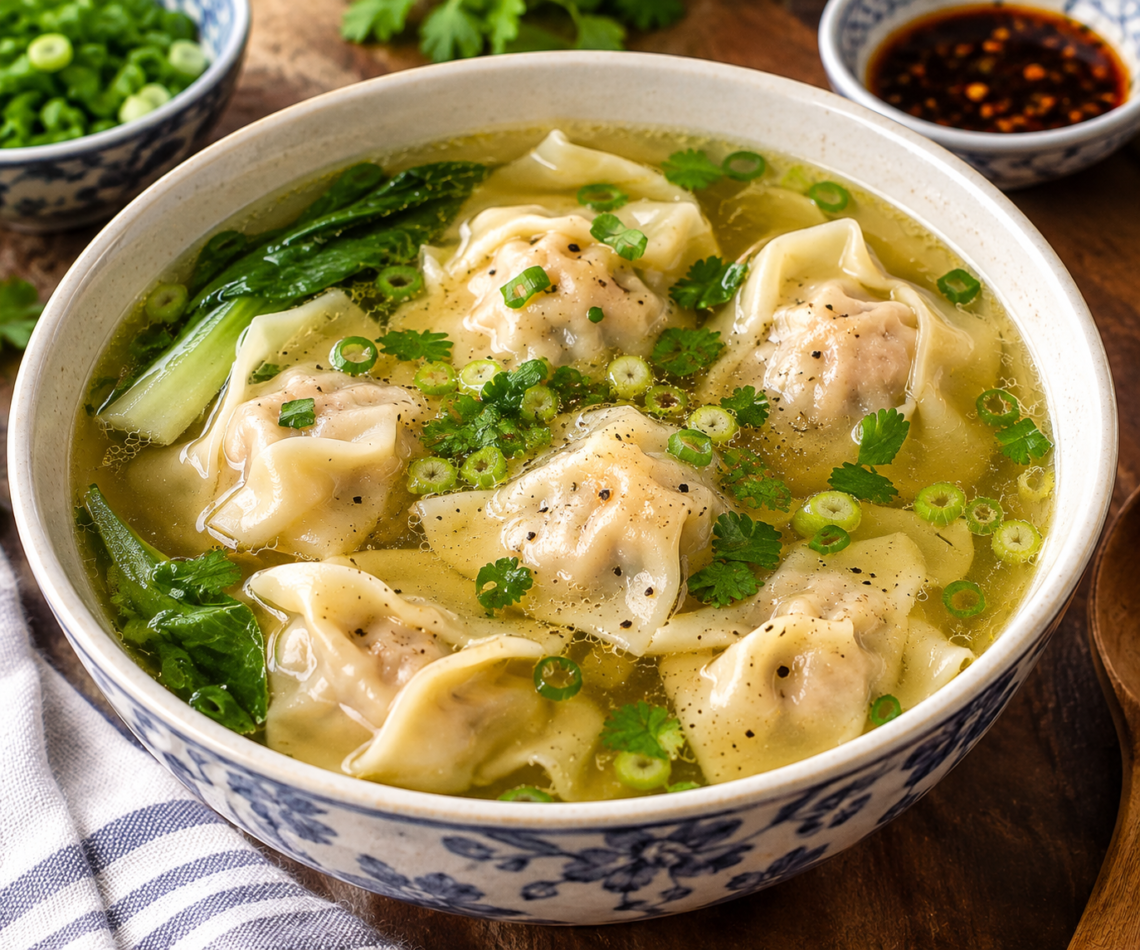
Homemade Wonton Soup is a comforting Chinese-inspired dish featuring tender wonton dumplings filled with savory ground pork or chicken, fresh ginger, garlic, and green onions. The dumplings simmer in a fragrant broth flavored with soy sauce and sesame oil, creating a warm, delicious soup that is perfect for lunch, dinner, or a cozy family meal.
This homemade version includes step-by-step instructions for making the wonton filling, folding the wrappers, preparing the flavorful broth, and cooking everything to perfection. It also includes nutrition information, serving suggestions, storage instructions, and frequently asked questions.
Prep Time: 35 minutes
Cook Time: 20 minutes
Total Time: 55 minutes
Servings: 4–6
Cuisine: Chinese-inspired
Course: Soup, Lunch, Dinner
Difficulty: Moderate
Ingredients
For the wontons:
– 1 pound (450 g) ground pork or ground chicken
– 30–35 square wonton wrappers
– 2 tablespoons finely chopped green onions
– 1 tablespoon freshly grated ginger
– 2 cloves garlic, finely minced
– 1 tablespoon soy sauce
– 1 teaspoon sesame oil
– 1 teaspoon cornstarch
– ½ teaspoon salt, or to taste
– ¼ teaspoon ground white pepper or black pepper
– 1 teaspoon rice vinegar, optional
For the soup broth:
– 8 cups (1.9 liters) chicken broth or chicken stock
– 2 cups water, if needed to adjust the broth
– 2 cloves garlic, lightly crushed or minced
– 1 tablespoon freshly grated ginger
– 2 tablespoons soy sauce
– 1 teaspoon sesame oil
– 1 teaspoon rice vinegar, optional
– ½ teaspoon white pepper, or to taste
– Salt, as needed
– 2 green onions, thinly sliced
– 1 cup thinly sliced bok choy or baby spinach, optional
– 1 teaspoon chili oil, optional, for serving
Optional garnishes:
– Additional sliced green onions
– Fresh cilantro
– A few drops of sesame oil
– Chili crisp or chili oil
– Thinly sliced mushrooms
– A pinch of white pepper
Equipment Needed
– Large mixing bowl
– Small bowl of water for sealing wrappers
– Large pot or Dutch oven
– Slotted spoon
– Cutting board and knife
– Measuring cups and spoons
Instructions
Step 1: Prepare the wonton filling
Place the ground pork or chicken in a large mixing bowl. Add the chopped green onions, grated ginger, minced garlic, soy sauce, sesame oil, cornstarch, salt, white pepper, and optional rice vinegar.
Mix everything thoroughly with a spoon or clean hands until the ingredients are evenly distributed and the filling becomes slightly sticky. This helps the filling hold together inside the wonton wrappers.
Avoid adding too much liquid to the mixture because a watery filling can make the wrappers difficult to seal.
Cover the bowl and refrigerate the filling for 10–15 minutes while you prepare your workspace. Keeping the filling chilled makes the wontons easier to assemble.
Step 2: Set up the wonton wrappers
Place the wonton wrappers on a clean, dry surface. Keep unused wrappers covered with a slightly damp kitchen towel so they do not dry out.
Place a small bowl of water nearby for sealing the edges.
Separate the wrappers carefully to prevent tearing. If they stick together, gently peel them apart rather than pulling forcefully.
Step 3: Fill the wontons
Place one wonton wrapper on your work surface. Keep it square-shaped, or position it like a diamond if that makes folding easier.
Add approximately 1 teaspoon of filling to the center of the wrapper. Do not overfill it, because too much filling can cause the wrapper to open while cooking.
Dip your fingertip into the water and lightly moisten two adjoining edges of the wrapper.
Fold the wrapper in half diagonally to form a triangle. Press the edges firmly together, gently pushing out any trapped air.
For a traditional folded shape, bring the two bottom corners of the triangle together, overlap them slightly, and seal them with a little water.
Repeat until all the filling is used. Place the finished wontons on a lightly floured tray, leaving a little space between them.
Step 4: Prepare the aromatic broth
Place a large pot over medium heat and pour in the chicken broth. Add the grated ginger, garlic, soy sauce, and white pepper.
Bring the broth to a gentle boil, then reduce the heat and let it simmer for 8–10 minutes. This allows the ginger and garlic to infuse the broth with a warm, savory flavor.
Taste the broth and adjust the seasoning with additional soy sauce or salt as needed. If the broth tastes too strong, add some water.
Stir in the sesame oil and optional rice vinegar near the end of simmering. Keep the broth hot while you cook the wontons.
Step 5: Cook the wontons
Bring a separate large pot of water to a gentle boil. Cooking the wontons separately helps keep the broth clear and prevents excess flour from thickening it.
Carefully lower the wontons into the simmering water in small batches. Stir gently once to prevent them from sticking to the bottom of the pot.
Cook for approximately 4–6 minutes, depending on the size of the wontons and the filling. Follow the wrapper package instructions when available.
The wrappers should look tender and slightly translucent. Because the filling contains raw meat, check that the center reaches a safe internal temperature of 165°F (74°C) for ground chicken or pork.
Remove the cooked wontons with a slotted spoon and transfer them carefully to a plate.
Step 6: Add vegetables to the broth
Add the sliced bok choy or baby spinach to the hot broth, if using.
Simmer for 1–3 minutes, just until the greens become tender but retain some color and texture.
If you are adding mushrooms, allow a few extra minutes for them to soften.
Taste the broth one final time and adjust the seasoning as needed.
Step 7: Assemble the soup
Divide the cooked wontons among four to six serving bowls.
Ladle the hot broth over the wontons, distributing the vegetables evenly.
Top each bowl with sliced green onions and fresh cilantro, if desired. Add a few drops of sesame oil or chili oil for extra flavor.
Serve immediately while the wontons are tender and the broth is steaming hot.
Tips for the Best Homemade Wonton Soup
– Do not overfill the wrappers. A teaspoon of filling is generally enough for standard wonton wrappers.
– Seal the edges carefully. Any gaps may allow the filling to escape during cooking.
– Keep the wrappers covered. Dry wrappers are more likely to crack when folded.
– Use a gentle simmer. A vigorous boil can break delicate wontons apart.
– Cook wontons separately. This keeps the broth cleaner and lets you control the cooking time more easily.
– Taste before adding salt. Soy sauce and prepared chicken broth may already contain plenty of sodium.
– Make extra wontons. Uncooked wontons freeze well and make a convenient future meal.
– Use fresh aromatics. Fresh ginger, garlic, and green onions give the broth a brighter flavor.
Variations
Chicken Wonton Soup
Replace the ground pork with ground chicken. Add finely chopped mushrooms for extra savory flavor, and make sure the filling reaches 165°F (74°C).
Shrimp Wonton Soup
Use finely chopped raw shrimp as the filling, alone or mixed with ground chicken. Chop the shrimp into small pieces so the filling holds together. Cook until the shrimp is opaque and reaches 145°F (63°C).
Vegetarian Wonton Soup
Replace the meat with finely chopped mushrooms, crumbled firm tofu, shredded cabbage, carrots, and green onions. Season with soy sauce, ginger, garlic, and a little sesame oil. Use vegetable broth instead of chicken broth.
Spicy Wonton Soup
Add chili oil, chili crisp, or a small amount of chili paste to each serving bowl. Adjust the quantity according to your preferred spice level.
Low-Sodium Wonton Soup
Choose reduced-sodium broth and reduced-sodium soy sauce. Add extra ginger, garlic, green onions, and fresh herbs for flavor without relying on additional salt.
Nutritional Information
Estimated values per serving, based on 6 servings using ground pork, standard wonton wrappers, and regular chicken broth. Actual values vary with ingredients and portion sizes.
Nutrient Approximate amount
Calories 300–360 kcal
Protein 17–23 g
Total fat 12–18 g
Saturated fat 3–5 g
Carbohydrates 27–35 g
Fiber 1–2 g
Total sugars 2–4 g
Sodium 800–1,300 mg
Cholesterol 40–65 mg
Nutrition notes:
– Protein: Ground pork or chicken provides protein that supports muscle maintenance and normal body functions.
– Carbohydrates: Most carbohydrates come from the wonton wrappers.
– Fat: Sesame oil and the meat contribute most of the fat.
– Fiber: Adding bok choy, spinach, cabbage, or mushrooms can increase the fiber content.
– Sodium: The broth and soy sauce are the main sodium sources. Reduced-sodium products can help lower the total.
– Sugar: The recipe contains little naturally occurring sugar, although packaged wrappers and broth can vary.
Allergen Information
– Wheat/gluten: Standard wonton wrappers generally contain wheat. Soy sauce may also contain wheat; use suitable gluten-free alternatives if needed.
– Soy: Regular soy sauce contains soy.
– Sesame: Sesame oil is a sesame allergen.
– Egg: Some wonton wrappers contain egg. Check the package label.
– Other cross-contact: Check packaged broth, wrappers, and seasonings for allergen statements.
This recipe does not intentionally require peanuts or tree nuts. However, packaged ingredients may have cross-contact warnings, so check labels carefully if cooking for someone with a serious allergy.
Serving Suggestions
Serve homemade wonton soup as a satisfying meal or as a starter alongside:
– Steamed jasmine rice
– Vegetable stir-fry
– Steamed or roasted broccoli
– Cucumber salad with rice vinegar
– Garlic green beans
– Chinese-style sautéed bok choy
– Spring rolls or dumplings
For a more filling main course, add extra vegetables or serve with a small bowl of rice.
Storage Instructions
Refrigerator:
Store leftover broth and cooked wontons in separate airtight containers when possible. Refrigerate within two hours of cooking and use within 3–4 days. Reheat the broth until steaming hot and heat the wontons thoroughly before serving.
Freezer:
Freeze uncooked wontons in a single layer on a baking tray until firm. Transfer them to a freezer-safe container or bag and label with the date. For best quality, use within 2–3 months.
Cook frozen wontons directly from frozen without thawing, allowing additional cooking time and checking that the filling reaches a safe internal temperature.
Freezing cooked wontons is possible, but their wrappers may become softer after thawing and reheating. The broth can also be frozen separately.
Reheating:
Warm the broth in a saucepan over medium heat. Add refrigerated cooked wontons near the end and heat until thoroughly hot. Avoid prolonged boiling, which can make the wrappers fall apart.
Frequently Asked Questions
Q1: Can I make wontons ahead of time?
Yes. Assemble the wontons up to one day ahead and refrigerate them in a covered container, provided they are kept cold and handled safely. For longer storage, freeze them uncooked.
Q2: Can I use store-bought wonton wrappers?
Absolutely. Store-bought wrappers save time and work very well. Check the package for folding instructions and any egg or wheat allergens.
Q3: Why are my wontons falling apart?
They may be overfilled, poorly sealed, or cooked at too vigorous a boil. Use less filling, press the edges firmly together, remove trapped air, and cook at a gentle simmer.
Q4: Can I use vegetable broth instead of chicken broth?
Yes. Vegetable broth works well, particularly with vegetable, tofu, or mushroom wontons. Add ginger, garlic, and green onions to build a deeper flavor.
Q5: How do I make the broth more flavorful?
Simmer it with fresh ginger, garlic, green onions, and good-quality stock. A small amount of soy sauce and sesame oil adds depth. Taste before adding more salt.
Q6: Can I make this soup gluten-free?
Yes, with appropriate substitutions. Use certified gluten-free wrappers if available, gluten-free tamari, and broth verified to be gluten-free. Check all ingredient labels carefully.
Q7: Is wonton soup healthy?
It can be part of a balanced diet. It provides protein, fluid, and, when vegetables are added, vitamins and minerals. Sodium and calorie content depend on the broth, filling, wrapper size, and portion.
Q8: Can I make wonton soup without sesame oil?
Yes. Leave it out if you dislike the flavor or need to avoid sesame. A small amount of neutral cooking oil can be used in the filling, although the finished flavor will be different.
Q9: How many wontons should I serve per person?
For a starter, approximately 4–5 wontons per person is a reasonable portion. For a main meal, serve around 6–8, depending on their size and whether you include vegetables or other sides.
Q10: Can I cook the wontons directly in the soup broth?
Yes, but cooking them separately generally keeps the broth clearer. If cooking them directly in the broth, avoid overcrowding the pot and maintain a gentle simmer. The broth may become slightly cloudy.
Q11: How can I make this soup spicier?
Add chili oil, chili crisp, or chili paste to individual bowls. This allows everyone to choose their preferred heat level.
Q12: Can I use frozen wontons?
Yes. Add frozen uncooked wontons directly to gently boiling water and cook until the wrappers are tender and the filling is fully cooked. Follow the package directions when using commercially prepared frozen wontons.
Final Recipe Notes
Homemade Wonton Soup is a delicious combination of tender dumplings, aromatic broth, and fresh garnishes. The key to a great result is a well-seasoned filling, carefully sealed wrappers, and a gentle cooking method that keeps the dumplings intact.
For the best flavor, prepare the broth with fresh ginger and garlic, cook the wontons separately, and assemble each bowl just before serving. This simple technique creates a comforting, restaurant-inspired soup that you can customize with chicken, pork, shrimp, or vegetables.
Do you like this personality?

With years of experience in restaurant research and local SEO, Sara creates accurate, user-friendly guides that work for both people and search engines. Her goal is to help users go from search results to their nearest restaurant or menu choice with as few clicks as possible.
- Grandma’s Cream Puffs – Light, Crisp & Creamy - October 17, 2026
- Easy Crockpot Creamy Garlic Parmesan Chicken - October 17, 2026
- Garlic Herb Roasted Potatoes - October 17, 2026