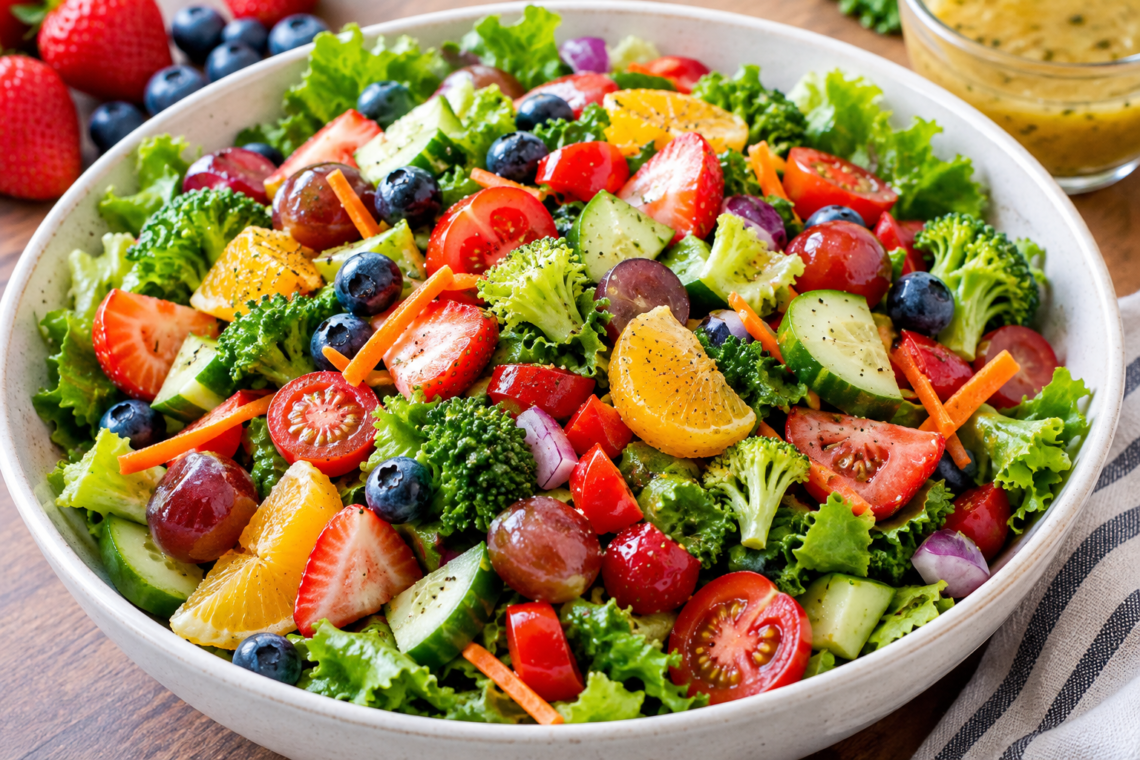
A fresh, colorful, and refreshing Fruits & Vegetable Salad made with crisp vegetables, juicy seasonal fruits, and a light, tangy homemade dressing. This healthy salad combines natural sweetness, crunch, and vibrant flavors, making it perfect for breakfast, lunch, dinner, picnics, or a nutritious snack. It is easy to customize with your favorite fruits and vegetables.
Servings: 4 Prep Time: 20 minutes Cook Time: 0 minutes Total Time: 20 minutes Course: Salad, Side Dish Cuisine: International Diet: Vegetarian, Gluten-Free, Egg-Free Difficulty: Easy
Ingredients
For the salad
1 medium apple, cored and diced
1 cup pineapple chunks, fresh
1 cup seedless grapes, halved
1 medium orange, peeled and segmented
1 medium cucumber, diced
1 medium carrot, peeled and grated
1 cup cherry tomatoes, halved
1 cup lettuce or mixed salad greens, chopped
1/2 medium red bell pepper, diced
1/4 small red onion, thinly sliced (optional)
1/2 cup sweet corn kernels, cooked and cooled
1/2 cup strawberries, sliced (optional)
2 tablespoons fresh parsley or mint, chopped
For the creamy, tangy dressing
1/3 cup plain Greek yogurt
1 tablespoon fresh lemon juice
1 teaspoon honey (optional)
1 teaspoon extra-virgin olive oil
1/4 teaspoon salt, or to taste
1/8 teaspoon black pepper
1/4 teaspoon chaat masala (optional)
1–2 teaspoons cold water, if needed to thin the dressing
Optional toppings
2 tablespoons chopped walnuts or almonds
1 tablespoon sunflower or pumpkin seeds
1 tablespoon raisins or dried cranberries
A few fresh mint leaves
Note: Nuts and seeds are optional. Omit them if you have a nut allergy, and check packaged ingredients for possible cross-contact.
Equipment Needed
Large salad bowl
Small bowl for dressing
Sharp knife and cutting board
Vegetable peeler or grater
Whisk or fork
Salad servers or two large spoons
Instructions
Step 1: Wash and prepare the produce
Wash all fruits and vegetables thoroughly under clean running water. Dry the lettuce, grapes, tomatoes, and other produce with a clean towel or salad spinner.
Peel the carrot and orange. Core the apple and cut it into small, bite-sized cubes. Dice the cucumber and bell pepper, halve the grapes and cherry tomatoes, and slice the strawberries if using them.
Step 2: Prepare the vegetables
Chop the lettuce into bite-sized pieces. Grate the carrot and thinly slice the red onion, if using.
Make sure the corn is fully cooked and cooled before adding it. If using canned corn, drain and rinse it well.
Step 3: Prepare the fruits
Cut the pineapple into small chunks and separate the orange into segments. Keep the fruit pieces similar in size so every serving contains a balanced mixture of flavors.
For a fresher appearance, toss the diced apple with a little lemon juice to help prevent browning.
Step 4: Make the dressing
In a small bowl, combine the Greek yogurt, lemon juice, honey, olive oil, salt, black pepper, and optional chaat masala.
Whisk until smooth and creamy. Add 1–2 teaspoons of cold water if the dressing is too thick. Taste and adjust the lemon juice, salt, or sweetness as desired.
For a lighter, dairy-free dressing, replace the yogurt with 2 tablespoons olive oil, 1–2 tablespoons lemon juice, and 1 teaspoon honey or another sweetener if desired.
Step 5: Combine the salad
Add the lettuce, cucumber, carrot, bell pepper, tomatoes, red onion, and corn to a large salad bowl.
Add the apple, pineapple, grapes, orange segments, and strawberries. Toss gently so the fruit stays intact and the ingredients are evenly distributed.
Step 6: Add the dressing
Pour the dressing over the salad shortly before serving. Toss gently until the fruits and vegetables are lightly coated.
Avoid adding too much dressing at once. Start with about half, taste, and add more as needed.
Step 7: Add the toppings
Sprinkle the chopped walnuts or almonds, seeds, raisins, or dried cranberries over the salad if desired. Garnish with fresh parsley or mint.
Step 8: Serve fresh
Serve immediately while the vegetables are crisp and the fruits are juicy. For the best texture, keep the dressing separate until just before serving.
Helpful Tips for the Best Fruits & Vegetable Salad
Choose ripe but firm fruits to keep the salad from becoming mushy.
Use seasonal produce for better flavor and variety.
Balance sweet fruits with crisp vegetables and a tangy dressing.
Cut ingredients into similar-sized pieces for easier serving.
Add delicate fruits, such as strawberries, toward the end.
Keep the dressing separate if preparing the salad ahead.
For a savory flavor, add a small pinch of chaat masala.
For extra protein, add chickpeas, grilled chicken, or a little cottage cheese.
For a vegan version, use dairy-free yogurt and maple syrup instead of honey.
For a lower-sugar version, reduce the pineapple and grapes and use more cucumber, lettuce, and bell pepper.
Nutritional Information
The following nutrition values are estimates for one serving, assuming the recipe makes 4 servings and includes the Greek yogurt dressing but excludes optional nuts, seeds, and dried fruit.
Nutrient
Approx. amount per serving
Calories
150–180 kcal
Protein
4–6 g
Total carbohydrates
27–32 g
Dietary fiber
4–6 g
Total sugars
19–24 g
Added sugars
0–3 g
Total fat
3–5 g
Saturated fat
1–2 g
Cholesterol
2–5 mg
Sodium
180–300 mg
Potassium
400–550 mg
Vitamin C
50–90 mg
Calcium
60–100 mg
Iron
0.8–1.5 mg
Actual nutrition varies according to the size and ripeness of the fruit, the yogurt used, the amount of dressing, and the optional toppings. Adding nuts or seeds will increase the calories, protein, and fat.
Allergen Information
Dairy: Contains Greek yogurt. Use dairy-free yogurt if avoiding dairy.
Tree nuts: Only present if walnuts or almonds are added.
Seeds: Optional sunflower or pumpkin seeds.
Gluten: Naturally gluten-free when all packaged ingredients are verified.
Eggs: No eggs are included in the basic recipe.
Honey: Optional; replace with maple syrup for a vegan version.
Food Safety and Storage
Refrigerate cut fruits and vegetables promptly.
Store leftover salad in an airtight container in the refrigerator and preferably eat within 24 hours for the best texture.
Store dressing separately for up to 3 days if freshly prepared and kept refrigerated.
Discard salad that has been left at room temperature for more than 2 hours, or more than 1 hour in temperatures above 32°C (90°F).
Do not freeze this salad, as the fruits and vegetables will lose their fresh texture.
Frequently Asked Questions (Q&A)
Q1: Can I prepare Fruits & Vegetable Salad ahead of time?
Yes. Wash and chop the ingredients several hours ahead and refrigerate them in an airtight container. Keep the dressing separate and combine everything just before serving.
Q2: Which fruits work best in this salad?
Apples, grapes, oranges, pineapple, strawberries, pears, kiwi, and pomegranate seeds all work well. Choose firm, fresh fruits for the best texture.
Q3: Can I make this salad without yogurt?
Yes. Use a simple dressing made with lemon juice, olive oil, a little honey or maple syrup, salt, and black pepper.
Q4: Is Fruits & Vegetable Salad healthy?
It can be a nutritious choice because it provides fiber, vitamins, minerals, and water. The nutritional value depends on the ingredients and portion size. Adding a protein source can make it more filling.
Q5: Is this salad suitable for weight management?
It can fit into a balanced weight-management plan. Use plenty of non-starchy vegetables, moderate portions of fruit, and a measured amount of dressing and toppings.
Q6: Is this salad suitable for people with diabetes?
It may fit into an individualized diabetes meal plan, but fruit carbohydrates still count. Consider smaller portions of higher-sugar fruits, skip the honey, use an unsweetened dressing, and monitor the total carbohydrate content. Individual needs vary.
Q7: Can I make it vegan?
Yes. Use unsweetened plant-based yogurt or a lemon-olive oil dressing and replace honey with maple syrup or omit the sweetener.
Q8: How can I prevent apples from turning brown?
Toss the apple pieces with a teaspoon of lemon juice immediately after cutting. This helps slow oxidation.
Q9: Can I add protein to the salad?
Yes. Chickpeas, cooked lentils, grilled chicken, tofu, cottage cheese, or plain Greek yogurt dressing can add protein.
Q10: Can I use frozen fruit?
Fresh fruit is best for a crisp salad. Thawed frozen fruit tends to release excess liquid, but it can be used if drained well and added just before serving.
Q11: What can I use instead of lettuce?
Try baby spinach, shredded cabbage, kale, or mixed salad greens. Choose greens that hold their texture when tossed.
Q12: Why does the salad become watery?
Juicy fruits and vegetables release moisture after cutting, particularly when salted or dressed. Drain wet ingredients if needed and add the dressing just before serving.
Q13: Can I make it without onion?
Absolutely. The onion is optional. Fresh mint, parsley, or a little extra bell pepper can add flavor without it.
Q14: What should I serve with this salad?
It pairs well with grilled chicken, baked fish, roasted vegetables, sandwiches, wraps, rice dishes, or a light soup.
Q15: Can children eat this salad?
Yes, with age-appropriate preparation. Cut grapes and cherry tomatoes lengthwise into quarters for young children, and cut firm fruits into safe, manageable pieces. Avoid whole nuts for young children because they are a choking hazard.
Serving Suggestions
Serve this colorful salad in a chilled glass bowl or on individual plates. Garnish with fresh mint, a light sprinkle of seeds, and a small amount of dressing. It works well as a refreshing side dish for family meals, summer gatherings, picnics, and potlucks.
Recipe Summary
This Fruits & Vegetable Salad is a quick, refreshing combination of seasonal fruit, crunchy vegetables, and creamy lemon-yogurt dressing. It is easy to customize, naturally colorful, and suitable for many occasions. Prepare it fresh, keep the dressing light, and enjoy a delicious balance of sweet, tangy, and crisp flavors.

Sara Mitchell is an expert restaurant content creator who writes easy-to-read guides about CAVA and other Mediterranean fast-casual chains in the United States. She covers locations, menus, prices, and hours, making it simple for visitors to find nearby restaurants and what to order quickly.
With years of experience in restaurant research and local SEO, Sara creates accurate, user-friendly guides that work for both people and search engines. Her goal is to help users go from search results to their nearest restaurant or menu choice with as few clicks as possible.
With years of experience in restaurant research and local SEO, Sara creates accurate, user-friendly guides that work for both people and search engines. Her goal is to help users go from search results to their nearest restaurant or menu choice with as few clicks as possible.
Latest posts by Sara Mitchell (see all)
- Grandma’s Cream Puffs – Light, Crisp & Creamy - October 17, 2026
- Easy Crockpot Creamy Garlic Parmesan Chicken - October 17, 2026
- Garlic Herb Roasted Potatoes - October 17, 2026