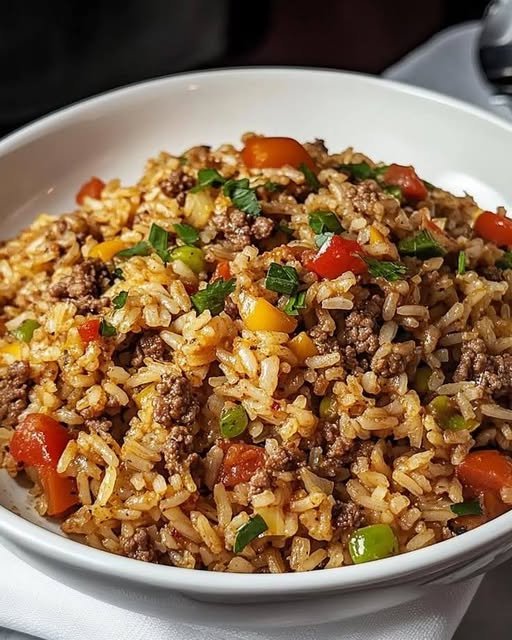
A quick, savory fried rice made with tender ground beef, fluffy rice, colorful vegetables, scrambled egg, garlic, ginger, and a delicious soy-based sauce. It’s an easy one-pan meal and a great way to use leftover rice.
Ingredients
Beef & Rice
1 lb lean ground beef
4 cups cooked and chilled white rice, preferably day-old
2 tablespoons vegetable oil, divided
2 large eggs, lightly beaten
3 cloves garlic, minced
1 teaspoon fresh ginger, grated
1 cup frozen peas and carrots
1/2 cup diced onion
1/2 cup diced red bell pepper
3 green onions, sliced
Sauce
3 tablespoons low-sodium soy sauce
1 tablespoon oyster sauce
1 teaspoon toasted sesame oil
1 teaspoon rice vinegar
1/2 teaspoon black pepper
1/2 teaspoon sugar, optional
1/4 teaspoon red pepper flakes, optional
Instructions
1. Prepare the Rice
For the best fried rice, use cold cooked rice.
If making rice specifically for this recipe, cook it according to the package directions, spread it on a baking sheet, and refrigerate it until completely chilled.
Cold rice fries much better and is less likely to become mushy.
2. Make the Sauce
In a small bowl, combine:
Soy sauce
Oyster sauce
Sesame oil
Rice vinegar
Black pepper
Sugar
Red pepper flakes
Mix well and set aside.
3. Cook the Eggs
Heat 1 teaspoon of vegetable oil in a large wok or skillet over medium-high heat.
Pour in the beaten eggs.
Cook for about 30–60 seconds, gently scrambling until just set.
Transfer the eggs to a plate and set aside.
4. Brown the Beef
Add another teaspoon of oil to the same wok.
Add the ground beef.
Cook for approximately 5–7 minutes, breaking it apart with a spatula, until browned and cooked through.
Drain excess grease if necessary.
5. Add Aromatics
Add the diced onion, minced garlic, and grated ginger.
Stir-fry for approximately 1–2 minutes, until fragrant and the onion begins to soften.
6. Add the Vegetables
Add the peas and carrots and diced bell pepper.
Cook for approximately 2–3 minutes.
The vegetables should remain slightly crisp.
7. Add the Rice
Increase the heat to medium-high.
Add the cold cooked rice.
Use your spatula to break up any large clumps.
Stir-fry everything for approximately 3–5 minutes, tossing frequently.
Allow some of the rice to sit against the hot pan briefly so it develops a lightly toasted flavor.
8. Add the Sauce
Pour the prepared sauce around the edges of the hot pan.
Toss everything together until the rice is evenly coated.
9. Add the Egg and Green Onion
Return the scrambled egg to the pan.
Add most of the sliced green onions.
Toss everything together for another 1–2 minutes.
10. Finish and Serve
Taste and adjust the seasoning if needed.
Top with the remaining green onions and serve hot.
Serving Suggestions
Beef & Veggie Fried Rice can be served as a complete meal, but it also pairs well with:
Steamed broccoli
Cucumber salad
Asian cabbage slaw
Spring rolls
Steamed dumplings
Egg rolls
Miso-style soup
Stir-fried vegetables
Approximate Nutrition
Estimated per serving, assuming 6 servings:
Calories: approximately 430–480
Protein: approximately 25–30 g
Carbohydrates: approximately 45–50 g
Fat: approximately 17–20 g
Fiber: approximately 3–4 g
Sugar: approximately 4–6 g
Sodium: approximately 700–900 mg
Nutrition varies depending on the fat percentage of the beef, rice type, oil, and sauces used.
Nut & Allergen Information
Nuts
No tree nuts are required in this recipe.
No peanuts are required.
Sesame oil is used; sesame is a separate major allergen and is not considered a tree nut.
Always check packaged sauces for allergen statements and possible cross-contact.
Other Common Allergens
Egg: This recipe contains eggs.
Soy: Soy sauce typically contains soy.
Wheat/Gluten: Regular soy sauce and oyster sauce may contain wheat.
Sesame: Sesame oil contains sesame.
Shellfish: Traditional oyster sauce contains oysters and is therefore not suitable for people with shellfish allergies.
Gluten-Free Option
Use:
Certified gluten-free tamari or soy sauce
Gluten-free oyster sauce or a suitable mushroom-based alternative
Certified gluten-free packaged ingredients
Shellfish-Free Option
Replace oyster sauce with a vegetarian mushroom-based oyster-style sauce.
Egg-Free Option
Simply omit the eggs. The fried rice will still be flavorful and satisfying.
Nut-Free Option
The basic recipe contains no intentionally added nuts or peanuts. Check all packaged sauces if preparing food for someone with a severe allergy.
Storage
Cool leftovers promptly and place them in a shallow airtight container.
Refrigerate for 3–4 days.
Because cooked rice requires careful temperature control, don’t leave fried rice sitting at room temperature for extended periods.
Freezing
Beef fried rice can be frozen for approximately 2–3 months for best quality.
Divide it into individual portions before freezing for easier reheating.
Reheating
Stovetop
Add the fried rice to a skillet with 1–2 tablespoons of water.
Heat over medium-high heat, stirring frequently, until steaming hot throughout.
Microwave
Place one serving in a microwave-safe bowl.
Cover loosely and heat in 60–90 second intervals, stirring between intervals, until thoroughly hot.
Tips for Perfect Fried Rice
Use cold, day-old rice whenever possible. Freshly cooked rice contains more moisture and can become sticky.
Use a large skillet or wok. Overcrowding makes the rice steam instead of fry.
Cook the beef first and drain excess grease if necessary.
Don’t overcook the vegetables. A little crunch adds texture.
Keep the heat relatively high once the rice goes into the pan.
Don’t add too much sauce. Excess liquid can make the rice soggy.
Let the rice sit briefly against the pan before tossing to develop a slightly toasted flavor.
Taste before adding salt. Soy sauce and oyster sauce are already salty.
For extra richness, add a small pat of butter during the final minute.
For extra heat, finish with chili oil or sriracha.
Q&A
Q: Can I use freshly cooked rice?
Yes, but chilled leftover rice gives better results. If using fresh rice, spread it thinly on a baking sheet and refrigerate until cold before frying.
Q: What type of beef works best?
Lean ground beef is the easiest option. You can also use thinly sliced sirloin, flank steak, or leftover cooked steak.
Q: Can I use brown rice?
Absolutely. Brown rice provides a nuttier flavor and more fiber, although the texture will be slightly different.
Q: Can I use frozen vegetables?
Yes. Frozen peas and carrots are particularly convenient. You don’t necessarily need to thaw them first.
Q: Can I add more vegetables?
Yes. Try broccoli, zucchini, mushrooms, cabbage, corn, spinach, green beans, or edamame.
Q: Can I make this without eggs?
Yes. Simply omit the eggs or replace them with a suitable egg alternative.
Q: Can I make this spicy?
Yes. Add red pepper flakes, chili oil, sriracha, sambal, or chopped fresh chili peppers.
Q: Why is my fried rice mushy?
Usually because the rice was too wet or freshly cooked, the pan was overcrowded, or too much sauce was added. Cold, dry rice and high heat are the keys to good fried rice.
Q: Can I use leftover steak instead of ground beef?
Yes. Cut cooked steak into small pieces and add it when you add the rice so it doesn’t become overcooked.
Q: Can I make this ahead of time?
Yes. Fried rice is excellent for meal prep. Store individual portions in airtight containers and refrigerate promptly.
Q: Is Beef & Veggie Fried Rice high in protein?
It provides a good amount of protein from beef and eggs. For an even higher-protein version, increase the lean beef or add additional eggs.
Q: Can I make it low-carb?
Yes. Replace the rice with cauliflower rice. Because cauliflower releases moisture, stir-fry it over relatively high heat and avoid adding too much sauce.
Q: Can I make it without oyster sauce?
Yes. Use a mushroom-based vegetarian oyster-style sauce or simply increase the soy sauce slightly.
Q: Can I use sesame seeds?
Yes, but sesame is an allergen. If you’re preparing this for someone with a sesame allergy, omit sesame seeds and sesame oil.
Q: What is the best oil for fried rice?
A neutral high-heat oil such as vegetable, avocado, or canola oil works well. Sesame oil is best used in smaller quantities for flavor rather than as the primary frying oil.

With years of experience in restaurant research and local SEO, Sara creates accurate, user-friendly guides that work for both people and search engines. Her goal is to help users go from search results to their nearest restaurant or menu choice with as few clicks as possible.
- Grandma’s Cream Puffs – Light, Crisp & Creamy - October 17, 2026
- Easy Crockpot Creamy Garlic Parmesan Chicken - October 17, 2026
- Garlic Herb Roasted Potatoes - October 17, 2026