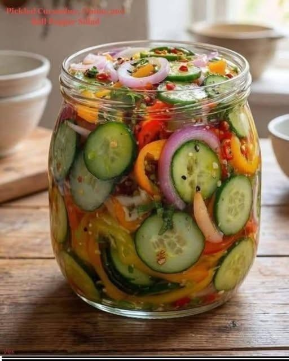
This colorful jar is a refrigerator-style quick pickle salad with cucumber, red onion, bell peppers, herbs and a tangy vinegar dressing. It is best kept refrigerated rather than treated as shelf-stable canned food. Refrigerator pickles are not shelf-stable unless a tested canning process is followed.
Ingredients
Makes about 1 large 1-quart/950 ml jar
Vegetables
- 3 medium cucumbers, thinly sliced
- ½ red onion, thinly sliced
- ½ red bell pepper, sliced
- ½ yellow or orange bell pepper, sliced
- 1 small jalapeño, thinly sliced — optional
- 2 tbsp fresh parsley or dill, chopped
- 1–2 cloves garlic, thinly sliced
Pickling Dressing
- ¾ cup 5% acidity white vinegar
- ½ cup water
- 1½ tsp salt
- 1–2 tsp sugar or honey, optional
- 1 tsp black peppercorns
- ½ tsp mustard seeds
- ½ tsp dried dill
- ¼ tsp red pepper flakes, optional
Using vinegar with known 5% acidity is important for pickling safety; don’t randomly reduce the vinegar or change the vinegar-to-water ratio if you’re following a tested preservation recipe.
Method
1. Prepare the vegetables
Wash the cucumbers, peppers and onion thoroughly. Slice the cucumbers into thin, even rounds. Cut the peppers and onion into similar-sized pieces.
2. Make the brine
Add vinegar, water, salt, sugar, peppercorns, mustard seeds, dill and red pepper flakes to a saucepan.
Bring just to a simmer, stirring until the salt dissolves.
3. Pack the jar
Place garlic and herbs in a clean jar. Add layers of cucumber, onion and peppers, gently pressing them down without crushing them.
4. Add the brine
Pour the warm pickling liquid over the vegetables until they are well covered. Leave a little space at the top.
5. Cool and refrigerate
Let the jar cool, then cover tightly and refrigerate.
For a refrigerator pickle, the vegetables should remain refrigerated; they should not be stored at room temperature as though they were shelf-stable canned pickles.
6. Let the flavors develop
For the best flavor, refrigerate for at least several hours, preferably overnight.
How to Serve
- With grilled chicken or fish
- On sandwiches and wraps
- With burgers
- Alongside rice or roasted vegetables
- Mixed into salads
- As a crunchy snack straight from the refrigerator
Estimated Nutrition
Approximate per 1 cup, depending on how much brine is consumed:
- Calories: 35–55 kcal
- Protein: 1–2 g
- Carbohydrates: 8–11 g
- Fat: 0–1 g
- Fiber: 2–3 g
- Sugar: 4–7 g
- Sodium: ~500–800 mg
If you omit the sugar, the carbohydrate and calorie content will be slightly lower.
Nutrition Benefits
Cucumber: high in water and provides a refreshing source of vegetables.
Bell peppers: provide vitamin C and antioxidants.
Red onion: adds fiber and plant compounds.
Fresh herbs: add flavor without significant calories.
Vinegar: gives the salad its characteristic sharp, tangy flavor.
Nut Information
This recipe contains no intentionally added tree nuts or peanuts.
- Peanuts: None
- Almonds: None
- Cashews: None
- Walnuts: None
- Pistachios: None
- Pecans: None
For a person with a severe nut allergy, check packaged vinegar, spices and other ingredients for cross-contact warnings.
Q&A
Q: How long should I pickle the vegetables?
For the best flavor, let them sit refrigerated overnight. They will become more flavorful as they sit.
Q: Can I eat them immediately?
Yes, but the flavor will be milder. A few hours in the refrigerator gives better results.
Q: Can I use apple cider vinegar?
Yes, provided it has the appropriate acidity for the recipe. White vinegar gives the cleanest color and sharper pickle flavor.
Q: Can I leave out the sugar?
Yes. Sugar mainly balances the acidity and isn’t essential to the basic flavor.
Q: Why did my cucumbers become soft?
Very thin slices, old cucumbers or improper pickling conditions can contribute to softness. Fresh, firm cucumbers give better texture.
Q: Can I add tomatoes?
For a simple refrigerated salad, you can add fresh tomatoes when serving. I wouldn’t add them to a long-storage pickling recipe without using a tested recipe because changing vegetable proportions can affect acidity and safety.
Q: Can I reuse the leftover brine?
Don’t reuse brine that has already been mixed with vegetables for another preservation batch. The vegetables change the acidity of the liquid.
Q: Is this shelf-stable?
No. This version is a refrigerator pickle. Keep it refrigerated. Shelf-stable pickling requires a tested recipe and proper processing.

With years of experience in restaurant research and local SEO, Sara creates accurate, user-friendly guides that work for both people and search engines. Her goal is to help users go from search results to their nearest restaurant or menu choice with as few clicks as possible.
- Grandma’s Cream Puffs – Light, Crisp & Creamy - October 17, 2026
- Easy Crockpot Creamy Garlic Parmesan Chicken - October 17, 2026
- Garlic Herb Roasted Potatoes - October 17, 2026