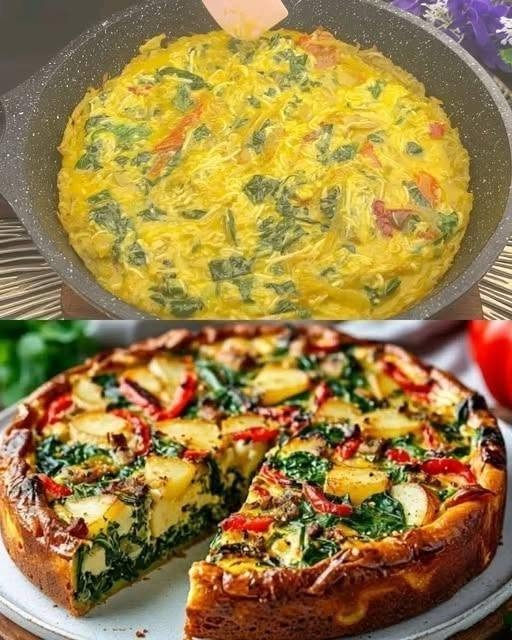
Your picture shows two delicious versions of an egg-based dish: a creamy spinach-and-cheese skillet frittata at the top and a thick, oven-baked spinach, potato, and cheese frittata at the bottom.
Below are both full recipes, including exact ingredient quantities, step-by-step instructions, preparation and cooking times, nutrition information, allergens, storage advice, substitutions, and frequently asked questions.
Recipe 1: Creamy Spinach & Cheese Skillet Frittata
Spinach cheese frittata in a pan. Gray background. Top view
Prep time
15 minutes
Cook time
15–20 minutes
Servings
4 people
Ingredients
Ingredient checklist
Adjust the serving size to update the ingredient quantities.
Large eggs — 6 eggs
Fresh spinach — 150 g
Shredded mozzarella or cheddar — 100 g
Milk or cream — 60 ml
Onion, finely chopped — 0.5 medium
Tomato, chopped — 1 small
Butter or olive oil — 1 tbsp
Garlic, minced — 2 cloves
Salt — 0.5 tsp
Black pepper — 0.25 tsp
Chili flakes or paprika (optional) — 0.25 tsp
Instructions
Frying spinach with onion and garlic in frying pan
Step 1: Prepare the vegetables
Wash the spinach and drain it well. Chop the onion and tomato, and mince the garlic. Heat the butter or olive oil in a nonstick skillet over medium heat.
Frying spinach with onion and garlic in frying pan
Step 2: Cook the vegetables
Add the onion and cook for 3–4 minutes. Add the garlic for 30 seconds, then stir in the spinach until wilted. Add the tomato and cook for another 1–2 minutes. Let excess moisture evaporate.
Γρήγορη ομελέτα με σπαράγγια – OW.GR
Step 3: Mix the eggs
Whisk the eggs with milk, salt, pepper, and optional chili flakes. Stir in about three-quarters of the cheese.
Spinach Frittata – Once Upon a Chef
Step 4: Cook gently
Reduce the heat to low. Pour the egg mixture over the vegetables and gently stir once or twice during the first minute. Sprinkle the remaining cheese over the top.
How to Make a Spinach Frittata | The Kitchn
Step 5: Cover and finish
Cover the pan and cook on low for 8–12 minutes, until the center is set. If the top remains wet, finish under a grill/broiler in an oven-safe pan, or cook a little longer with the lid on. The center should reach 71°C (160°F) for egg safety.
Serving suggestion: Rest for 3 minutes, cut into wedges, and serve with toast, flatbread, or a fresh salad.
Recipe 2: Oven-Baked Spinach, Potato & Cheese Frittata
Фритата с картофи, спанак и червени чушки | Goodlife
This is the thicker, more substantial dish shown in the bottom half of your picture. The potatoes make it filling, while spinach, peppers, and melted cheese give it a colorful, savory flavor.
Prep time
20 minutes
Cook time
35–45 minutes
Servings
6 people
Ingredients
Ingredient checklist
Original recipe serves 6 and fits a round 23–25 cm (9–10 inch) oven-safe pan or cake tin.
Large eggs — 8 eggs
Potatoes — 400 g
Fresh spinach — 200 g
Shredded cheddar, mozzarella, or a mixture — 150 g
Red bell pepper — 1 medium
Onion — 1 medium
Milk — 120 ml
Olive oil — 2 tbsp
Garlic — 2 cloves
Salt — 1 tsp
Black pepper — 0.5 tsp
Paprika — 0.5 tsp
Dried oregano or mixed herbs — 1 tsp
Butter or oil for greasing — 1 tsp
Detailed cooking instructions
【じゃがいもの切り方】じゃがいもの薄切り – macaroni
Step 1: Prepare the potatoes
Preheat the oven to 180°C (350°F). Peel the potatoes if desired and slice them into thin rounds, approximately 3–5 mm thick. Boil them in salted water for 6–8 minutes until just tender, then drain thoroughly. Avoid overcooking.
Cheesy Baked Frittata With Spinach, Potato, And Pepper | Baked Bree
Step 2: Cook the vegetables
Heat the olive oil in a large pan. Cook the chopped onion for 3–4 minutes. Add garlic and sliced bell pepper, then cook for another 2–3 minutes. Add the spinach and stir until wilted. Cook away excess liquid so the frittata does not become watery.
Steam-Baked Holiday Morning Quiche | Combi Steam Oven Recipes
Step 3: Make the egg mixture
Whisk the eggs and milk in a large bowl. Add salt, pepper, paprika, and oregano. Fold in about 100 g of the cheese, reserving the remaining 50 g for the top.
Cheesy Baked Frittata With Spinach, Potato, And Pepper | Baked Bree
Step 4: Assemble the frittata
Grease the baking dish. Arrange half the potato slices on the bottom. Spread the spinach and pepper mixture over them, then add the remaining potatoes. Pour the egg mixture evenly over everything. Gently shake the dish to distribute the eggs.
EasyChef | Cheesy Spinach and Potato Frittata
Step 5: Bake
Sprinkle the remaining cheese on top. Bake for 30–40 minutes, or until the edges are golden and the middle is set. A deeper dish may need an additional 5–10 minutes. Check that the center reaches 71°C (160°F).
13 Healthy Frittata Recipes to Make for a Crowd
Step 6: Rest and serve
Let the frittata rest for 10 minutes before cutting. This helps the eggs set and keeps the wedges intact. Serve warm or at room temperature.
Nutrition information
These values are estimates based on the quantities above. Actual nutrition depends on egg size, cheese variety, oil absorption, and portion size.
Nutrition comparison per serving
Approximate values; not laboratory-tested.
Nutrient
Recipe 1
Recipe 2
Calories 300–350 kcal 300–370 kcal
Protein 21–25 g 19–23 g
Carbohydrates 5–9 g 25–32 g
Fat 21–26 g 17–23 g
Fiber 1–3 g 3–5 g
Sugar 2–4 g 3–6 g
Recipe 1 serves four; Recipe 2 serves six. Ranges account for differences in ingredients and preparation.
Vitamins and minerals
Protein: Eggs and cheese provide protein for muscle maintenance and repair.
Vitamin A: Spinach and eggs contribute to normal vision and immune function.
Vitamin K: Spinach is a particularly good source, supporting normal blood clotting and bone health.
Folate: Spinach provides folate, which is needed for normal cell division.
Iron: Spinach contributes iron, although plant-based iron is less readily absorbed than iron from animal sources.
Calcium: Cheese and milk contribute calcium for bones and teeth.
Potassium: Potatoes and spinach contribute potassium, which supports normal muscle and nerve function.
Vitamin B12 and choline: Eggs provide both, supporting normal nerve function and other essential body processes.
Allergens and dietary information
Dietary concern
Recipe 1
Recipe 2
Eggs
Contains
Contains
Milk/dairy
Contains
Contains
Gluten
Naturally gluten-free if ingredients are uncontaminated
Naturally gluten-free if ingredients are uncontaminated
Nuts/peanuts
No nuts required
No nuts required
Vegetarian
Yes
Yes
Vegan
No
No
Low-carbohydrate
Generally suitable, depending on portion
Less suitable due to potatoes
Nut information: Neither recipe requires peanuts, almonds, walnuts, cashews, or other tree nuts. However, check cheese, milk, and packaged seasonings for allergen statements and cross-contamination warnings if cooking for someone with a nut allergy. These recipes are not guaranteed allergen-free.
Tips for the best results
Avoid watery spinach: Frozen spinach works too, but thaw it completely and squeeze out as much water as possible.
Choose the right cheese: Cheddar gives a stronger flavor; mozzarella gives a softer, stretchier texture. A mixture of both works well.
Keep the heat low for Recipe 1: High heat can burn the bottom before the center sets.
Slice potatoes evenly for Recipe 2: Uniform slices cook consistently and make neat layers.
Don’t overbake: Remove the dish when the center is set; prolonged cooking makes eggs rubbery.
For a crisp top: Use the oven grill/broiler briefly at the end, watching closely to prevent burning.
Storage and reheating
Refrigerator: Cool promptly, place in an airtight container, and refrigerate within two hours. Eat within 3–4 days.
Freezer: Freeze individual portions in airtight, freezer-safe packaging for up to 2–3 months for best quality.
Reheating: Warm in an oven at 160°C (320°F) until hot throughout, or microwave individual portions in short intervals.
Food safety: Reheat leftovers to 74°C (165°F). Avoid leaving egg dishes at room temperature for extended periods.
Frequently asked questions (Q&A)
1. What is the difference between an omelet, a frittata, and a crustless quiche?
An omelet is usually cooked quickly and folded around its filling. A frittata mixes the filling into the eggs and cooks as one thick round, often finished in the oven. A crustless quiche generally has a softer, custard-like texture because it often contains more dairy.
2. Can I make these recipes without an oven?
Yes. Recipe 1 is designed for the stovetop. For Recipe 2, use a covered, oven-safe skillet on very low heat and cook until the center is fully set. The top may not brown as evenly.
3. Can I use frozen spinach?
Yes. Use approximately 100–150 g thawed, well-drained spinach for Recipe 1, or 150–200 g for Recipe 2. Remove excess water before adding it to the pan.
4. Can I prepare the frittata ahead of time?
Yes. Cook the vegetables and potatoes ahead, refrigerate them separately, and assemble shortly before baking. You can also cook the entire frittata in advance and reheat portions later.
5. Why is my frittata watery?
Spinach, tomatoes, and other vegetables release moisture during cooking. Drain vegetables well, cook away excess liquid, and avoid adding too much milk. Frozen spinach should be squeezed dry.
6. Why does my frittata collapse after cooking?
A small amount of settling is normal as the eggs cool. Excessive collapse can happen when the center is undercooked, the egg mixture contains too much liquid, or the dish is cut immediately. Allow it to rest before slicing.
7. How can I make the recipe healthier?
Use less cheese and oil, add extra spinach and peppers, and choose reduced-fat cheese if desired. For Recipe 2, you can replace some of the potatoes with mushrooms, zucchini, or additional spinach.
8. Can I make it without milk?
Yes. Replace the milk with water or an unsweetened, unflavored plant-based alternative. The texture may be slightly less creamy. You can also omit it entirely.
9. Can I add chicken or other meat?
Yes. Add cooked, chopped chicken, turkey, or beef. Cook the meat thoroughly before mixing it with the eggs. Raw meat should not be added directly to the frittata because it may not cook safely in the required time.
10. Is frittata suitable for breakfast, lunch, or dinner?
All three. Serve a wedge with toast for breakfast, salad for lunch, or roasted vegetables and bread for dinner.
11. Can children eat this dish?
Yes, provided the eggs are fully cooked and the ingredients are appropriate for their age and dietary needs. Cut the food into suitable bite-sized pieces and check for allergies.
12. How do I know when the frittata is fully cooked?
The center should be set rather than liquid, and the internal temperature should reach 71°C (160°F). A clean knife is a useful secondary check, but a food thermometer is more reliable.
Which recipe should you choose?
Choose Recipe 1 if you want something quick, creamy, and lower in carbohydrates.
Choose Recipe 2 if you want a thicker, more filling dish with potatoes, colorful vegetables, and a golden cheese topping.

With years of experience in restaurant research and local SEO, Sara creates accurate, user-friendly guides that work for both people and search engines. Her goal is to help users go from search results to their nearest restaurant or menu choice with as few clicks as possible.
- Broccoli Apple Salad (No-Mayo) - October 27, 2026
- Baked Blueberry Cottage Cheese Breakfast Bowls - October 27, 2026
- Spinach, Potato & Cheese Frittata - October 27, 2026