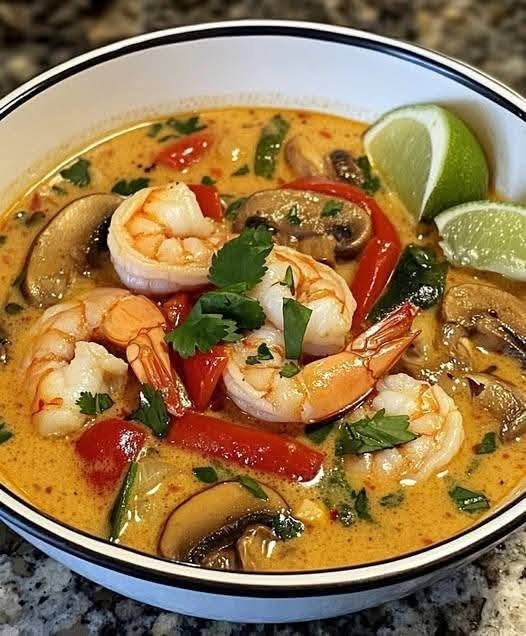
A rich and comforting Thai-inspired soup made with juicy shrimp, creamy coconut milk, fresh lime, ginger, garlic, and fragrant Thai spices. This soup is perfect for a cozy dinner, with a delicious balance of creamy, savory, tangy, and mildly spicy flavors.
Prep Time: 15 minutes
Cook Time: 25 minutes
Total Time: 40 minutes
Servings: 4
Course: Soup / Main Course
Cuisine: Thai-Inspired
Difficulty: Easy
Ingredients
For the Soup
– 1 lb (450 g) large shrimp, peeled and deveined
– 1 tablespoon olive oil or coconut oil
– 1 tablespoon unsalted butter (optional)
– 1 medium yellow onion, finely chopped
– 4 cloves garlic, minced
– 1 tablespoon fresh ginger, grated
– 1 red bell pepper, thinly sliced
– 1 cup mushrooms, sliced
– 2 tablespoons Thai red curry paste
– 1 can (13.5 oz / 400 ml) full-fat coconut milk
– 3 cups (720 ml) chicken broth or seafood broth
– 1 tablespoon fish sauce
– 1 teaspoon brown sugar or coconut sugar
– 1 tablespoon fresh lime juice, plus more to taste
– 1 teaspoon soy sauce, optional
– 1 stalk lemongrass, bruised and cut into pieces, optional
– 3–4 kaffir lime leaves, optional
– 1/2 teaspoon salt, or to taste
– 1/4 teaspoon ground black pepper
– 1/4 teaspoon chili flakes, optional
– 1/2 cup cherry tomatoes, halved, optional
For Garnish
– 1/4 cup fresh cilantro, chopped
– 2 green onions, thinly sliced
– Lime wedges, for serving
– 1 small red chili, thinly sliced, optional
– 1 teaspoon toasted sesame seeds, optional
– Fresh Thai basil leaves, optional
Optional Additions
– 1 cup baby spinach
– 1 cup cooked rice or rice noodles
– 1/2 cup bamboo shoots, drained
– 1 teaspoon sesame oil for extra aroma
Equipment Needed
– Large soup pot or Dutch oven
– Cutting board and sharp knife
– Measuring cups and spoons
– Wooden spoon or spatula
– Ladle
– Small bowl for preparing ingredients
Instructions
Step 1: Prepare the Ingredients
Peel and devein the shrimp if needed, then pat them dry with paper towels. If using frozen shrimp, thaw them completely and drain off excess water.
Chop the onion, mince the garlic, grate the ginger, slice the bell pepper and mushrooms, and halve the cherry tomatoes if using them.
Prepare the lemongrass and lime leaves if available. Bruise the lemongrass lightly with the back of a knife to release its fragrance.
Measure out the coconut milk, broth, curry paste, fish sauce, lime juice, and seasonings before cooking.
Step 2: Sauté the Aromatics
Place a large soup pot over medium heat and add the olive oil or coconut oil.
Add the chopped onion and cook for 3–4 minutes, stirring occasionally, until softened and slightly translucent.
Add the minced garlic and grated ginger. Cook for another 30–60 seconds, stirring constantly, until fragrant.
Avoid browning the garlic too much, as it can develop a bitter flavor.
Step 3: Add the Thai Curry Paste
Add the Thai red curry paste to the pot and stir it into the onion, garlic, and ginger mixture.
Cook for 1–2 minutes, allowing the curry paste to release its aroma and blend with the oil.
This step helps deepen the flavor of the soup and gives it a beautiful, warm color.
If you prefer a milder soup, start with 1 tablespoon of curry paste and add more later if needed.
Step 4: Cook the Vegetables
Add the sliced red bell pepper and mushrooms to the pot.
Stir well and cook for 3–4 minutes until the vegetables begin to soften.
If using bamboo shoots or cherry tomatoes, add them at this stage.
The vegetables should remain slightly firm because they will continue cooking in the broth.
Step 5: Add the Broth and Aromatics
Pour in the chicken or seafood broth and stir thoroughly, scraping up any flavorful bits from the bottom of the pot.
Add the bruised lemongrass and kaffir lime leaves, if using.
Bring the mixture to a gentle simmer over medium heat.
Reduce the heat and let it simmer uncovered for 8–10 minutes so the ginger, garlic, curry paste, and herbs can infuse the broth.
Do not boil it aggressively.
Step 6: Add the Coconut Milk
Pour in the coconut milk and stir gently until the soup becomes smooth and creamy.
Add the fish sauce, brown sugar, optional soy sauce, black pepper, and a small amount of salt.
Simmer gently for 3–5 minutes to combine the flavors.
Taste the broth before adding extra salt because fish sauce and curry paste can already be salty.
For a richer soup, use full-fat coconut milk. For a lighter texture, use light coconut milk, keeping in mind that the soup will be less creamy.
Step 7: Add the Shrimp
Add the prepared shrimp to the simmering soup.
Cook for approximately 3–5 minutes, depending on their size, stirring gently once or twice.
The shrimp are ready when they turn pink and opaque throughout. Avoid overcooking them, as they can become tough and rubbery.
For food safety, cook shrimp to an internal temperature of 145°F (63°C).
Step 8: Finish with Lime Juice
Turn off the heat and remove the lemongrass pieces and lime leaves if desired.
Stir in the fresh lime juice.
Taste the soup and adjust the seasoning:
– Add more lime juice for extra tanginess.
– Add a little fish sauce for a deeper savory flavor.
– Add a pinch of sugar if the curry tastes too sharp.
– Add chili flakes or extra curry paste for more heat.
– Add a splash of broth if the soup is too thick.
If using baby spinach, stir it in at the end and allow the residual heat to wilt it.
Step 9: Garnish and Serve
Ladle the hot soup into serving bowls.
Garnish with chopped cilantro, green onions, fresh Thai basil, sliced red chili, and lime wedges.
For a complete meal, serve the soup with steamed jasmine rice or cooked rice noodles.
Enjoy immediately while the shrimp are tender and the coconut broth is warm, creamy, and fragrant.
Tips for the Best Thai Coconut Shrimp Soup
1. Use full-fat coconut milk for a rich, velvety broth.
2. Use fresh ginger, garlic, and lime juice for the brightest flavor.
3. Add the shrimp near the end to prevent overcooking.
4. Simmer gently after adding coconut milk to help maintain a smooth texture.
5. Balance the flavors with lime for sourness, fish sauce for saltiness, and a little sugar for sweetness.
6. Adjust the curry paste gradually because different brands vary in heat and saltiness.
7. Remove the lemongrass and lime leaves before serving if you prefer not to have them in the bowl.
Substitutions and Variations
– Chicken version: Replace the shrimp with thinly sliced chicken and cook it thoroughly before serving.
– Vegetarian version: Replace the shrimp with tofu and use vegetable broth and vegetarian curry paste.
– Extra vegetables: Add spinach, zucchini, carrots, or bok choy.
– More protein: Add tofu or serve with extra shrimp.
– Noodle soup: Add cooked rice noodles directly to individual bowls before ladling in the soup.
– Extra spicy: Add Thai bird’s-eye chilies or additional red curry paste.
– Milder version: Use less curry paste and omit the chili flakes.
Storage and Reheating
Refrigerator: Store leftover soup in an airtight container for up to 3 days, refrigerated promptly.
Freezer: The soup can be frozen for up to 2 months, although coconut milk may separate slightly after thawing and the shrimp may become softer.
Reheating: Warm gently in a saucepan over low to medium-low heat, stirring occasionally. Avoid a vigorous boil, and add a little broth if needed to loosen the soup.
Food safety: Refrigerate leftovers within 2 hours of cooking. Reheat leftovers thoroughly to 165°F (74°C). For best texture, enjoy the shrimp fresh.
Nutrition Information
Approximate values per serving, assuming 4 servings and the core recipe with full-fat coconut milk, shrimp, broth, vegetables, and oil, without rice or noodles.
– Calories: 390–460
– Protein: 25–30 g
– Total carbohydrates: 12–18 g
– Dietary fiber: 2–4 g
– Total sugars: 5–8 g
– Total fat: 28–35 g
– Saturated fat: 20–27 g
– Cholesterol: 160–210 mg
– Sodium: 850–1,300 mg
Actual nutrition varies with the coconut milk, curry paste, broth, shrimp size, and amount of fish sauce and salt used. Rice or noodles will increase the carbohydrate and calorie totals.
Allergen Information
– Shellfish: Contains shrimp, a major allergen.
– Coconut: Contains coconut, which can trigger reactions in some individuals.
– Fish: Fish sauce contains fish-derived ingredients.
– Soy: Optional soy sauce may contain soy.
– Sesame: Optional sesame oil and sesame seeds contain sesame.
– Gluten: Some soy sauces and curry pastes may contain wheat or other gluten-containing ingredients. Check product labels.
– Dairy: Optional butter contains dairy; omit it to make the recipe dairy-free.
– Peanuts and tree nuts: The core recipe contains no peanuts or tree nuts as listed, but curry paste and other packaged ingredients may have cross-contact warnings. Check labels carefully if cooking for someone with a nut allergy.
For a dairy-free soup, use coconut oil instead of butter. For a gluten-free version, use certified gluten-free broth, curry paste, and fish sauce, and omit regular soy sauce or replace it with a gluten-free alternative.
Frequently Asked Questions
Can I use frozen shrimp?
Yes. Thaw them completely in the refrigerator or under cold running water, then drain and pat dry before adding them to the soup.
Can I make this soup ahead of time?
Yes. Prepare the broth and vegetables ahead, refrigerate them, and reheat gently when ready to serve. Add the shrimp near serving time for the best texture.
Why is my coconut soup too thin?
Let it simmer gently for a few extra minutes before adding the shrimp, or use full-fat coconut milk. Avoid prolonged cooking once the shrimp have been added.
Can I make it without fish sauce?
Yes. Use a little extra soy sauce or a suitable vegetarian seasoning, adjusting gradually to taste. The flavor will be slightly different from traditional Thai-inspired soup.
Is this soup spicy?
It has mild to moderate heat with 2 tablespoons of red curry paste, but the intensity varies by brand. Reduce the paste for a milder soup.
What should I serve with it?
Steamed jasmine rice, rice noodles, fresh herbs, and lime wedges are excellent accompaniments.
Final Result
Your Thai Coconut Shrimp Soup should have a creamy coconut broth, tender pink shrimp, fragrant ginger and garlic, colorful vegetables, and a bright lime finish. The combination of savory, tangy, slightly sweet, and spicy flavors makes it a satisfying meal for lunch or dinner.

With years of experience in restaurant research and local SEO, Sara creates accurate, user-friendly guides that work for both people and search engines. Her goal is to help users go from search results to their nearest restaurant or menu choice with as few clicks as possible.
- Cheesy Vegetable Stuffed Bread Bake - October 23, 2026
- Chicken Piccata with Lemon Capers - October 23, 2026
- Hearty Cabbage and Ground Beef Soup - October 23, 2026