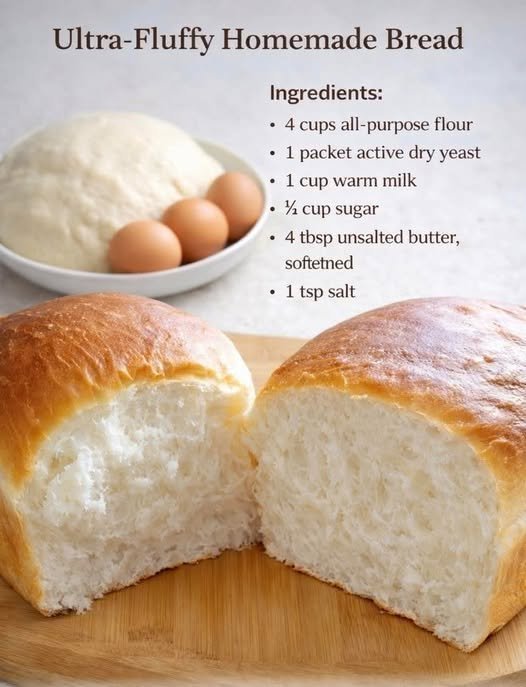
This homemade bread recipe makes soft, fluffy, slightly sweet bread with a golden-brown crust and a tender, cottony inside. It is perfect for breakfast, sandwiches, toast, and serving with butter or jam.
The recipe below follows the ingredients shown in your image, with detailed measurements, step-by-step instructions, nutritional estimates, allergen information, troubleshooting tips, and frequently asked questions.
1. Recipe overview
Preparation
25–30 minutes
Rising time
1½–2 hours
Baking
25–35 minutes
Yield
2 medium loaves
Difficulty
Beginner-friendly
Oven temperature
180°C / 350°F
Texture
Soft, airy and fluffy
2. Ingredients
Makes approximately 2 medium loaves, or 16–24 servings depending on slice size.
TradeGlobe | Global B2B Wholesale Trading Platform
All-purpose flour
4 cups (480–520 g)
Forms the structure of the bread. Measure by weight if possible; cup measurements vary.
History of Yeast — Pakmaya
Active dry yeast
1 packet (7 g / 2¼ tsp)
Makes the dough rise and creates a light texture.
Heat-resistant Glass Measuring Cup 350ml/500ml Scale Cup Milk Cup Water Cups Household Beaker Mugs | Shopee Philippines
Warm milk
1 cup (240 ml)
Use lukewarm milk, approximately 38–43°C. Hot milk may damage the yeast.
Bowl of white sugar isolated on white background, top view
Granulated sugar
½ cup (100 g)
Adds sweetness, supports browning, and helps create a tender crumb.
Mantequillera Francesa con Tapa
– Varma
Unsalted butter
4 tbsp (56–57 g)
Softened butter improves flavor and gives the bread a tender texture.
MONARCH SALT TABLE IODIZED CONTAINER – US Foods CHEF’STORE
Salt
1 tsp (about 5–6 g)
Balances sweetness and strengthens the dough.
Optional ingredients
1 egg, beaten, for brushing the tops and creating a shiny golden crust.
1–2 tablespoons extra milk, if the dough feels dry.
1–2 tablespoons melted butter for brushing after baking.
1 teaspoon vanilla extract for a sweeter, enriched bread, if desired.
Important: The image shows three eggs in a bowl, but the written ingredient list does not include eggs. The main recipe below uses no eggs in the dough. You can add one egg for a richer, brioche-like loaf, but reduce the milk slightly to account for the extra liquid.
3. Step-by-step instructions
Zuckerkuchen – nach Omas Originalrezept! | Einfach Kochen
Step 1: Activate the yeast
Pour the warm milk into a large bowl.
Stir in 1 tablespoon of the measured sugar.
Sprinkle in the active dry yeast.
Let it stand for 5–10 minutes.
The mixture should become foamy or bubbly. If it remains completely inactive after 10–15 minutes, check the yeast’s freshness and the milk temperature before continuing.
Jersey Mike’s Bread Recipe: Bakery-Style Softness for Legendary Subs – 90 Recipes
Step 2: Mix the dough
Add the remaining sugar and most of the flour to the yeast mixture.
Add the salt and softened butter.
Stir with a wooden spoon until a shaggy dough forms.
Add the remaining flour gradually, stopping when the dough is soft and slightly tacky.
Do not add all the flour automatically if the dough already feels firm. A slightly tacky dough generally makes softer bread.
Pão Caseiro: O Guia Completo para um Pão Perfeito e Artesanal
Step 3: Knead the dough
Knead by hand for 8–12 minutes, or in a stand mixer with a dough hook for approximately 6–8 minutes.
The dough should become smooth, elastic and stretchy. If it sticks slightly to your hands, lightly grease your hands instead of adding lots of extra flour.
Tip: Proper kneading develops gluten, which helps the bread hold its shape and rise into a fluffy loaf.
recette Pâte à Pizza pour une Pizza Parfaite
Step 4: First rise
Lightly grease a bowl.
Place the dough inside and turn it to coat lightly.
Cover with a clean towel or plastic wrap.
Leave in a warm, draft-free place for about 60–90 minutes, or until doubled in size.
In a cool kitchen, the rise may take longer. Judge by the dough’s size rather than the clock alone.
Kneading wet dough by hand | King Arthur Baking
Step 5: Shape the loaves
Gently press the dough to release excess gas.
Divide it into two equal portions.
Shape each portion into a tight loaf.
Place in two lightly greased loaf pans, approximately 8½ × 4½ inches (21 × 11 cm), or shape as round loaves on a lined baking tray.
Keep the surface smooth and avoid tearing the dough.
Soft and Fluffy White Bread Loaf – Ritzy recipes
Step 6: Second rise
Cover the shaped dough and let it rise for 30–45 minutes, or until noticeably puffy.
If using loaf pans, the dough should rise to around the rim or slightly above it, depending on the pan size.
Avoid overproofing. Dough that rises too far may collapse in the oven.
EASY HOMEMADE BREAD RECIPE – Butter with a Side of Bread
Step 7: Bake
Preheat the oven to 180°C (350°F).
Optionally brush the tops with beaten egg for a glossy finish or milk for a softer, less shiny finish.
Bake for 25–35 minutes, depending on loaf size and your oven.
The crust should be golden brown. For a more reliable doneness check, the center of the bread should reach approximately 88–93°C (190–200°F).
Pack Vaso Galleta – De Pura Madre – Friendly Bakery
Step 8: Cool and serve
Remove the bread from the pans after about 5–10 minutes and transfer it to a wire rack.
Brush with melted butter for a soft, flavorful crust if desired.
Let the loaves cool for at least 45–60 minutes before slicing. Cutting while hot can compress the crumb and make it gummy.
4. The secrets to extra-fluffy bread
Measure flour accurately.
Too much flour is one of the most common reasons homemade bread turns dense. Weighing approximately 500 g is more consistent than packing flour into cups.
Keep the dough soft.
Add flour gradually. The dough should feel supple and slightly tacky, not stiff or dry.
Allow enough rising time.
Underproofed dough tends to be dense. Look for dough that has visibly expanded and become puffy.
Knead until elastic.
Well-developed gluten traps the gas produced by yeast, helping the loaf rise evenly.
Use milk and butter.
These enrich the dough and help produce a tender, soft crumb.
5. Nutrition information
The following values are estimates for the full recipe using the listed ingredients and without an optional egg wash. Actual nutrition varies with flour weight, ingredient brands and loaf size.
Estimated nutrition per serving, assuming 20 equal servings
130–150
Calories
4 g
Protein
23–26 g
Carbohydrates
2–3 g
Fat
1 g
Fiber, approximately
4–6 g
Sugar, approximately
These are approximate figures, not laboratory-tested nutrition facts. A larger slice contains proportionally more calories and carbohydrates.
Is homemade bread healthy?
It provides carbohydrates for energy and some protein from wheat flour.
Milk and butter contribute fat and small amounts of additional nutrients.
All-purpose flour is usually lower in fiber than whole-wheat flour.
The recipe contains added sugar and saturated fat from butter.
For more fiber, replace 1 cup of the all-purpose flour with whole-wheat flour and add a little extra milk if needed.
6. Allergen and dietary information
Wheat / gluten — present
All-purpose wheat flour contains gluten. This recipe is not suitable for people with celiac disease or a wheat allergy as written.
Milk — present
Milk and butter contain dairy ingredients. Use an unsweetened plant-based milk and dairy-free butter substitute if appropriate.
Egg — optional
The written recipe does not require egg. Egg is only needed if you choose to enrich the dough or brush the top. The eggs pictured in the image are not included in its ingredient list.
Nuts — not required
No nuts are listed in this recipe. However, check ingredient labels and prevent cross-contact if serving someone with a nut allergy.
Is this bread vegetarian or vegan?
Vegetarian: Yes, generally.
Vegan: No, because the recipe contains milk and butter. Use suitable plant-based substitutes to make it vegan.
Nut-free ingredients: The listed ingredients do not require nuts, but a nut-allergic person should verify product labels and preparation conditions.
Gluten-free: No. A gluten-free bread recipe requires a specifically formulated gluten-free flour blend and a different method.
7. Storage and freezing
Storage method
Recommended duration
Best practice
Room temperature
2–3 days
Store in an airtight bag or container once fully cool.
Refrigerator
Generally not ideal
Refrigeration can make bread stale faster.
Freezer
About 2–3 months for best quality
Slice first and wrap tightly.
After thawing
Eat promptly
Thaw at room temperature or warm individual slices in a toaster.
For a softer crust, store the cooled loaf in a sealed food-safe bag. For a crispier crust, leave it loosely wrapped, recognizing that it will dry out more quickly.
8. Troubleshooting guide
Problem: The bread is dense and heavy.
Possible causes: too much flour, inactive yeast, insufficient kneading or inadequate rising time.
Solution: Measure flour by weight, check the yeast, knead until elastic and allow the dough to rise until visibly expanded.
Problem: The dough is too sticky.
A little stickiness is normal.
Solution: Grease your hands and knead for another few minutes. Add flour in small amounts only if the dough is genuinely too wet to handle.
Problem: The bread is dry or crumbly.
Possible causes: excess flour, overbaking or slicing too early.
Solution: Keep the dough soft, check the oven temperature and remove the loaves once the centers are cooked through.
Problem: The crust is too dark.
Your oven may run hot, or the bread may be positioned too close to the top heating element.
Solution: Bake on the middle rack and loosely cover the loaves with foil if they brown too quickly.
Problem: The bread collapses after rising.
Possible causes: overproofing, very weak dough structure or excessive liquid.
Solution: Shorten the second rise and bake when the dough is puffy rather than waiting for it to expand excessively.
9. Frequently asked questions
Q1. Can I use instant yeast instead of active dry yeast?
Yes. Use approximately 2¼ teaspoons (7 g) of instant yeast. You can mix it directly with the flour and other dry ingredients; there is no need to activate it separately. Rising times may be shorter.
Q2. Can I make this bread without milk?
Yes. Replace the milk with lukewarm water or an unsweetened plant-based milk. Water will generally produce a less rich loaf, while soy milk or oat milk can provide a softer texture.
Q3. Why is sugar used in bread?
Sugar adds sweetness and encourages browning. Yeast can ferment flour’s available sugars, so the full amount of added sugar is not essential for yeast activity. You can reduce it, although the taste and texture may change.
Q4. Can I leave out the butter?
Yes, but the bread will be less rich and may have a firmer crumb. A neutral vegetable oil can replace the butter; use approximately 3–4 tablespoons as a starting point.
Q5. How do I know when the dough has risen enough?
The first rise is usually complete when the dough has roughly doubled in volume. During the second rise, it should look visibly puffy. Temperature and yeast activity affect timing.
Q6. Can I make the dough the night before?
Yes. After kneading, cover the dough well and refrigerate it overnight. The next day, let it warm slightly, shape it, allow it to rise until puffy, and bake. The cold dough may need extra time.
Q7. Can I make this recipe without a loaf pan?
Yes. Shape the dough into two round loaves and bake them on a parchment-lined tray. Start checking a little earlier because baking time can vary with the shape and thickness.
Q8. Can I add eggs to make it softer?
Yes. One egg can make the crumb richer and more tender. Because the egg adds liquid, reduce the milk by roughly 2–3 tablespoons initially and adjust the dough as needed. The result will differ slightly from the egg-free version.
Q9. Why is my bread gummy inside?
It may be underbaked or sliced before cooling. Check the internal temperature and allow the bread to cool thoroughly before cutting.
Q10. Can I make this recipe in a bread machine?
Usually, yes, if the machine can accommodate the dough quantity. Follow your machine’s ingredient-order instructions and check that its capacity is sufficient for approximately 500 g of flour plus the other ingredients.
Q11. Is the bread sweet?
It has a mild sweetness from the ½ cup of sugar. For a more savory everyday loaf, you can reduce the sugar to 2–3 tablespoons.
Q12. How can I make the crust extra soft?
Brush the hot loaf with melted butter and let it cool under a clean kitchen towel. Store it in a sealed bag after cooling completely.
10. Serving suggestions
Soft As Wonder White Bread Recipe – Easy & Delicious | Forktionary
Butter toast
Serve warm with butter, honey or jam.
ホームベーカリー ビストロの技術 | 特長 ホームベーカリー ビストロ SD-MDX4 | ホームベーカリー | Panasonic
Sandwiches
Use slices for cheese, egg, chicken or vegetable sandwiches.
Francia pirítós recept – krémes és édes reggeli | Kifli.hu
French toast
Dip slices in beaten egg, milk and cinnamon, then pan-fry.
Mihaela Bilic, truc pentru a desăra mâncarea: Excesul va dispărea | DCMedical
Soup and curry
Serve alongside soup, lentils or your favorite curry.
Printable recipe card
Ultra-Fluffy Homemade Bread
Yield: 2 medium loaves · Oven: 180°C / 350°F
Ingredients
4 cups all-purpose flour (about 480–520 g)
1 packet active dry yeast (7 g)
1 cup warm milk (240 ml)
½ cup sugar (100 g)
4 tablespoons softened unsalted butter (56–57 g)
1 teaspoon salt (5–6 g)
Method
Activate the yeast in warm milk with 1 tablespoon sugar for 5–10 minutes.
Mix in the remaining sugar, flour, salt and butter to form a soft dough.
Knead for 8–12 minutes until smooth and elastic.
Cover and let rise until doubled, about 60–90 minutes.
Divide into two loaves and place in greased pans.
Cover and let rise for another 30–45 minutes.
Bake at 180°C / 350°F for 25–35 minutes, until golden and cooked through.
Cool on a wire rack for at least 45–60 minutes before slicing.
Final baking tip: The most important factors for getting the fluffy texture shown in your picture are accurately measured flour, a soft dough, thorough kneading, sufficient rising time and allowing the bread to cool before slicing.

With years of experience in restaurant research and local SEO, Sara creates accurate, user-friendly guides that work for both people and search engines. Her goal is to help users go from search results to their nearest restaurant or menu choice with as few clicks as possible.
- Stuffed Cabbage Rolls - October 18, 2026
- Easy Crockpot Creamy Garlic Parmesan Chicken - October 18, 2026
- Turmeric Carrot Lentil Stew - October 18, 2026