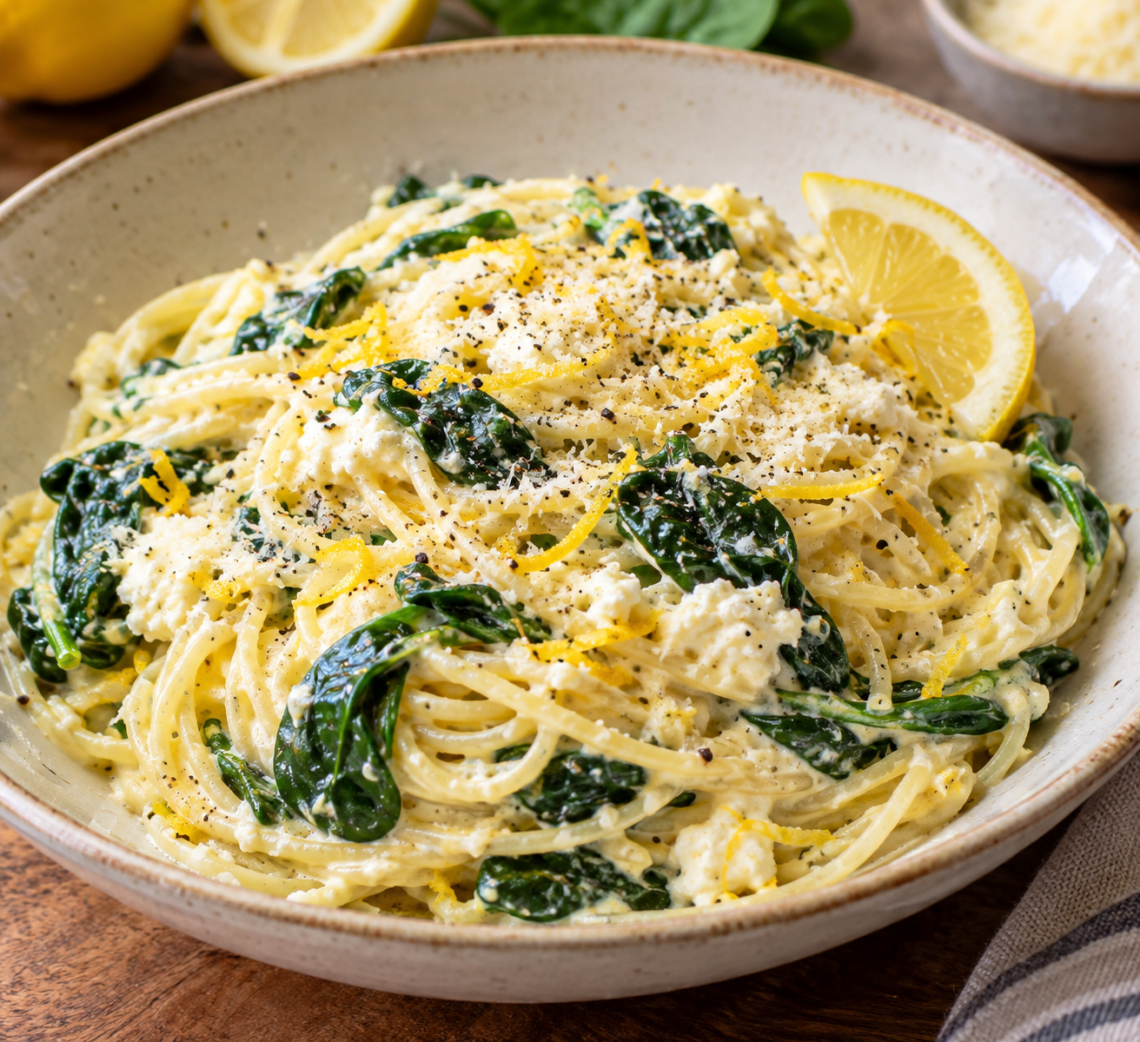
Lemon Ricotta Pasta with Spinach is a creamy, fresh, and flavorful Italian-inspired dish made with tender pasta, smooth ricotta cheese, fresh spinach, garlic, lemon zest, and Parmesan. The sauce is rich and silky without requiring heavy cream, while the lemon adds a bright, refreshing flavor that balances the cheese perfectly. This easy homemade recipe is ideal for a comforting family dinner, a quick lunch, or an elegant meatless meal.
Recipe Information
Prep Time: 15 minutes
Cook Time: 20 minutes
Total Time: 35 minutes
Servings: 4
Course: Main Course
Cuisine: Italian-inspired
Difficulty: Easy
Cooking Method: Stovetop
Diet: Vegetarian, when made with vegetarian-certified Parmesan
Ingredients
For the pasta:
12 oz (340 g) spaghetti, linguine, penne, or fusilli
1 tablespoon salt for the pasta water, or as needed
2 cups fresh baby spinach (approximately 60–80 g)
1 tablespoon extra-virgin olive oil
3 cloves garlic, finely minced
1/4 teaspoon red pepper flakes, optional
1/2 cup reserved pasta water, plus extra if needed
For the creamy lemon ricotta sauce:
1 cup (250 g) whole-milk ricotta cheese
1/2 cup (50 g) freshly grated Parmesan cheese
Zest of 1 large lemon
2 tablespoons fresh lemon juice
2 tablespoons extra-virgin olive oil
1/4 teaspoon freshly ground black pepper
1/4 teaspoon salt, or to taste
1/4 teaspoon Italian seasoning, optional
1–2 tablespoons warm water or reserved pasta water, to loosen the ricotta mixture
For garnish:
2 tablespoons freshly grated Parmesan cheese
1 teaspoon freshly grated lemon zest
Freshly ground black pepper, to taste
Fresh basil leaves or chopped parsley, optional
A light drizzle of extra-virgin olive oil, optional
Instructions
1. Prepare the ingredients.
Wash the baby spinach thoroughly and pat it dry. Peel and finely mince the garlic. Wash the lemon, grate its yellow outer zest, and squeeze out the juice. Avoid grating too deeply into the white pith, which can taste bitter.
Measure the ricotta and Parmesan, and prepare all the remaining ingredients before beginning to cook.
2. Make the lemon ricotta sauce.
In a medium mixing bowl, combine the ricotta cheese, grated Parmesan, lemon zest, lemon juice, olive oil, black pepper, salt, and optional Italian seasoning.
Whisk with a fork or small whisk until well combined. For an extra-smooth sauce, blend the mixture briefly in a food processor.
Add 1–2 tablespoons of warm water or reserved pasta water and mix until the sauce becomes smooth and spoonable. Set aside while you cook the pasta.
3. Cook the pasta.
Bring a large pot of water to a rolling boil. Add the salt, followed by the pasta.
Cook according to the package instructions until al dente, meaning the pasta is tender but still has a slight bite in the center.
Before draining, carefully reserve at least 1 cup of pasta water. This starchy water is essential for loosening the ricotta sauce and helping it cling to the pasta.
Drain the pasta without rinsing it.
4. Sauté the garlic.
While the pasta cooks, heat 1 tablespoon of olive oil in a large skillet over medium-low heat.
Add the minced garlic and optional red pepper flakes. Cook for approximately 30–60 seconds, stirring constantly, until fragrant.
Do not allow the garlic to brown or burn, as this can make the finished dish bitter.
5. Add the spinach.
Add the fresh spinach to the skillet and gently toss it with the garlic and olive oil.
Cook for 1–2 minutes, until the spinach wilts and reduces in volume. If the pan looks dry, add 1–2 tablespoons of reserved pasta water.
Keep the heat moderate so the garlic remains fragrant and the spinach stays tender and bright green.
6. Combine the cooked pasta and spinach.
Add the drained pasta to the skillet with the spinach and garlic.
Toss everything together with tongs until the pasta is evenly coated with the flavorful olive oil and the spinach is distributed throughout.
Reduce the heat to low, then remove the skillet from the heat before adding the ricotta mixture. This is important because excessive heat can make the cheese grainy.
7. Add the creamy ricotta sauce.
Spoon the lemon ricotta sauce over the pasta. Toss gently but thoroughly, making sure every strand or piece of pasta is coated.
Gradually add the reserved pasta water, 1–2 tablespoons at a time, while tossing continuously.
Start with a small amount and add more as needed. The starch in the water helps the ricotta, Parmesan, and olive oil form a cohesive, silky sauce.
The finished sauce should look glossy and creamy, not watery or clumpy. You may need approximately 1/4–1/2 cup of pasta water, depending on the consistency of your ricotta and the shape of your pasta.
8. Adjust the seasoning.
Taste the pasta and make any final adjustments.
Add more lemon juice if you prefer a brighter, tangier flavor.
Add extra Parmesan for a deeper, saltier cheese flavor.
Add freshly ground black pepper for warmth.
Add a pinch of red pepper flakes for a spicy finish.
Add a little more pasta water if the sauce becomes too thick.
Remember that Parmesan already contains salt, so taste before adding more salt.
9. Garnish the pasta.
Transfer the finished pasta to warm serving bowls or a large serving platter.
Sprinkle with freshly grated Parmesan, lemon zest, and freshly ground black pepper. Add a few fresh basil leaves or chopped parsley if desired.
Finish with a small drizzle of extra-virgin olive oil for additional richness and flavor.
10. Serve immediately.
Serve the pasta while warm, when the ricotta sauce is at its creamiest and the spinach is tender.
Pair it with a fresh green salad, roasted vegetables, garlic bread, or grilled chicken for a more substantial meal.
Tips for the Best Lemon Ricotta Pasta
Use whole-milk ricotta for a richer and creamier texture.
Choose a fresh lemon and use both its zest and juice for the best citrus flavor.
Grate Parmesan fresh whenever possible because it generally melts more smoothly than pre-shredded cheese.
Always reserve pasta water before draining.
Remove the skillet from the heat before adding the ricotta sauce to help prevent graininess.
Add pasta water gradually instead of pouring it all in at once.
Avoid adding too much lemon juice at the beginning; you can always add more after tasting.
Do not overcook the spinach. It should be wilted but still vibrant.
Serve immediately because the sauce naturally thickens as it cools.
If the sauce becomes too thick before serving, stir in a splash of warm water or milk.
Variations and Substitutions
1. Lemon Ricotta Pasta with Chicken
Add 1–2 cups of cooked, sliced grilled chicken. Season the chicken with salt, pepper, garlic, and a little lemon juice. Toss it with the pasta just before serving for a protein-rich variation.
2. Lemon Ricotta Pasta with Shrimp
Sauté peeled and deveined shrimp in olive oil with garlic, salt, and black pepper until cooked through. Add the shrimp to the finished pasta and garnish with fresh parsley.
3. Lemon Ricotta Pasta with Mushrooms
Slice 1–2 cups of mushrooms and sauté them in olive oil until golden and tender. Add the garlic and spinach afterward, then continue with the recipe.
4. Lemon Ricotta Pasta with Cherry Tomatoes
Add 1 cup of halved cherry tomatoes to the skillet and cook until softened and juicy. Their sweetness complements the tangy lemon and creamy ricotta.
5. Whole-Wheat Lemon Ricotta Pasta
Replace regular pasta with whole-wheat pasta for more dietary fiber and a slightly nuttier flavor. Cook according to the package instructions.
6. Gluten-Free Lemon Ricotta Pasta
Use gluten-free pasta made from rice, corn, quinoa, or legumes. Reserve its cooking water and add it gradually, as its starch content may differ from conventional pasta.
7. Extra-Creamy Lemon Ricotta Pasta
Blend the ricotta before mixing it with the other sauce ingredients. Add a little warm pasta water and extra Parmesan to create a smoother, richer consistency without heavy cream.
8. Spicy Lemon Ricotta Pasta
Increase the red pepper flakes to 1/2 teaspoon or adjust to your preferred heat level. Add them to the olive oil with the garlic.
9. Lemon Ricotta Pasta with Peas
Add 1/2–1 cup of frozen peas during the final 2–3 minutes of pasta cooking. Drain with the pasta and toss with the spinach and sauce.
10. High-Protein Version
Use legume-based pasta and add grilled chicken, shrimp, or white beans. The exact protein content will depend on your chosen ingredients and portions.
Storage and Reheating
Refrigeration:
Store leftover pasta in an airtight container in the refrigerator for up to 3 days.
Reheating on the stovetop:
Place the pasta in a skillet over low heat. Add 1–2 tablespoons of water or milk and stir gently until warmed through. Add more liquid if needed to restore the creamy texture.
Reheating in the microwave:
Transfer an individual portion to a microwave-safe dish. Add a small splash of water or milk, cover loosely, and heat in short intervals, stirring between each interval.
Freezing:
Freezing is not recommended because ricotta-based sauces may separate or become grainy after thawing.
Food safety:
Refrigerate leftovers within 2 hours of cooking and reheat thoroughly before eating.
Nutrition Information
Approximate nutrition per serving, based on 4 servings using the ingredients listed above, excluding optional garnishes.
Calories: 490 kcal
Protein: 20 g
Total Fat: 18 g
Saturated Fat: 7 g
Carbohydrates: 61 g
Dietary Fiber: 4 g
Total Sugars: 4 g
Cholesterol: 35 mg
Sodium: 480 mg
Potassium: approximately 350 mg
Calcium: approximately 250 mg
Iron: approximately 3 mg
Nutrition values are estimates and may vary based on the pasta brand, ricotta, Parmesan, serving size, and the amount of salt retained from cooking.
Allergen Information
Contains milk and dairy from ricotta and Parmesan.
Contains wheat and gluten when prepared with conventional wheat pasta.
May contain egg, depending on the pasta brand.
No peanuts or tree nuts are intentionally included in the listed ingredients.
Check all product labels for possible cross-contact if preparing this recipe for someone with food allergies.
Parmesan made with animal-derived rennet may not be suitable for strict vegetarian diets. Choose vegetarian-certified Parmesan if necessary.
Frequently Asked Questions
1. Can I make lemon ricotta pasta without heavy cream?
Yes. Ricotta, Parmesan, olive oil, and starchy pasta water create a naturally creamy sauce without heavy cream.
2. Why is my ricotta sauce grainy?
Ricotta can have a naturally grainy texture, and high heat can make it more noticeable. Blend the ricotta for a smoother consistency and mix it into the pasta off the heat.
3. Can I make this recipe ahead of time?
For the best texture, cook and assemble the pasta just before serving. You can prepare the ricotta mixture, grate the cheese, mince the garlic, and wash the spinach ahead of time.
4. What pasta works best for this recipe?
Spaghetti and linguine are excellent choices, while penne, fusilli, and rigatoni hold the sauce in their curves and ridges.
5. Can I use frozen spinach instead of fresh spinach?
Yes. Thaw the spinach completely and squeeze out excess moisture before adding it to the skillet. Too much water can dilute the sauce.
6. Can I use low-fat ricotta?
Yes. Low-fat ricotta works, although the sauce may be less rich. Add pasta water gradually until you achieve the desired consistency.
7. How can I make this pasta more filling?
Add grilled chicken, shrimp, white beans, peas, or roasted chickpeas. These ingredients can increase the protein content and make the meal more substantial.
8. Is this recipe vegetarian?
Yes, provided the Parmesan is made with vegetarian-friendly rennet. Traditional Parmesan varieties may use animal-derived rennet, so check the label if strict vegetarian preparation is important.
9. Can I make the pasta spicy?
Yes. Increase the red pepper flakes or add a small amount of finely chopped fresh chili while sautéing the garlic.
10. How do I keep the sauce creamy?
Use reserved pasta water, add it gradually, and toss continuously. Avoid boiling the ricotta mixture, as excessive heat can cause the sauce to separate.
11. Can I add mushrooms or other vegetables?
Absolutely. Mushrooms, cherry tomatoes, peas, asparagus, and roasted zucchini all work well. Cook vegetables that release a lot of moisture before combining them with the sauce.
12. Can I use bottled lemon juice?
Fresh lemon juice is recommended because it has a brighter flavor and the recipe also uses lemon zest. Bottled juice can work in a pinch, but it will not provide the same fragrant citrus notes.
13. Why does the sauce become thick after sitting?
Ricotta and Parmesan continue to absorb moisture as the pasta cools. Stir in a little warm water or milk to loosen the sauce before serving or reheating.
14. Can I make this recipe dairy-free?
You can use plant-based ricotta and dairy-free Parmesan alternatives, but the texture and flavor will differ. Choose products that melt well and check their allergen labels.
15. Is lemon ricotta pasta suitable for meal prep?
Yes, although the texture is best when freshly made. Store individual portions in airtight containers for up to 3 days and add a little liquid when reheating.
Serving Suggestions
Garlic bread or toasted sourdough
Fresh green salad with a light lemon vinaigrette
Roasted asparagus or broccoli
Sautéed green beans with garlic
Grilled chicken or lemon-herb shrimp
Roasted cherry tomatoes
Sparkling water with lemon slices
Final Recipe Summary
Lemon Ricotta Pasta with Spinach is a simple yet elegant meal that combines creamy ricotta, fresh spinach, garlic, Parmesan, and bright lemon flavor. With its silky sauce, easy preparation, and versatile ingredients, it is a wonderful choice for a quick family dinner or a comforting vegetarian lunch. Serve it freshly prepared for the best creamy texture and enjoy every flavorful bite.

With years of experience in restaurant research and local SEO, Sara creates accurate, user-friendly guides that work for both people and search engines. Her goal is to help users go from search results to their nearest restaurant or menu choice with as few clicks as possible.
- Grandma’s Cream Puffs – Light, Crisp & Creamy - October 17, 2026
- Easy Crockpot Creamy Garlic Parmesan Chicken - October 17, 2026
- Garlic Herb Roasted Potatoes - October 17, 2026