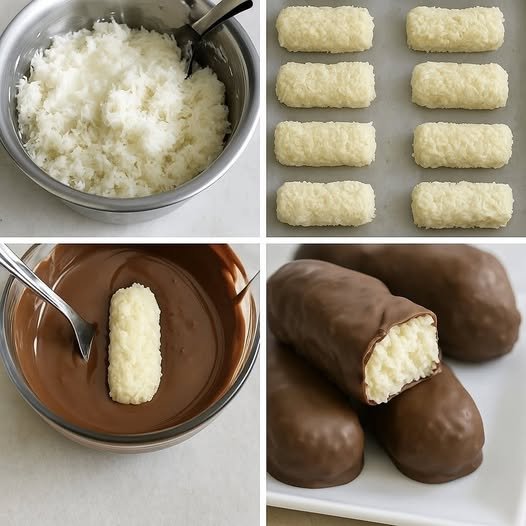
The photo shows no-bake chocolate-covered coconut bars, similar to a homemade Bounty/Mounds-style candy: a soft, chewy coconut center shaped into logs, chilled, then completely coated in chocolate. Recipes for this style commonly use just desiccated coconut, sweetened condensed milk, and chocolate.
Y
YouTube
+1
Full Recipe
Yield: 10–12 bars
Prep time: 20 minutes
Chilling: 1–1½ hours
Cooking: No baking required
Ingredients
Coconut filling
200 g (2½ cups) unsweetened desiccated coconut, finely shredded
200 g (about ¾ cup) sweetened condensed milk
2 tbsp milk powder — optional, but gives a firmer, richer filling
½ tsp vanilla extract — optional
Pinch of salt
Chocolate coating
250–300 g chocolate, chopped
Milk chocolate for a sweeter Bounty-style result
Dark chocolate for a less-sweet version
Or use 150 g milk + 100 g dark chocolate for a balanced flavor
1 tsp coconut oil or neutral oil, optional, for a thinner coating
The basic coconut-to-condensed-milk ratio is consistent with several versions of this dessert; some recipes use approximately 200–225 g coconut with 200–240 g condensed milk, while others use less condensed milk for a firmer center.
Y
YouTube
+1
Method
1. Prepare the coconut mixture
Place the 200 g desiccated coconut in a bowl.
Add:
condensed milk
milk powder
vanilla
salt
Mix thoroughly with a spoon or your hands.
The mixture should be moist and sticky but firm enough to hold its shape.
2. Check the consistency
Take a small amount and squeeze it together.
Too dry/crumbly? Add condensed milk 1 tablespoon at a time.
Too wet/sticky? Add another 1–2 tablespoons coconut.
Perfect: it presses together easily and doesn’t collapse.
Don’t add all the condensed milk blindly—the moisture content of different coconut brands varies.
3. Shape the bars
Line a tray with parchment/baking paper.
Divide the coconut mixture into approximately 10–12 portions.
Shape each into a short rectangular log, roughly:
8–10 cm long × 2½–3 cm wide
Press firmly so there are no loose coconut flakes.
The image shows relatively thick cylindrical/rounded bars, so don’t make them too thin.
4. Chill
Place the shaped coconut bars in the refrigerator for 30–45 minutes.
For an especially firm center, put them in the freezer for 15–20 minutes.
Chilling before dipping makes the bars substantially easier to coat. Similar recipes specifically chill the shaped coconut pieces before dipping them in melted chocolate.
H
Halaal Recipes
+1
5. Melt the chocolate
Put the chopped chocolate in a completely dry heatproof bowl.
Microwave method
Heat for 15–20 seconds at a time, stirring thoroughly after each interval.
Stop heating when only a few small pieces remain, then stir until completely smooth.
Double-boiler method
Place the bowl over gently simmering water.
Important: the bottom of the bowl should not touch the water, and no water should get into the chocolate.
Stir until smooth.
If desired, stir in 1 teaspoon coconut oil for a thinner, easier-to-dip coating.
6. Coat the coconut bars
Take one chilled coconut bar at a time.
Use two forks to:
Pick up the bar.
Lower it into the melted chocolate.
Turn it gently until completely covered.
Lift it out.
Allow excess chocolate to drip back into the bowl.
Place it on parchment paper.
Repeat with all the bars.
A fork or dipping tool works well for this process.
H
Halaal Recipes
7. Set the chocolate
Place the coated bars in the refrigerator for approximately 30–45 minutes, or until the chocolate is completely firm.
For the appearance in your photograph, allow the chocolate to set naturally for a few minutes and then refrigerate.
Optional decoration
Before the chocolate hardens, you can:
Double-boiler method
Place the coated bars in the refrigerator for approximately 30–45 minutes, or until the chocolate is completely firm.
drizzle with white chocolate
sprinkle with coconut
make 2–3 shallow lines across the top with a fork
sprinkle with chopped almonds or hazelnuts
Nut Information
Is coconut a tree nut?
No. Coconut is botanically a drupe, not a tree nut. However, coconut can still cause allergic reactions in some people, and labeling/allergen rules differ by country.
If you’re making these for someone with a nut allergy
The safest approach is to check every ingredient’s label, particularly:
chocolate
desiccated coconut
condensed milk
milk powder
flavorings
Chocolate can have cross-contact warnings such as “may contain nuts.”
Want actual nuts?
For an Almond Joy-style version, place a whole or halved roasted almond on top of each coconut bar before coating—or mix 50–75 g finely chopped toasted almonds into the coconut filling.
You can also use:
almonds
pistachios
hazelnuts
walnuts
pecans
Do not add nuts if these are being served to someone with a nut allergy.
Troubleshooting Q&A
Q: Why are my coconut bars falling apart?
The mixture is probably too dry.
Add condensed milk 1 tablespoon at a time, mix, and test again.
Also make sure you press the coconut mixture firmly when shaping.
Q: Why are they too soft?
Use a little more desiccated coconut and chill longer.
The bars should be firm and cold before dipping.
Q: Can I use fresh coconut?
Yes, but fresh coconut contains considerably more moisture, so the consistency will be different. Unsweetened desiccated coconut is much easier for getting the firm texture shown in the picture.
Q: Can I use sweetened coconut?
Yes, but reduce the condensed milk because both ingredients contain significant sugar.
For this recipe, unsweetened desiccated coconut is preferable.
Q: Can I use milk chocolate?
Absolutely. Milk chocolate gives the closest profile to a sweet Bounty-style bar.
Q: Can I use dark chocolate?
Yes. 55–65% dark chocolate gives a particularly nice contrast to the sweet coconut filling.
Q: Do I need to temper the chocolate?
No, if you’re making these for home consumption.
Simply melted chocolate will set in the refrigerator. If you want a professional glossy coating that stays firm at room temperature, tempering is worthwhile.
Q: Why did my chocolate become thick?
It may have overheated or come into contact with water.
Keep all utensils and bowls completely dry and melt gently.
Q: Can I make them without condensed milk?
Yes, but you’ll need another binder. Condensed milk is particularly convenient because it supplies both sweetness and moisture and helps bind the coconut.
M
Martha Stewart
Q: Can I bake them?
You don’t need to. The version in your picture is a no-bake preparation.
Q: Can I freeze them?
Yes. Freeze them in an airtight container with parchment between layers.
Thaw in the refrigerator before serving.
Q: How should I store them?
Keep them in an airtight container in the refrigerator, particularly in a warm climate. Let them sit at room temperature for about 10 minutes before serving for a softer coconut center.
Q: How long do they last?
For best quality, consume refrigerated homemade bars within roughly 1 week. Freeze them if you need longer storage.
For the Exact Look in Your Photo
For 8 large bars, I’d use:
Coconut center
200 g desiccated coconut
200 g condensed milk
2 tbsp milk powder
½ tsp vanilla
pinch of salt
Coating
300 g milk chocolate
Shape the coconut into thick 8–10 cm logs, chill for 45 minutes, dip completely in chocolate, and refrigerate until set.
That gives the thick white coconut center + smooth rounded chocolate shell seen in your image.
Quick ratio to remember
1 part coconut : 1 part condensed milk : ~1.25 parts chocolate for coating
This is a flexible recipe rather than a cake-style formula—the exact amount of condensed milk should be adjusted until the coconut mixture is moldable.
Y
YouTube
+1
Nutrition note: these are an indulgent confection, primarily providing carbohydrate/sugar and fat from the condensed milk, coconut, and chocolate. If you need exact calories or macros, they should be calculated from the specific brands and quantities you use.
Simply melted chocolate will set in the refrigerator. If you want a professional glossy coating that stays firm at room temperature, tempering is worthwhile.
Q: Why did my chocolate become thick?
It may have overheated or come into contact with water.

With years of experience in restaurant research and local SEO, Sara creates accurate, user-friendly guides that work for both people and search engines. Her goal is to help users go from search results to their nearest restaurant or menu choice with as few clicks as possible.
- Creamy Garlic Parmesan Chicken & Broccoli Rice Bowls - September 19, 2026
- Crispy Cheesy Hashbrowns - September 19, 2026
- Crispy Potato Pockets Snack - September 19, 2026