No kneading • No eggs • No butter • No mixer • Simple ingredients
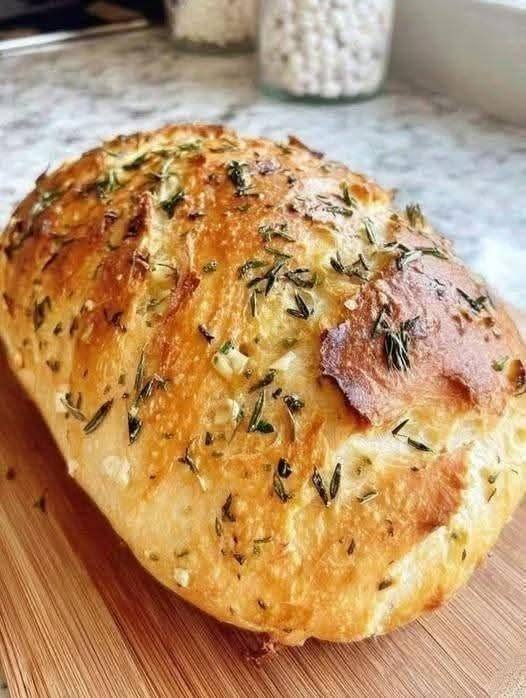
This rustic bread has a crisp, golden crust and a soft, chewy center. Fresh rosemary and thyme give it the same herby look and flavor as the loaf in the picture.
Ingredients
For the dough
- 3 cups (375 g) all-purpose flour
- 1½ cups (360 ml) warm water
- 1½ teaspoons salt
- 1 teaspoon instant yeast
For the topping
- 1 tablespoon olive oil
- 1–2 teaspoons fresh rosemary, finely chopped
- 1–2 teaspoons fresh thyme leaves
- Optional: ½ teaspoon garlic powder
Instructions
1. Mix the dough
In a large bowl, combine the flour, yeast, and salt.
Pour in the warm water and stir with a wooden spoon until everything comes together into a rough, sticky dough. Don’t knead it.
2. Let it rise
Cover the bowl tightly with plastic wrap or a clean kitchen towel.
Leave at room temperature for 8–12 hours, preferably overnight. The dough should become puffy and develop bubbles.
3. Shape
Lightly flour your work surface. Scrape the dough onto it and gently fold the edges toward the center a few times.
Shape it into a rough round loaf. Avoid kneading or working the dough excessively.
4. Second rise
Place the dough on parchment paper and cover loosely.
Let it rest for 30–45 minutes.
Meanwhile, preheat your oven to 450°F (230°C).
5. Prepare the topping
Brush or lightly drizzle the top with olive oil. Sprinkle with chopped rosemary and thyme.
You can make a few shallow cuts across the top with a sharp knife.
6. Bake
For the best crust, bake the loaf in a covered Dutch oven:
- Place the dough into the preheated Dutch oven.
- Cover and bake for 25–30 minutes.
- Remove the lid and bake another 10–15 minutes, until deeply golden brown.
If you don’t have a Dutch oven, bake on a parchment-lined baking sheet at 425°F (220°C) for about 30–40 minutes.
7. Cool
Transfer the bread to a wire rack and allow it to cool for at least 30–45 minutes before slicing. This helps the inside finish setting.
🥖 Nutrition Information
Approximate per 1/10 loaf, without optional toppings:
- Calories: ~145
- Carbohydrates: ~30 g
- Protein: ~4 g
- Fat: ~0.5 g
- Fiber: ~1 g
- Sodium: ~350 mg
Nutrition varies depending on the flour, salt, and portion size.
🌾 Allergen Information
- Contains: wheat/gluten
- Dairy-free: Yes
- Egg-free: Yes
- Butter-free: Yes
- Nut-free: Yes, when made with the ingredients listed
- Vegan: Yes, if the flour and yeast used are vegan-friendly
Q&A
Q: Do I really need to knead the dough?
No. The long resting time allows the dough to develop structure without traditional kneading.
Q: Can I use active dry yeast?
Yes. Use about 1¼ teaspoons active dry yeast and make sure it is properly activated if your brand requires that.
Q: Can I let it rise overnight?
Yes. That’s actually ideal for this recipe. About 8–12 hours works well at room temperature.
Q: Why is my dough so sticky?
No-knead dough is supposed to be fairly sticky. Avoid adding lots of extra flour, or the finished bread can become dense.
Q: Can I use whole-wheat flour?
Yes, but replacing all the flour may produce a heavier loaf. For a lighter texture, start by replacing ½–1 cup of the all-purpose flour with whole-wheat flour.
Q: Can I make it without the herbs?
Absolutely. Rosemary and thyme are optional. The basic bread works perfectly without them.
Q: How do I store it?
Keep the cooled loaf in a bread bag or loosely wrapped at room temperature for about 2–3 days. For longer storage, slice and freeze it.
Q: Why shouldn’t I slice it immediately?
The bread continues cooking internally as it cools. Cutting too early can make the center seem gummy.
Q: Can I make smaller rolls instead?
Yes. Divide the dough into smaller portions and reduce the baking time, checking them once they become golden brown.

With years of experience in restaurant research and local SEO, Sara creates accurate, user-friendly guides that work for both people and search engines. Her goal is to help users go from search results to their nearest restaurant or menu choice with as few clicks as possible.
- Creamy Garlic Parmesan Chicken & Broccoli Rice Bowls - September 19, 2026
- Crispy Cheesy Hashbrowns - September 19, 2026
- Crispy Potato Pockets Snack - September 19, 2026