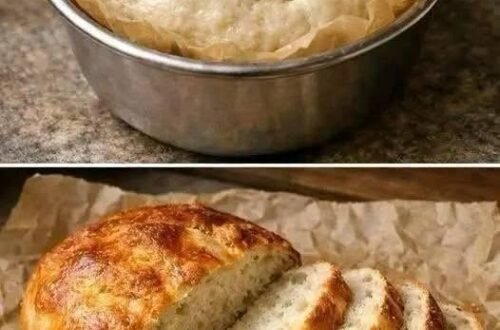
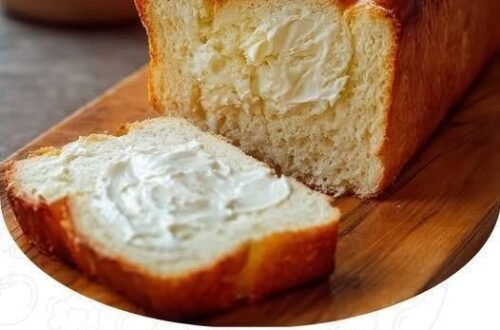
Makes: 1 large loaf
Pan: 9 × 5 inch / 23 × 13 cm loaf pan
Prep: 30–40 minutes
First rise: 60–90 minutes
Second rise: 40–60 minutes
Bake: 30–35 minutes
Total: about 3–4 hours
Ingredients
Tangzhong
Bread flour — 20 g
Whole milk — 100 g/ml
Main dough
Bread flour — 300 g
Whole milk — 120 g/ml, lukewarm
Granulated sugar — 45 g
Instant yeast — 6 g (about 2 tsp)
Fine salt — 5 g (about ¾–1 tsp)
Large egg — 1, about 50 g without shell
Unsalted butter — 40 g, very soft
Milk powder — 15 g, optional but recommended
For the top
1 egg yolk + 1 tbsp milk for a shiny golden crust
Important: Weigh the flour and liquids if possible. Bread flour around 11.5–13% protein works particularly well for this style of bread.
L
LMA
+1
1. Make the Tangzhong
Put:
20 g bread flour
100 g milk
into a small saucepan while cold.
Whisk thoroughly until completely smooth.
Place over low to medium-low heat.
Cook while whisking constantly for approximately 3–5 minutes.
You are looking for a thick, smooth paste. The whisk should leave visible lines across the bottom of the pan.
The mixture should resemble thick pudding.
Do not boil it aggressively.
Immediately transfer it to a clean bowl and allow it to cool until lukewarm or room temperature.
This cooked flour mixture is the key to the characteristic soft texture of milk bread.
K
King Arthur Baking
+1
2. Prepare the yeast
Warm the 120 g milk until slightly warm, around 35–40°C.
Don’t make it hot.
If using instant yeast, you can mix it directly with the flour. If using active dry yeast, mix it with the warm milk and a teaspoon of the sugar and leave it for 5–10 minutes until slightly foamy.
Yeast substitutions
Approximately:
6 g instant yeast
7–7.5 g active dry yeast
18 g fresh yeast
Instant yeast is the easiest option.
3. Mix the dough
In a large bowl or stand mixer, combine:
300 g bread flour
15 g milk powder
45 g sugar
5 g salt
Then add:
cooled Tangzhong
120 g milk
1 egg
yeast
Mix until everything comes together into a rough dough.
It will initially look somewhat sticky. Don’t immediately add lots of extra flour.
4. Knead
Knead for approximately 6–8 minutes.
Then gradually add the 40 g softened butter.
Continue kneading for another 8–12 minutes.
The finished dough should be:
smooth
elastic
soft
slightly tacky
stretchy rather than crumbly
A good test is the windowpane test.
Take a small piece of dough and gently stretch it between your fingers.
If you can stretch it into a thin membrane without it immediately tearing, the gluten is sufficiently developed.
Milk-bread recipes commonly add the butter after the initial gluten development and continue kneading until the dough becomes supple and elastic.
E
Epicurious
+1
5. First rise
Form the dough into a smooth ball.
Place it in a lightly greased bowl.
Cover with plastic wrap or a damp towel.
Leave somewhere warm for approximately 60–90 minutes, or until the dough has approximately doubled in size.
Ideal temperature
Around 26–28°C is excellent.
Don’t judge fermentation solely by the clock. Room temperature, yeast strength and dough temperature all affect the timing.
6. Check the first rise
Gently press one finger into the dough.
If the indentation slowly springs back but doesn’t immediately disappear, you’re generally ready for the next step.
If it springs back immediately → give it more time.
If the dough collapses dramatically → it may have over-proofed.
7. Divide and shape
Turn the dough onto a lightly floured surface.
Divide it into 3 equal pieces.
For example, if your finished dough weighs around 650–700 g, each piece will be roughly 215–230 g.
Shape each piece into a loose ball.
Cover and rest for 10–15 minutes.
This resting period relaxes the gluten and makes shaping much easier.
8. Shape the three pieces
Take one piece.
Flatten it gently into a rectangle.
Fold the left side toward the center.
Fold the right side toward the center.
Then roll it up tightly from one end, creating a short log.
Repeat with the other two pieces.
Place all three rolls side-by-side in a greased 9 × 5-inch loaf pan.
This three-piece method produces the beautiful pull-apart sections visible in your photo. A similar three-roll shaping method is commonly used for Japanese milk bread.
S
Simple Table Recipes
9. Second rise
Cover the pan.
Allow the dough to rise for approximately 40–60 minutes.
The dough should become visibly puffy and rise close to the top of the pan.
Don’t wait until it has massively overflowed.
Important
Under-proofed: dense, heavy bread
Correctly proofed: fluffy, tall, fine crumb
Over-proofed: weak structure, coarse/deflated loaf
10. Egg wash
Mix:
1 egg yolk
1 tbsp milk
Gently brush the surface.
Don’t press down on the dough while brushing.
This gives the loaf the beautiful shiny golden-brown top shown in your picture.
For a softer, less shiny crust, simply brush with milk instead.
11. Bake
Preheat oven to:
175°C / 350°F
Bake for approximately 30–35 minutes.
If the top becomes brown too quickly, loosely cover it with aluminum foil during the final part of baking.
The loaf is done when:
the top is deep golden brown
the loaf sounds hollow when tapped
the internal temperature is approximately 93–99°C / 200–210°F
One published milk-bread recipe similarly uses an approximately 350°F oven and targets roughly 205–210°F internally.
Y
YouTube
12. The most important step — cooling
Remove the bread from the pan.
Place it on a wire rack.
Let it cool for at least 45–60 minutes before slicing.
Don’t cut it immediately.
The inside continues to set as it cools. Cutting too early can compress that beautiful fluffy crumb.
Secrets to Getting the Exact Soft Texture in Your Photo
1. Don’t add too much flour
This is probably the #1 mistake.
The dough should feel soft and slightly tacky before baking.
Adding lots of flour because the dough feels sticky produces a dense loaf.
2. Use bread flour
Bread flour gives you the gluten strength necessary to hold all that liquid and produce a tall loaf.
If using ordinary all-purpose flour, you may need slightly less milk because flour strength varies.
3. Don’t skip Tangzhong
The cooked flour/liquid paste is what makes this style of bread particularly soft and moist.
K
King Arthur Baking
4. Butter goes in after initial mixing
Allowing the flour and liquid to begin developing gluten before incorporating the butter makes it easier to develop a strong, elastic dough.
5. Don’t over-proof
A loaf that has risen enormously isn’t necessarily better.
Over-proofing can produce a weak loaf that collapses or has a coarse, fragile crumb.
6. Knead enough
The dough needs strong gluten development.
The windowpane test is more useful than simply saying “knead for 10 minutes.”
Can I use water instead of milk?
Yes.
For a lighter loaf, you can make the Tangzhong with water and use milk in the dough.
For the richest, softest version, however, whole milk is excellent.
A water-based Tangzhong is also a well-established variation of this technique.
K
Kurryleaves
Can I make it without egg?
Yes.
Replace the egg with approximately 40–50 g milk.
The loaf will still be soft, although the egg contributes richness, color and tenderness.
Can I use margarine instead of butter?
Yes.
Use approximately 40 g margarine.
Butter gives a better flavor, while margarine can produce a very soft bakery-style texture.
Can I omit milk powder?
Yes.
The 15 g milk powder is optional.
If you don’t have it, simply leave it out. You generally don’t need to compensate with additional flour.
Milk powder contributes milk solids, flavor, browning and tenderness.
Can I use all-purpose flour?
Yes, but bread flour is preferable.
If your all-purpose flour is relatively weak, don’t automatically use the full amount of milk. Hold back 10–20 g and add it only if the dough needs it.
Flour protein and absorption vary significantly between brands.
Can I prepare the Tangzhong the night before?
Yes.
Prepare it, cool it completely, cover it and refrigerate it.
Bring it toward room temperature before making the dough.
This can make the baking process much easier.
Can I refrigerate the dough overnight?
Yes.
For a slow fermentation, reduce the yeast somewhat and refrigerate the mixed/kneaded dough after shaping it into a ball.
The next day, allow it to warm and continue proofing.
Because fermentation speed depends heavily on refrigerator temperature and yeast quantity, watch the dough rather than following an exact clock.
Can I freeze this bread?
Yes.
For best quality:
Cool completely.
Slice if desired.
Wrap tightly.
Put into a freezer bag.
Freeze for up to roughly 1–2 months for best quality.
Thaw at room temperature.
You can briefly warm individual slices before serving.
Why is my bread dense?
Most commonly:
1. Too much flour
→ Dough became stiff.
2. Weak/old yeast
→ Poor fermentation.
3. Under-proofing
→ Dough didn’t have enough time to expand.
4. Insufficient kneading
→ Gluten wasn’t strong enough.
5. Liquid was too hot
→ Yeast was damaged/killed.
6. Tangzhong wasn’t cooled
→ Excessively hot Tangzhong can interfere with yeast.
Why did the bread collapse?
Possible causes:
over-proofing
insufficient gluten development
too much liquid for your flour
opening the oven very early
insufficient baking
shaping too loosely
The most common culprits are over-proofing and inadequate gluten development.
Why is the top splitting?
Usually the dough was under-proofed or the surface tension during shaping was too high.
Give the shaped loaf more time during the second rise.
Also make sure you’re not rolling the dough excessively tightly.
Why isn’t mine as fluffy as the picture?
For that extremely fluffy result, concentrate on these five things:
Strong bread flour → correct hydration → proper kneading → complete proofing → don’t overbake.
The Tangzhong helps considerably, but it cannot compensate for poor gluten development or incorrect fermentation.
Baker’s Percentage — For Scaling the Recipe
For those who bake regularly, approximately:
Ingredient Baker’s %
Flour, including Tangzhong 100%
Milk, including Tangzhong ~59%
Sugar ~14%
Butter ~12.5%
Egg ~16%
Salt ~1.6%
Instant yeast ~1.9%
This makes it easy to scale the recipe for different pan sizes.
🇵🇰 Ingredients Easily Available in Pakistan
You don’t need specialty Japanese ingredients.
Look for:
Bread flour / high-protein wheat flour
Instant yeast
Full-cream milk
Unsalted butter
Milk powder
Fine sugar
Eggs
If you cannot find bread flour, good-quality all-purpose/maida can work, but start with slightly less milk and adjust according to the dough.
How to Serve It
This bread is excellent for:
breakfast toast
butter + honey
jam
sandwiches
French toast
chicken sandwiches
egg sandwiches
cheese toast
Nutella/chocolate spread
bread pudding
It’s particularly good while still slightly warm, when the crumb is exceptionally soft.
Quick Recipe Card
Tangzhong:
20 g flour + 100 g milk → cook until thick → cool.
Dough:
300 g bread flour + 15 g milk powder + 45 g sugar + 5 g salt + 6 g yeast + 120 g milk + 1 egg + Tangzhong.
Mix → knead → add 40 g butter → knead until elastic.
First rise: 60–90 min.
Divide into 3 → shape → place in 9×5-inch pan.
Second rise: 40–60 min.
Egg wash.
Bake: 175°C / 350°F for 30–35 min.
Cool completely before slicing.
This formulation follows the established Tangzhong milk-bread approach used in several tested milk-bread recipes, while the quantities above are balanced specifically for a single

With years of experience in restaurant research and local SEO, Sara creates accurate, user-friendly guides that work for both people and search engines. Her goal is to help users go from search results to their nearest restaurant or menu choice with as few clicks as possible.
- Soft, Fluffy Garlic Herb Stuffed Flatbread - October 26, 2026
- Creamy Nutty Milk Pudding - October 25, 2026
- Flourless Lemon Pistachio Cake - October 25, 2026